





Ever wondered what happens behind those pristine recordings that transport you to another world? Dive into audio engineering, where art meets technology to create sonic experiences. The process of music recording is a unique blend of technical precision and creative flair.
Audio engineering is a technical discipline focused on recording, manipulating, mixing, and reproducing sound through mechanical and electronic means. This field involves sophisticated audio processing to shape the final listener experience.
Audio engineers are responsible for the recording, mixing, and mastering of music and other audio content. They use specialized equipment and software to ensure optimal sound quality for music albums, live performances, film soundtracks, and podcasts. This field requires both technical expertise and creative sensibility to achieve the desired sonic results.
The journey into audio engineering opens doors to various paths for those seeking a music career. Professionals may work as freelance sound engineers or in union positions that can be financially rewarding.
Key Takeaways / TL;DR
- Audio engineering combines technical skill and artistic judgment to create professional sound recordings.
- Professional audio engineers need proficiency with specialized equipment, software, and foundational acoustic principles.
- Career success in this field requires both formal education and practical experience in professional recording environments.

1
What Is Audio Engineering: Defining The Discipline
Audio engineering encompasses the technical and creative processes involved in capturing, manipulating, and reproducing sound. At its core, it represents the intersection of science and artistry, requiring both precise technical knowledge and creative intuition to achieve professional sound results.
Audio Engineering: From Analog To Digital
The evolution of audio engineering has transformed dramatically from analog to digital domains. In the analog era, engineers worked with physical equipment like tape machines and large-format consoles, requiring hands-on expertise with electrical systems and electronics.
The digital revolution introduced computer-based recording systems, plugins, and virtual instruments that expanded possibilities while making production more accessible. Modern audio engineers must understand both worlds:
- Analog principles: Signal flow, gain staging, impedance matching
- Digital concepts: Sampling rates, bit depth, digital signal processing (DSP)
This transition hasn't eliminated analog techniques; rather, it has integrated them with digital workflows. Many engineers still value analog equipment for its unique sonic characteristics while leveraging digital tools for precision, repeatability, and efficiency.
Key Responsibilities Of Modern Audio Engineers
Today's audio engineers perform diverse functions across multiple environments. Their fundamental responsibility remains "getting sound from one place to another" through professional audio recording. This requires optimal quality and creative intent.
Key responsibilities in music recording include:
- Technical setup: Microphone selection and placement, equipment configuration
- Signal processing: Using equalization, compression, and audio effects
- Mixing: Balancing multiple audio sources for cohesive output
- Mastering: Finalizing recordings for distribution
- Troubleshooting: Identifying and resolving technical issues
Audio engineers work in various contexts, including recording studios, live venues, broadcast facilities, and post-production houses. Each environment requires specialized knowledge and adaptability.
The profession increasingly demands proficiency with digital audio workstations (DAWs) alongside traditional equipment operation. Engineers must continually update their skills as technologies evolve.
Distinguishing Between Audio Engineering And Music Production
While often used interchangeably, audio engineering and music production represent distinct yet complementary disciplines. Audio engineering primarily focuses on technical aspects: equipment operation, signal flow, and sonic quality.
Music production encompasses broader creative decisions, including:
- Arrangement, songwriting, and composition guidance
- Performance direction
- Project oversight from concept to completion
- Artistic vision implementation
In practice, these roles frequently overlap. A studio engineer might also take on the duties of a mixing engineer. Many professionals function as both engineers and producers, or even as composers, especially on smaller projects.
The mixing engineer is specifically tasked with blending tracks to create a polished music recording. The distinction between roles becomes clearer in larger productions where specialized tasks are assigned.
The Technical And Creative Balance In Audio Engineering
Audio engineering combines technical knowledge with creative intuition in a delicate balance. Technical proficiency provides the foundation: understanding acoustics, electronics, and digital processing ensures clean, accurate sound reproduction.
Creative aspects include:
- Sonic sculpting: Using technical tools to create emotional impact
- Problem-solving: Finding innovative solutions to recording challenges
- Aesthetic judgment: Making choices that enhance the artistic intent
This balance varies by project and genre. Classical recordings might prioritize transparent capture, while electronic music production might embrace creative processing and manipulation.
The most respected engineers develop a signature approach while remaining versatile. They understand when to apply technical rules and when to break them for creative effect. This balance requires ongoing practice, experimentation, and listening development.
Ultimately, audio engineering serves the music itself—technical excellence becomes meaningful when it helps convey emotion and artistic vision effectively. Both the producer and the mixing engineer work toward this common goal.

2
Essential Audio Engineering Equipment For Beginners
Getting started in audio engineering requires some fundamental equipment to capture, process, and monitor sound effectively. Investing in quality audio equipment allows you to capture sound with much higher fidelity and a lower noise floor.
Building Your First Home Studio Setup
Setting up a studio recording space requires careful consideration of both the gear and the room acoustics. Successful music recording depends on the right tools, which can significantly impact your workflow efficiency, even with a modest initial investment.
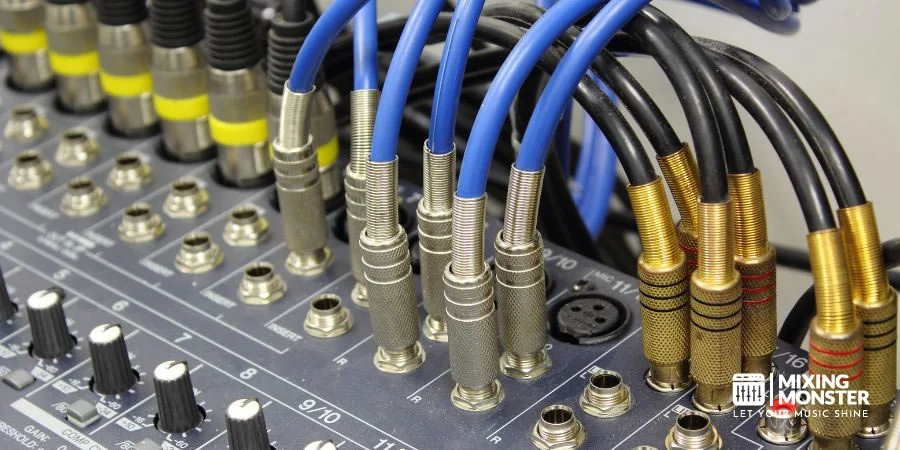
A functional home studio begins with an audio interface - the critical bridge between your analog equipment and digital recording environment. Quality options for beginners include the Focusrite Scarlett series or PreSonus AudioBox. These interfaces include built-in preamplifiers to boost quiet microphone signals.
Room treatment is often overlooked but crucial. Start with basic acoustic panels for early reflections and bass traps for corners. Even budget-friendly foam panels can dramatically improve recording clarity.
For connectivity, invest in quality XLR cables for microphones and TRS cables for monitors. Avoid the cheapest options as they can introduce noise and reliability issues.
A sturdy microphone stand and pop filter are essential accessories that prevent handling noise and plosive sounds. These fundamental components create the foundation for clear recordings regardless of your genre focus.
Understanding Digital Audio Workstations (DAWs)
A Digital Audio Workstation is the software heart of modern recording. Popular beginner-friendly options include:
- Reaper: Affordable with full functionality
- GarageBand: Free for Mac users
- Audacity: Free open-source option
- Pro Tools First: Limited but industry-standard workflow
- Ableton Live Lite: Often bundled with interfaces
Your DAW handles recording, editing, mixing, and mastering. Most offer similar core features but differ in workflow and specialized capabilities. Before purchasing, try free trials to find which interface feels most intuitive.
Storage considerations are important - recording multitrack sessions requires significant hard drive space. An external SSD offers both speed and capacity for audio production.
DAWs typically include basic audio plugins for compression, EQ, and reverb. These are sufficient for beginners before expanding to professional third-party options.
Discover Best Audio Gear & Equipment

Microphone Types And Their Applications
Dynamic microphones like the Shure SM57 or SM58 ($99-129) offer versatility and durability. They excel with loud sources like drums, guitar amps, and live vocals due to their rugged construction and focused pickup pattern.
Condenser microphones provide enhanced sensitivity and frequency response for vocals, acoustic instruments, and ambient recording. Entry-level options like the Audio-Technica AT2020 ($99) or Rode NT1 ($269) deliver professional results for beginners.
For recording setup versatility, consider these microphone patterns:
|
Pattern |
Best For |
Examples |
|
Cardioid |
Single source, noise rejection |
Most vocal mics |
|
Omnidirectional |
Room ambience, multiple sources |
Conference mics |
|
Figure-8 |
Interviews, stereo techniques |
Ribbon mics |
Many beginners benefit from a large-diaphragm condenser microphone for its versatility across vocal and instrument applications, paired with a dynamic mic for louder sources.
Monitoring Equipment: Headphones And Loudspeakers
Accurate monitoring is essential for making informed mixing decisions. High-quality loudspeakers and headphones allow you to hear the full frequency spectrum. For headphones, consider both closed-back and open-back options:
Closed-back headphones like Audio-Technica ATH-M50x ($149) or Sony MDR-7506 ($99) provide isolation for recording and detailed monitoring. They prevent microphone bleed during recording sessions.
Open-back headphones such as Sennheiser HD600 ($300) offer a wider soundstage for mixing but leak sound. They're better for mixing sessions than tracking.
Studio monitors provide the most accurate representation of your mix. Entry-level options include:
- JBL 305P MkII ($149 each)
- KRK Rokit 5 G4 ($179 each)
- PreSonus Eris E5 ($129 each)
Position monitors at ear level in an equilateral triangle formation with your listening position. Even modest monitoring equipment properly set up can provide valuable mix translation insights that consumer headphones cannot deliver.
3
Fundamental Audio Concepts Every Engineer Must Master
Audio engineering requires mastery of several core technical concepts that form the foundation of professional sound production. These principles govern how we capture, process, and reproduce audio to sound both natural and engaging to listeners.
Sound Waves And Frequency Fundamentals
Sound waves are pressure variations traveling through air or other media. The frequency of these waves, measured in Hertz (Hz), determines pitch—lower frequencies (20-250Hz) create bass tones, while higher frequencies (4 kHz-20kHz) produce treble sounds. The human hearing range typically spans from 20Hz to 20kHz.
Wavelength and frequency are inversely related: lower frequencies correspond to longer wavelengths. This relationship explains why bass frequencies require larger speakers to be reproduced accurately.
Sine waves represent the purest tones, while complex sounds, such as voices and instruments, contain fundamental frequencies plus numerous harmonics. These harmonics, occurring at multiples of the fundamental, give instruments their distinctive timbres.
In practical terms, understanding frequency helps engineers make critical mixing decisions, like using high-pass filters to remove unnecessary low frequencies or identifying which frequency bands need adjustment to fix problematic recordings.
Decoding Decibels And Signal Levels
Decibels (dB) measure audio signal strength on a logarithmic scale, making them practical for representing the wide dynamic range of human hearing. A 10dB increase represents approximately a doubling of perceived loudness.
Different dB references exist in audio engineering:
- dBFS: Decibels relative to full scale, used in digital recording (0dBFS is the maximum level)
- dBu/dBV: Analog signal references
- dBSPL: Sound pressure level, measuring acoustic volume
Signal-to-noise ratio (SNR) indicates how much stronger the desired signal is compared to background noise. A higher SNR means cleaner audio.
Gain staging—managing signal levels throughout the audio chain—is crucial for maintaining optimal signal quality. Start with recording levels peaking around -18 dBFS to -12 dBFS, providing sufficient headroom while staying well above the noise floor.
Clipping occurs when signals exceed maximum levels, causing distortion. Using meters effectively helps prevent unintentional distortion while ensuring sufficient signal strength.
Your Song Mixed & Mastered By Mixing Monster
Compression, EQ, And Dynamics Processing
Compression reduces dynamic range by attenuating louder signals while leaving quieter ones untouched. Key parameters include:
- Threshold: Sets the level where compression begins
- Ratio: Determines compression strength (4:1 means a 4dB input increase results in only 1dB output increase)
- Attack/Release: Control how quickly compression engages and disengages
Equalization (EQ) shapes frequency content. Parametric EQs offer precise control with adjustable frequency, gain, and Q (bandwidth). Consider these EQ approaches:
- Subtractive EQ: Cut problematic frequencies rather than boosting desired ones
- High-pass filtering: Remove unnecessary low frequencies to clean up mixes
- Bell curves: Target specific frequency ranges
Other essential dynamic processors include gates (removing noise between wanted signals), limiters (preventing signal peaks), and expanders (increasing dynamic range). These tools work together to create polished, professional-sounding productions.
When applying these processors, subtle adjustments often yield better results than dramatic ones. Listen critically and compare before/after to ensure improvements.
Understanding Stereo Imaging And Spatial Audio
Stereo imaging creates the perception of sound source locations across the horizontal field. Phase relationships between channels determine positioning—identical signals in both channels appear centered, while varying amplitude and timing differences create off-center positioning.
The Haas effect (precedence effect) influences spatial perception: when identical sounds arrive at different times (under ~40ms), listeners perceive a single sound located toward the first-arriving source.
Panning places sounds in the stereo field. Beyond simple left-right positioning, techniques like auto-panning create movement. Mid-side processing separates center (mid) and side information, enabling independent manipulation of stereo width.
Reverb and delay establish depth perception. Shorter reverbs (rooms, chambers) place sounds closer to listeners, while longer ones (halls, plates) push them further back. The balance between dry and wet signals controls perceived distance.
Binaural recording and processing recreate three-dimensional audio experiences through headphones, capturing how sound interacts with the human ear and the head. These spatial audio concepts are increasingly important with immersive formats like Dolby Atmos becoming industry standards.
4
Recording Techniques For Professional Results
Creating professional results in a studio recording requires technical expertise and quality equipment. A recording engineer must balance technical settings with the artist's creative comfort to capture the best take. Achieving excellence in music recording starts with a deep understanding of the source material and the environment.
Microphone Placement Strategies For Various Sources
Methodical approaches help to capture sound accurately in any environment. The difference between amateur and professional results often comes down to applying proven techniques rather than expensive gear. Proper microphone placement remains fundamental to capturing quality audio.
Drum recording requires strategic placement for each component. Position a dynamic mic inside the kick drum for attack and another outside for low-end resonance. For snares, place a mic 1-2 inches above the drum head, at a 45-degree angle.
Piano recording benefits from the 3-mic technique: one near the high strings, one for the low register, and an ambient mic for room sound. This creates a full, natural stereo image.
Wind and brass instruments generally sound best with mics positioned slightly off-axis to reduce air blasts while capturing the instrument's tonal characteristics.
Capturing Clean Vocal Recordings
Start with proper vocal booth preparation—acoustic treatment is essential. Use bass traps in corners and acoustic panels at reflection points to minimize unwanted reverberations.
Select the right microphone for the vocalist's characteristics—Large-diaphragm condensers like the Neumann U87 excel for most voices. Whether the artist is singing or rapping, the right mic choice ensures the lyrics remain clear. This is vital for the listener to connect with the message.
Proper pop filter positioning—about 3-4 inches from the microphone—prevents plosives. Maintain a consistent distance between the performer and the microphone (typically 6-8 inches) for uniform levels.
Multiple microphone techniques provide options during mixing. Try recording simultaneous tracks with both condenser and dynamic mics to blend characteristics later.
Monitor headphone mix carefully—vocalists perform better when they hear themselves clearly. Keep headphone volume moderate to prevent vocal strain and pitch issues.
Related Articles

Multitrack Recording Approaches
Modern multitrack recording offers various methodologies for capturing complex arrangements. The layered approach involves recording one instrument at a time, starting with rhythm sections (drums, bass) and building upward.
Live ensemble recording captures performers playing simultaneously, preserving natural interaction and dynamics. This requires careful microphone isolation techniques to prevent bleed between tracks.
Virtual instruments and MIDI recording expand possibilities without acoustic limitations. Consider this hybrid approach:
- Record acoustic drums, bass, and rhythm guitars in a professional space
- Layer additional elements in home studios
- Apply digital processing for cohesion
When recording bands, create submixes during tracking. Group drums to a stereo bus, guitars to another, allowing for more efficient mixing later while maintaining individual track control.
Room Acoustics And Their Impact On Recordings
Room acoustics fundamentally shape your recording quality before sound even reaches the microphone. Professional recording studios invest heavily in acoustic design because reflections, standing waves, and resonances dramatically affect captured audio.
Small, untreated rooms often create boxy, resonant recordings with problematic low-frequency buildup. Temporary solutions include:
- Hanging moving blankets to reduce high-frequency reflections
- Placing furniture asymmetrically to break up standing waves
- Recording in larger spaces when possible for natural ambiance
The live/dead end approach creates controlled recording environments. The "dead end" contains absorptive materials where microphones are positioned, while the "live end" incorporates diffusive surfaces that scatter reflections.
Room size determines optimal microphone distances. In larger spaces, ambient microphones placed 6-10 feet from the source capture valuable room characteristics. Experiment with placement heights—higher positions often yield more balanced room tones.

5
Mixing And Mastering Essentials
The final sound quality of a recording depends heavily on the mixing and mastering processes, where technical skill meets artistic judgment to create professional, balanced audio that translates well across different playback systems.
Creating Balance And Clarity In Your Mix
Balance forms the foundation of every great mix. As a mixing engineer, you start by setting appropriate levels for each track, ensuring the primary elements remain prominent. Use the volume fader as your first and most important tool. This step is crucial for any music recording to sound professional and clear.
Proper panning techniques create width and separation. Position elements in the stereo field according to their importance—typically keeping bass, kick drum, and lead vocals centered while spreading supporting instruments across the panorama.
Frequency management is crucial for clarity. Apply high-pass filters to remove unnecessary low frequencies from instruments that don't need them. This prevents muddy mixes and creates space for bass elements.
Gain staging throughout the signal chain prevents distortion and preserves dynamic range. Aim for average levels around -18 dBFS during mixing to maintain headroom for mastering.
Use subtractive EQ before additive adjustments. Cutting problematic frequencies often yields better results than boosting desirable ones.
Effective Use Of Effects And Processing
Compression is essential for controlling dynamics but requires careful application. Common ratios for mixing include:
|
Instrument |
Typical Ratio |
Attack |
Release |
|
Vocals |
2:1 to 4:1 |
5-20ms |
50-150ms |
|
Bass |
4:1 to 8:1 |
10-30ms |
60-200ms |
|
Drums |
4:1 to 10:1 |
1-10ms |
50-100ms |
Reverb creates depth and dimension, but can quickly muddy a mix. Apply it to sends rather than inserts to maintain control. Consider using different reverb types for different instruments—shorter for percussion, longer for pads and strings.
Delay offers space without the wash of reverb. Tempo-synced delays (quarter notes, eighth notes) help elements sit in the mix while maintaining rhythmic integrity.
Saturation and distortion add character and warmth. Even subtle harmonic enhancement can make digital recordings feel more analog and engaging.
Automation brings mixes to life. Don't settle for static levels—automate volume, effects sends, and plugin parameters to create movement and emphasis where needed.
Mastering Workflows For Different Platforms
Mastering requirements vary significantly across distribution platforms. Start with a reference track that sounds excellent on multiple systems to guide your decisions.
For streaming platforms, focus on integrated loudness targets. Most streaming services normalize audio based on LUFS measurements. They also use various delivery formats, such as Opus, to stream audio efficiently to users across different devices.
- Spotify: -14 LUFS
- YouTube: -14 LUFS
- Apple Music: -16 LUFS
CD masters can be louder since there's no streaming normalization. Aim for around -10 to -12 LUFS with peaks not exceeding -0.3dBTP to avoid intersample clipping.
Vinyl mastering requires special considerations—less compression, careful bass management, and avoiding excessive stereo information in low frequencies.
Create a mastering chain that typically includes:
- Spectral analysis and correction
- Subtle compression (ratios below 2:1)
- Gentle EQ adjustments
- Stereo enhancement (with caution)
- Limiting for the final loudness
Always check your masters on multiple playback systems, including headphones, car stereos, and consumer speakers, to ensure translation across different environments.
Common Mixing Mistakes And How To Avoid Them
Excessive bass leads to muddy, unfocused mixes. Use reference tracks to calibrate your perception and ensure bass elements complement rather than dominate the mix.
Over-compression destroys dynamics and causes listening fatigue. Aim for subtle compression across multiple processors rather than dramatic reduction on individual tracks.
Neglecting mono compatibility can cause phase issues. Regularly check your mix in mono during the mixing process, especially when using stereo widening techniques.
Improper gain staging throughout the mix leads to distortion and processing inefficiency. Maintain consistent levels between plugins and avoid clipping individual tracks.
Mixed decisions based on poor monitoring lead to translation problems. Invest in acoustic treatment before expensive speakers, and use headphones as a secondary reference.
Mixing too loud fatigues your ears and leads to poor decisions. Mix at moderate levels (around 83dB SPL) and take regular breaks to preserve your critical listening abilities.
Over-reliance on soloing creates elements that don't work together. Make most decisions with the full mix playing to understand how components interact within the complete arrangement.

6
Audio Engineering In Specialized Fields
Audio engineering extends beyond music studios into various specialized domains, each requiring unique technical skills and creative approaches. These specialized fields demand specific knowledge of equipment, acoustics, and workflow processes tailored to their unique environments and audience expectations.
Live Sound Engineering Fundamentals
Live sound engineering focuses on delivering optimal audio experiences for in-person audiences. The role of a live sound engineer is to manage the complex acoustics of a venue while ensuring the performers are heard clearly. A live sound engineer must balance multiple audio sources in real-time. This requires adapting to changing acoustic environments at concerts, theaters, and events.
A live sound setup, often managed by a sound technician, requires careful planning. An experienced sound tech oversees the installation and signal routing. This setup includes:
- Front of House (FOH) console for the main audience mix
- Monitor system for performers' reference audio
- Microphone selection and placement for various instruments
- Signal processing chains for each audio source
The process of live sound mixing requires technicians to troubleshoot quickly. A live sound tech must respond instantly to equipment issues under pressure. They conduct soundchecks to establish baseline levels. They also frequently use equalization to eliminate feedback caused by audio loops between microphones and loudspeakers.
Digital consoles have revolutionized live sound, allowing engineers to save presets and recall settings instantly between acts. Many venues now employ dedicated monitor engineers who create custom mixes for each performer through in-ear monitoring systems.
Post-Production Audio For Film And Television
Post-production audio transforms raw film footage into immersive sonic experiences by carefully layering dialogue, sound effects, and music. Engineers in this field follow standardized workflows to maintain consistency across media platforms.
The post-production process typically includes:
- Dialogue editing - cleaning speech recordings and ensuring clarity
- ADR (Automated Dialogue Replacement) - re-recording lines in studio conditions
- Foley recording - creating custom sound effects for on-screen actions
- Sound design - crafting unique sonic elements for fictional environments
Engineers use specialized software such as Pro Tools to synchronize audio with visual elements precisely. They must understand industry delivery specifications, including loudness standards (measured in LUFS) that vary between streaming platforms, broadcast television, and cinema releases.
Surround sound mixing has become essential, with formats evolving from 5.1 to advanced systems like Dolby Atmos that position sounds in three dimensions. This creates more realistic audio environments where sounds can move seamlessly around and above viewers.
Game Audio Design And Implementation
Game audio engineering combines traditional sound design with interactive programming elements. Unlike linear media, game audio must adapt dynamically to player actions while maintaining consistent quality across varying gameplay scenarios.
Key components of game audio include:
- Adaptive music systems that transition between emotional states
- Procedural audio is generated algorithmically rather than pre-recorded
- 3D audio positioning for realistic spatial representation
- Audio middleware like FMOD or Wwise for implementation
Game audio engineers must optimize assets to balance quality against memory constraints. They create variations of recurring sounds to prevent repetition fatigue during extended gameplay sessions.
Implementation requires understanding game engines and programming concepts. Engineers often work with middleware that bridges the gap between audio content and game code, allowing complex audio behaviors without extensive programming knowledge.
Acoustic simulation has advanced significantly, with modern games calculating sound propagation through virtual materials and spaces for unprecedented realism.
Podcast And Broadcast Audio Engineering
Audio engineering in broadcasting prioritizes vocal clarity and consistent loudness. Professionals in broadcasting focus on delivering consistent, high-quality audio for radio and television audiences worldwide. This field blends technical precision with efficient workflows to maintain quality. It is essential for meeting regular production schedules in radio and television.
Essential tools for podcast engineers include:
- Dynamic processing (compressors, limiters) to control volume fluctuations
- Noise reduction software to eliminate background interference
- Multitrack recording platforms for remote interview capture
- Loudness normalization to meet platform-specific delivery standards
Remote recording has become increasingly important, with engineers developing systems to record high-quality audio from participants in different locations. Cloud-based collaborative platforms enable real-time monitoring and feedback during recording sessions.
Broadcast engineers face additional regulatory requirements regarding transmission standards and the integration of the Emergency Alert System. They must ensure compliance with loudness regulations, such as the CALM Act, while maintaining a compelling dynamic range for listeners.
Production efficiencies come from template-based workflows and batch-processing tools that streamline repetitive tasks while ensuring consistent branding across episodes.

7
Building A Career In Audio Engineering
Establishing a career in audio engineering requires a strategic approach combining education, practical experience, and industry networking. The path typically involves developing technical skills, creating a compelling portfolio, and understanding both employment and entrepreneurial opportunities.

Education Paths And Certification Options
Formal education in audio engineering ranges from certificate programs to bachelor's degrees at specialized institutions. Many successful engineers hold degrees in audio engineering, music production, or electrical engineering with a focus on audio technology. Certificate programs can provide targeted skills in specific areas, such as Pro Tools operation or live sound reinforcement.
Professional certifications, such as Avid Certified Pro Tools Operator or Dante Certification, add credibility to resumes. These demonstrate specialized knowledge to potential employers and clients in the audio industry.
Online courses and workshops offer flexibility for working professionals to upgrade skills. Many platforms provide specialized training in mixing, mastering, and recording techniques taught by industry veterans.
Continuing education remains essential as technology evolves rapidly. Engineers must stay current with new hardware and software. Organizations like Women in Audio also help promote diversity and provide resources for professional development.
Portfolio Development Strategies
Creating a diverse, high-quality portfolio demonstrates your capabilities to potential clients and employers. Begin by recording and mixing projects for friends, local bands, or student films to build initial samples.
Focus on quality over quantity in your portfolio. A few exceptionally well-produced tracks showcase your skills better than numerous mediocre recordings. Include before/after examples that highlight your mixing and mastering abilities.
Key portfolio elements:
- 3-5 professionally mixed tracks in different genres
- Client testimonials and project descriptions
- Technical notes explaining your approach to each project
- Examples showing problem-solving (fixing poor recordings, creative solutions)
Document your workflow and processes to demonstrate your professional approach. This helps producers and clients understand your methodical techniques and attention to detail.
Networking In The Audio Industry
Building professional relationships is crucial for career advancement in audio engineering. Attend industry conferences, workshops, and local music events to connect with producers, musicians, and other engineers.
Join professional organizations like the Audio Engineering Society (AES) or the Recording Academy. These memberships provide access to industry events, continuing education, and job boards specifically for audio professionals.
Social media platforms and audio forums allow engineers to showcase work, exchange knowledge, and build visibility. Platforms like LinkedIn, SoundBetter, and specialized Facebook groups connect professionals across the music business ecosystem.
Collaboration with other creatives expands your network exponentially. Working with videographers, producers, and musicians creates a web of connections that often leads to future opportunities and referrals within the audio industry.
Freelancing Vs. Studio Employment Opportunities
Studio employment offers stability, mentorship, and access to professional equipment. Entry-level positions, such as runner or assistant engineer, provide valuable learning experiences under experienced professionals while building industry contacts.
Freelancing offers flexibility and entrepreneurial control, but it requires strong communication skills and business acumen. Independent engineers must handle marketing, client relations, and financial management alongside technical work.
Comparison of career paths:
|
Aspect |
Studio Employment |
Freelancing |
|
Income stability |
Predictable salary |
Variable/project-based |
|
Equipment access |
Studio provides |
Self-funded investment |
|
Client acquisition |
Handled by studio |
Personal responsibility |
|
Creative control |
May be limited |
Greater autonomy |
Many successful engineers blend both approaches, maintaining studio relationships while developing freelance clients. This hybrid model offers income stability while building personal brand and management skills.
Starting with small projects and gradually expanding services allows sustainable growth. Developing specialization in particular genres or services helps establish a reputation in specific market segments within the broader music industry.
8
Audio Engineering Software And Tools
The audio production landscape relies on specialized software and tools that enable engineers to capture, edit, manipulate, and finalize audio content. Modern audio engineering workflows incorporate everything from traditional digital audio workstations to cutting-edge AI solutions.
Industry-Standard DAWs Comparison
Pro Tools remains the industry benchmark for professional studios, offering comprehensive recording, editing, and mixing capabilities with unparalleled stability. Its strength lies in recording and post-production workflows, though it comes with a steeper learning curve and higher price point.
Adobe Audition excels in podcast and broadcast production with spectral editing capabilities that make it ideal for restoration work. Meanwhile, Logic Pro provides exceptional value for Apple users with its extensive instrument and effect library.
For budget-conscious engineers, free options like Audacity or Waveform Free offer surprisingly robust functionality, while Reaper provides professional features at a fraction of the cost of commercial DAWs. Each platform has distinct workflow advantages suited to different production styles.
Essential Plugins For Every Audio Engineer
Compressors: FabFilter Pro-C2 and Waves CLA-76 remain staples for dynamic control, offering transparent operation and character, respectively. Engineers typically maintain a selection of compressor types to address different source materials.
EQ Tools: A high-quality parametric EQ, such as FabFilter Pro-Q3 or Waves H-EQ, provides surgical precision for frequency adjustments. Dynamic EQs have become increasingly essential for addressing problematic frequencies only when they appear.
Reverb Solutions: Convolution reverbs like Altiverb or algorithmic options like Valhalla VintageVerb give engineers spatial depth options. Most professionals maintain both types to cover different acoustic environments.
Utility Tools: iZotope RX9 for audio repair, Waves Vocal Rider for dynamic vocal control, and Soundtoys decapitator for saturation effects round out a comprehensive toolkit. These specialized tools solve specific production challenges that standard DAW plugins can't address effectively.
AI-Assisted Audio Tools And Their Applications
AI-powered noise reduction has revolutionized post-production, with tools like iZotope RX9's Dialogue Isolate extracting clean speech from challenging environments. These tools analyze audio characteristics to separate wanted elements from unwanted noise.
Automated mastering platforms like LANDR and eMastered offer professional-sounding results to independent producers with limited budgets. While not replacing mastering engineers, these tools deliver consistent results for draft masters and reference tracks.
AI mixing assistants from Sonible and Izotope analyze audio against reference material to suggest processing decisions. These tools serve as educational resources, showing engineers potential approaches rather than replacing human decision-making.
Voice synthesis and audio generation tools like Descript's Overdub allow you to correct spoken content without re-recording. This technology creates significant workflow efficiencies for podcast producers and dialogue editors.
Cloud Collaboration Platforms For Remote Work
Digital audio workstations now routinely include cloud collaboration features, with Avid Cloud Collaboration for Pro Tools and Steinberg's VST Transit enabling real-time session sharing. These platforms maintain version control while allowing multiple engineers to work simultaneously.
Dedicated platforms like Audiomovers provide high-quality streaming for remote monitoring sessions, enabling clients to listen in real-time with minimal latency. This functionality has become essential for client approval processes in distributed work environments.
File management systems like Dropbox facilitate large media transfers and support commenting. Most platforms require you to sign in to sync your preferences and access shared projects. These solutions create structured workflows for feedback and revisions.
Project management tools specifically designed for audio post-production, such as Soundflow and ftrack, streamline administrative tasks and approvals. They automate repetitive processes while providing transparency for all stakeholders throughout production pipelines.
9
Key Takeaways For Audio Engineering Success
Master your existing equipment before investing in new gear. Spend time learning about the equipment you already have and recording with it regularly.
Focus on fundamentals first. Many beginners make the mistake of trying advanced techniques before understanding basic concepts like gain staging, proper microphone placement, and signal flow.
Technical proficiency is non-negotiable. Successful audio engineers continuously develop their technical knowledge and stay up to date with industry standards and technologies.
Gain practical experience whenever possible. Theory is important, but hands-on practice in recording studios and live venues provides invaluable learning opportunities.
Develop your ear through critical listening exercises. Train yourself to identify frequencies, effects, and subtle audio nuances that make a difference in productions.
Networking plays a crucial role in an audio engineer's career. Building relationships with artists, producers, and other engineers can lead to more opportunities and collaborations.
Persistence matters. The audio engineering field is competitive, and success rarely happens overnight. Consistent effort and a willingness to learn from mistakes are essential.
|
Skill Area |
Why It's Important |
|
Technical Knowledge |
Foundation for all audio work |
|
Critical Listening |
Enables quality decision-making |
|
Communication |
Helps translate artist vision to sound |
|
Problem-solving |
Essential for troubleshooting sessions |
Remember: Audio engineering is both technical and creative. The most successful engineers balance both aspects while serving the needs of the music.

Frequently Asked Questions
1
What are the educational requirements for a career in audio engineering?
Most audio engineering positions require at least a bachelor's degree in audio engineering, music production, or a related field. Some professionals enter the industry with associate degrees or certificates from specialized technical schools.
Many successful audio engineers supplement formal education with hands-on experience through internships or assistant positions. These practical opportunities provide valuable real-world knowledge that can't be taught in classrooms.
Self-taught engineers can succeed, but they typically need a strong portfolio demonstrating technical proficiency and practical knowledge of audio concepts. Continuing education is essential as audio technology evolves rapidly.
2
How do audio engineering salaries compare within the industry?
Entry-level audio engineers typically earn between $30,000 and $45,000 annually, while experienced professionals with specialized skills can command $60,000 to $90,000 or more. Location significantly impacts salary, with major entertainment hubs offering higher compensation.
Specialization affects earnings potential, with mastering engineers and post-production specialists often earning more than general recording engineers. Freelance engineers may experience income fluctuation but potentially higher earnings ceiling.
Contract work for major studios, labels, or production companies generally provides more stability than freelance positions. Many engineers diversify income through teaching, equipment rental, or consulting services.
3
What job opportunities exist for graduates with a degree in audio engineering?
Graduates can pursue careers in recording studios, live sound reinforcement, broadcast media, video game development, and film/television production. The rise of streaming platforms has created demand for audio professionals with expertise in digital distribution.
Post-production houses hire audio engineers to edit, mix, and master content across various media formats. Many interview questions focus on technical skills and practical experience with industry-standard equipment and software.
Educational institutions, equipment manufacturers, and technology companies offer positions in audio engineering, ranging from teaching to product development. Entrepreneurial graduates often establish independent studios or consultation businesses.
4
What are the differences between audio engineering and sound engineering?
Audio engineering typically focuses on recording, mixing, and production for music and other media. Sound engineering often encompasses broader applications, including acoustical design, live sound reinforcement, and audio system installation.
The educational paths may differ: audio engineering programs emphasize studio techniques, while sound engineering programs cover more physics and electronics concepts. Both fields require strong technical knowledge of audio equipment and principles.
Industry terminology sometimes uses these terms interchangeably, but specific job responsibilities may vary between positions with either title. Understanding the particular role requirements is essential when applying for positions.
5
How do I choose the right audio engineering program or school for my goals?
Evaluate programs based on curriculum comprehensiveness, quality of facilities, industry connections, and graduate outcomes. Schools with professional-grade studios and equipment provide valuable hands-on experience with industry-standard tools.
Consider faculty credentials and professional experience, as instructors with active industry careers offer contemporary insights and potential networking opportunities. Student-to-equipment ratios impact how much actual hands-on time you'll receive.
Research internship opportunities and job placement rates for graduates. Programs with strong industry partnerships often provide pathways to employment through networking events, guest lectures, and placement services.
6
What skills are essential for success in the field of audio engineering?
Technical proficiency with digital audio workstations (DAWs), mixing consoles, microphones, and signal processing equipment is fundamental. Critical listening skills must be developed through practice and experience.
Problem-solving abilities are crucial, as engineers frequently troubleshoot technical issues under pressure. Effective communication skills enable collaboration with artists, producers, and clients.
Time management and attention to detail distinguish exceptional engineers from average ones. Many professionals recommend asking experienced engineers about their workflows and techniques to develop efficient practices.
Related Articles
You Might Also Be Interested In