





AI-generated music has shifted from experimental technology to a practical tool that millions of creators now use to produce original compositions in seconds. The technology raises questions about creativity, copyright, and the future of music production.
AI generated music refers to original musical compositions created by artificial intelligence systems that analyze patterns from existing songs to generate new melodies, harmonies, rhythms, and even vocals without direct human composition. These systems use neural networks and machine learning algorithms to understand musical structure and create everything from background tracks to complete songs with vocals.
The technology can produce music across multiple genres, including pop, rock, classical, and electronic, with some platforms offering royalty-free licensing for commercial use. Modern AI music generators have evolved beyond simple melody creation to sophisticated arrangements that include instrumentation, vocals with proper diction, and emotional expression.
This article explains how AI music generation technology works, examines the leading platforms available today, and discusses the opportunities and challenges creators face when using these tools. You'll learn which AI music generators offer the best audio quality for different use cases, understand key copyright and licensing considerations, and learn about the technology's impact on musicians and the broader music industry.
The guide also addresses ethical concerns and future trends that will shape how AI-generated compositions integrate into creative workflows.
Key Takeaways / TL;DR
- AI music generators use neural networks to create original compositions across multiple genres in seconds.
- Copyright and licensing terms vary significantly between platforms, so verify commercial usage rights.
- The technology offers opportunities for content creators while challenging traditional music industry practices.

1
AI Generated Music: Definition And Scope
AI-generated music refers to compositions, productions, or performances created by artificial intelligence systems that analyze existing music to learn patterns and structures. These systems can produce everything from simple melodies to complete instrumental arrangements, transforming how musicians and creators approach music production.
What AI Generated Music Really Means
AI-generated music encompasses musical works created with artificial intelligence, including melodies, harmonies, lyrics, and full arrangements. The technology relies on machine learning algorithms that process large datasets of existing music to identify and reproduce musical patterns.
These systems learn from thousands or millions of songs to understand how different musical elements work together. Developers train AI models to recognize chord progressions, rhythmic patterns, and structural elements common across genres. The trained systems can then generate original compositions or create music in specific styles.
AI can produce instrumental music, beats, and full songs with varying degrees of complexity. Some systems generate instrumental versions of existing tracks, while others create entirely new compositions from scratch. The output quality depends on the training data, algorithm sophistication, and the specific task the system performs.
Early Experiments And Evolution Of Music AI
Early AI music systems could produce only brief audio samples under one minute, featuring basic instrumentation and harmonies. These initial attempts resembled sound cues more than actual music, with limited melodic and harmonic complexity.
OpenAI's Jukebox in 2020 represented a significant milestone, though it still produced relatively short samples. The technology has since progressed to generate full-length, stylistically rich compositions. Research interest from both musicians and computer scientists has increased significantly in recent years, with major companies entering the field.
The evolution continues as algorithms become more sophisticated at understanding musical context and structure. Modern systems can create music across multiple genres and maintain coherent musical ideas throughout longer pieces.
Types Of AI Generated Music Systems
AI music creation systems fall into several categories based on their approach and capabilities:
Rule-based systems use predefined musical rules and compositional techniques. These systems apply traditional music theory principles programmatically to generate compositions.
Machine learning models analyze existing music to learn patterns on their own. They include neural networks, deep learning architectures, and generative adversarial networks that can produce varied outputs.
Hybrid systems combine rule-based and learning approaches. These provide more control over the generation process while maintaining the flexibility of learned patterns.
Assisted composition tools work alongside human creators rather than replacing them. These systems suggest melodies, harmonies, or rhythmic ideas that musicians can incorporate into their work.
How It Differs From Traditional Music Production
Traditional music production requires human musicians to compose, perform, and record each element of a track. The process involves understanding music theory, developing technical skills, and making creative decisions throughout production.
AI music creation automates many of these steps through algorithmic processes. Systems can generate instrumental versions or complete arrangements without human performance. The technology processes musical data mathematically, identifying patterns and relationships that humans might approach intuitively.
AI-generated pieces often lack the depth and nuance of human-composed music. Precisely controlling style, structure, and emotional content remains challenging. Human producers work from lived experience and emotional intent, while AI systems operate on statistical patterns learned from training data.
The speed difference is substantial. AI can generate multiple variations of beats or melodies in seconds, while human composition might take hours or days. However, human creators bring contextual understanding and intentionality that current AI systems cannot replicate.

2
How AI Music Generation Technology Works
AI music generation relies on machine learning algorithms that analyze vast collections of existing music to identify patterns in melody, harmony, rhythm, and structure. These systems use different architectures and training methods to produce original compositions ranging from simple melodies to complex arrangements.
Machine Learning And Neural Networks In Music
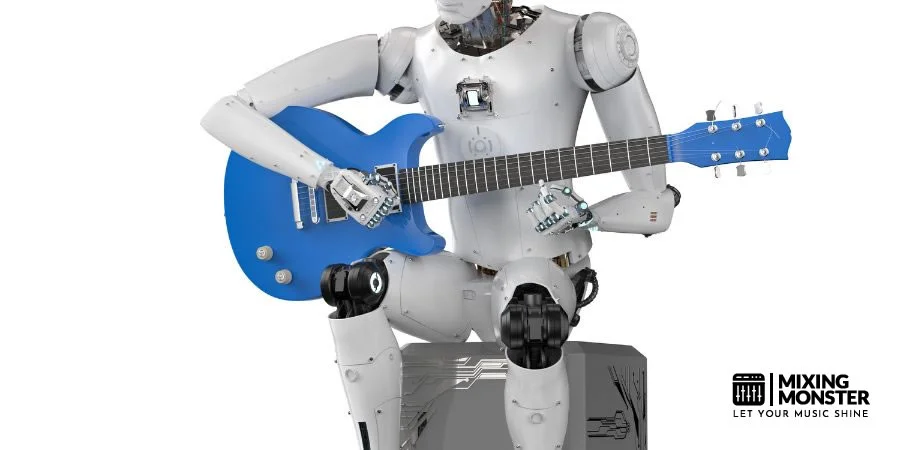
Neural networks form the backbone of modern AI music generation systems. These networks consist of interconnected layers that process musical information much like the human brain processes patterns. Deep learning architectures like transformers and recurrent neural networks analyze sequential musical data to understand temporal relationships between notes and phrases.
The most advanced systems employ multiple specialized neural networks working together. MusicLM uses three distinct token types to model sound: textual-fidelity tokens for audio-text representation, semantic tokens for long-term coherence in composition, and acoustic tokens capturing fine-grained details. This multi-layered approach allows artificial intelligence to handle different aspects of music composition simultaneously.
Transformer-based models have become particularly effective for music generation. These architectures excel at capturing long-range dependencies in musical sequences, which is essential for maintaining coherent structure across extended compositions. They process musical elements as discrete tokens, enabling precise control over rhythm, pitch, and timbre.
Training Data, Datasets, And Pattern Recognition
AI music systems learn from enormous datasets of recorded music. MusicLM was trained on 280,000 hours of music, while MuLan used soundtracks from 44 million online music videos alongside text descriptions. The scale of training data directly impacts the quality and diversity of generated output.
Pattern recognition algorithms identify recurring structures in music theory elements, including chord progressions, melodic contours, and rhythmic patterns. These systems analyze how different musical components interact across genres and styles. The AI learns statistical relationships between notes, timing, and dynamics without necessarily understanding music in the way humans do.
Data preprocessing converts audio into machine-learning-ready formats. Spectrograms represent audio as visual patterns of frequency over time, while techniques like residual vector quantization compress audio data into discrete token streams. These representations allow neural networks to process musical information efficiently.
Discover Best Audio Gear & Equipment


Generative Models Vs Rule-Based Systems
Generative models create music by learning probability distributions from training data. These systems generate music that resembles their training set without following explicit rules. Diffusion models, like those used in Stable Audio, gradually refine random noise into coherent audio through iterative denoising steps guided by learned patterns.
Rule-based systems follow predetermined compositional rules derived from music theory. They apply explicit constraints about harmony, voice leading, and form. While these systems produce theoretically correct music, they often lack the creative flexibility of generative models.
Modern approaches increasingly combine both methods. Integrating musical knowledge and theory into AI models improves output quality and coherence. Hybrid systems use generative models for creative exploration while applying rule-based constraints to ensure musical validity. This combination produces results that are both novel and musically sensible.
Role Of Human Input And Prompt Engineering
Text prompts serve as the primary interface between users and AI music systems. Users describe desired musical characteristics like genre, mood, tempo, and instrumentation. The system interprets these descriptions through joint embeddings that connect natural language with musical features.
Prompt engineering significantly affects output quality. Specific, detailed prompts yield more predictable results than vague descriptions. For example, specifying "uplifting east coast boom-bap hip hop beat" produces more targeted results than simply requesting "hip hop music."
Advanced systems accept multiple conditioning inputs beyond text. MusicLM supports melodic conditioning through humming, whistling, or playing instruments, allowing users to specify musical contour directly. Stable Audio implements timing-conditioning, enabling users to control output duration by providing start time and total length parameters.
Interactive music generation tools enable collaboration between human musicians and AI models throughout the creative process. Users can iteratively refine outputs, adjust parameters, and guide the system toward desired results. This collaborative approach leverages both human creativity and computational power to generate music that neither could produce independently.
Human oversight remains essential for lyrics generation and complex compositional decisions. While AI can produce coherent musical structures, humans typically guide higher-level creative choices about arrangement, emotional arc, and artistic intent.
3
Popular AI Generated Music Tools And Platforms
Modern AI music platforms range from simple prompt-based generators that create complete songs from text descriptions to professional-grade software that integrates with existing production workflows. These tools serve different user needs, from content creators seeking royalty-free background music to professional producers looking for AI-assisted composition capabilities.
Text-To-Music And Prompt-Based Tools
Suno AI leads the text-to-music category, generating complete songs with vocals from simple text prompts. Users type descriptions like "upbeat pop song about summer" and receive fully produced tracks within minutes. The platform excels at creating natural-sounding vocals and professional-quality arrangements across multiple genres.
Udio offers similar text-to-music capabilities with high-quality output and the option to input custom lyrics. The AI interprets text descriptions and translates them into corresponding musical elements effectively. Both platforms function as comprehensive AI song generators that handle melody, harmony, rhythm, and vocal production simultaneously.
As intuitive AI song makers, these prompt-based tools eliminate the need for extensive musical knowledge. They analyze patterns in existing music and apply those learned structures to new compositions based on user inputs.
AI Music Generators For Creators And Brands
Soundraw provides customization options specifically designed for content creators who need royalty-free background music. As a versatile AI music creator, the platform lets users adjust audio blocks, change instrument intensity, and access Pro mode for detailed edits. This level of control makes it valuable for video producers and podcasters.
Beatoven specializes in custom soundtracks with features for creating specific sections like intros, loops, and outros. Users can select genre, mood, and instruments, then adjust the intensity of different elements within each track.
Mubert and Loudly offer quick generation options for creators who prioritize speed over extensive customization. These platforms work well for generating background music quickly, though they offer less control over specific musical elements than more advanced tools.
Your Song Mixed & Mastered By Mixing Monster


Open-Source Vs Commercial Music AI Software
Commercial platforms like AIVA offer extensive control with professional-grade interfaces that resemble traditional digital audio workstations. AIVA allows users to adjust nearly every aspect of a composition, from instrumentation to tempo, and generate multiple variations for comparison. The platform charges subscription fees but provides sophisticated composition capabilities.
Several platforms offer free plan options. Creators looking for a free AI music generator can test Suno, Beatoven, AIVA, Loudly, Soundful, or Mubert through their limited free tiers. These free versions typically restrict the number of generations or impose usage limitations on commercial projects.
Open-source alternatives provide transparency in how AI models generate music, though they often require more technical knowledge to implement. Commercial platforms prioritize user-friendly interfaces and handle the technical complexity behind the scenes.
Integration With DAWs And Creative Workflows
Professional music producers can export tracks from AI generators into traditional digital audio workstations for further refinement. Musicful and similar platforms allow users to generate initial compositions and then import them into software like Logic Pro, Ableton Live, or FL Studio for detailed editing.
This hybrid workflow combines AI-generated foundations with human creativity and technical expertise. Producers use AI tools to quickly generate melodic ideas, chord progressions, or complete arrangements, then apply their own mixing, mastering, and production techniques.
Some platforms include features beyond basic generation. AI lyrics generators help write song text, while vocal remover tools extract instrumental tracks from existing songs. These supplementary features fit into broader creative workflows, letting creators use AI assistance at multiple stages of music production.
4
Benefits And Opportunities Of AI Generated Music
AI-generated music delivers tangible advantages in production speed, affordability, and accessibility while opening doors to innovative creative applications. These systems enable rapid, scalable content creation and provide tools previously available only to professionals with significant resources.
Speed, Scalability, And Cost Efficiency
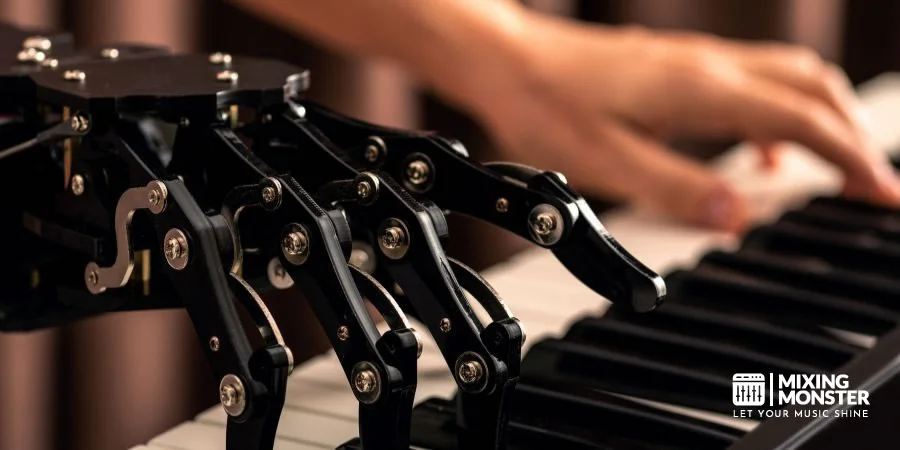
AI music generators produce complete tracks in minutes, not the hours or days required for traditional composition. This faster workflow lets content creators generate multiple background-music variations quickly, testing different moods and styles without extra studio time or musician fees.
The scalability of AI-generated music eliminates bottlenecks in production pipelines. A single user can create dozens of custom soundtracks simultaneously, meeting tight deadlines that would require hiring multiple composers using conventional methods. Many platforms offer daily free credits, allowing creators to experiment with different outputs before committing to paid plans.
Cost reduction represents another significant benefit. Traditional music production involves expenses for studio rental, equipment, session musicians, mixing engineers, and mastering specialists. AI tools consolidate these functions into affordable software subscriptions or pay-per-track models, making professional-quality audio accessible to individuals and small businesses operating on limited budgets.
Democratizing Music Creation
Modern AI tools remove technical barriers that previously prevented non-musicians from creating original compositions. With an accessible AI song maker or AI music creator, users without formal training in music theory can produce polished tracks using simple parameters or text descriptions.
This accessibility transforms who can participate in music creation. Independent game developers, podcasters, and small marketing teams generate custom audio without hiring professional composers. The democratization of music production lets creators worldwide add original soundtracks to their projects, regardless of musical background or location.
Educational opportunities expand as learners experiment with AI tools to understand composition, arrangement, and production concepts. These platforms serve as teaching aids, letting students hear their creative ideas realized immediately and iterate based on the results.
Related Articles


New Creative Possibilities And Genres
AI systems excel at generating unexpected combinations of musical elements that human composers might not naturally consider. These tools analyze vast libraries of existing music to identify patterns and create hybrid styles that blend genres in novel ways.
Artists use AI as a collaborative partner to overcome creative blocks and explore unfamiliar territories. The technology suggests chord progressions, melodic variations, and instrumental arrangements that inspire new compositional directions. Some producers integrate AI-generated segments into their work, refining and personalizing the output to create unique final products.
Platforms like Endel and AIVA demonstrate AI's capability to produce specialized music types, including adaptive soundscapes that respond to user activity, time of day, or biometric data. These personalized experiences represent entirely new categories of musical content that traditional composition methods cannot efficiently replicate.
Use Cases In Marketing, Games, And Film
Marketing teams leverage AI-generated music to produce background music for advertisements, social media content, and promotional videos without licensing fees or copyright complications. Brands create audio identities tailored to specific campaigns, adjusting mood and tempo to match target demographics and platform requirements.
Game developers benefit from AI's ability to generate adaptive soundtracks that respond to player actions and game states. Rather than looping static tracks, AI systems create dynamic audio that intensifies during action sequences and calms during exploration phases. This responsiveness enhances immersion while reducing the cost of commissioning extensive original scores.
Film and video producers use AI to generate temporary music for rough cuts during editing. Some independent filmmakers employ these tools for final soundtracks when budgets cannot accommodate professional composers.
A music video generator integrated with AI audio tools enables complete audiovisual content creation within unified platforms, streamlining workflows for content creators who manage multiple production aspects simultaneously.

5
Challenges And Limitations Of AI Generated Music
AI music generation faces significant obstacles in quality consistency, dataset biases, market saturation, and technical accessibility that affect both creators and listeners.
Quality, Originality, And Emotional Depth
AI-generated music struggles to consistently produce professional-quality songs that match human compositions in emotional resonance and creative innovation. While AI systems excel at pattern recognition and technical execution, they often produce tracks that sound formulaic or lack the nuanced emotional expression that human artists bring to their work.
The core limitation is that AI processes music as statistical patterns rather than meaningful artistic statements. AI-generated music still has technical limitations and can produce unexpected or undesirable results. When AI systems sample existing music, they engage in pattern recognition and statistical recombination rather than making conscious choices about meaning, context, and artistic expression the way human artists do.
Most AI-generated tracks lack the subtle imperfections and spontaneous creative decisions that give human music its distinctive character. Professional quality requires not just technical competence but also the ability to take artistic risks and make unconventional choices that AI systems are not programmed to pursue.
Bias In Training Data And Style Repetition
Training datasets significantly influence the output quality and diversity of AI music generators. Systems trained predominantly on certain genres or time periods tend to reproduce those styles repeatedly, creating homogeneous output that reflects the biases present in their training data.
When AI models learn from limited or imbalanced datasets, they perpetuate existing patterns rather than generating truly novel compositions. This creates a feedback loop where popular styles become overrepresented while underrepresented genres and cultural traditions receive inadequate attention.
The repetition problem extends beyond genre to include melodic patterns, chord progressions, and rhythmic structures. AI systems often recycle similar musical elements across different compositions because they identify these patterns as statistically successful rather than artistically limiting.
Oversaturation of Music Content
The ease of generating AI music has led to unprecedented content volume flooding streaming platforms and music libraries. This saturation creates discovery challenges for both human artists and listeners seeking quality content.
As AI generation becomes more accessible, the barrier to creating and distributing music effectively disappears. This democratization produces positive outcomes but also means platforms must process exponentially more submissions, while listeners face increasingly difficult curation decisions.
The volume problem compounds existing challenges in the music industry where algorithmic recommendations and playlist placements already determine commercial success. Human artists now compete not just with other musicians but with endless AI-generated alternatives flooding the same digital spaces.
Technical Constraints And Learning Curves
AI music generation faces technical limitations that restrict accessibility and usability for many potential users. The software requires substantial computing resources, specialized knowledge, and time investment to produce usable results.
Most AI music tools require technical proficiency beyond traditional music production skills. Users must understand parameters like model training, dataset preparation, and output refinement that differ significantly from conventional digital audio workstation workflows.
Common technical barriers include:
- High computational requirements for model training and generation
- Complex interfaces requiring programming or machine learning knowledge
- Limited real-time generation capabilities
- Inconsistent output quality requiring extensive manual refinement
- Compatibility issues with standard music production software
The learning curve discourages adoption among musicians who lack technical backgrounds, creating a divide between those who can leverage AI tools effectively and those who cannot access these capabilities.

6
Copyright, Ethics, And Legal Issues In AI Generated Music
AI-generated music exists in a complex legal landscape where copyright protection requires human authorship, training datasets often contain copyrighted works without permission, and human artists face economic threats from unlicensed AI reproductions of their creative output.
Who Owns AI Generated Music?
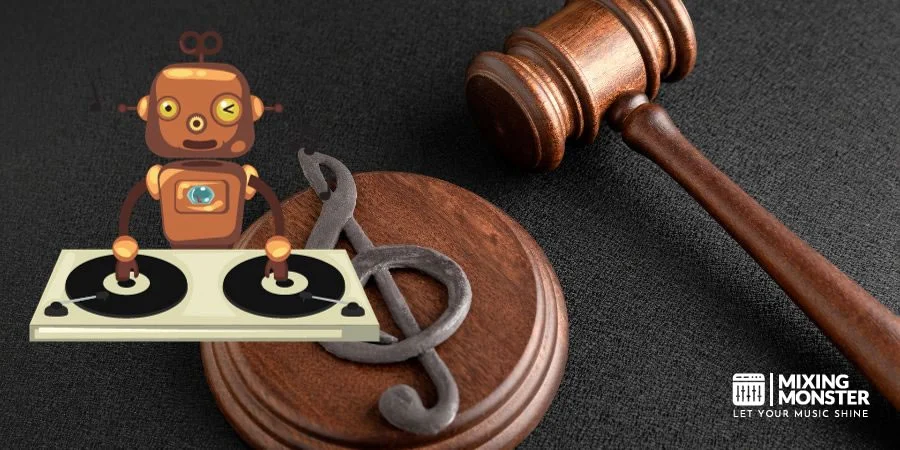
The U.S. Copyright Office maintains that works created solely by AI without human creative input cannot receive copyright protection. Only music with meaningful human contributions qualifies for copyright under current law.
When a person uses AI as a tool while making creative decisions about melody, arrangement, or composition, they may own the copyright to those human-authored elements. The purely AI-generated portions remain unprotected and enter the public domain immediately.
This creates a complex ownership situation. A musician who prompts an AI system and then edits the output may claim copyright over their modifications but not the original AI generation. Some platforms like Mureka address this by issuing full commercial licensing rights for every track generated, allowing users to distribute and sell AI-created music without royalty obligations.
The absence of copyright protection for pure AI output means this music functions similarly to copyright-free music in practice, though the legal distinction matters for enforcement and commercial applications.
Training Data And Copyrighted Works
Major music labels including Universal Music Group, Sony Music, and Warner Music Group filed lawsuits against AI music platforms Suno and Udio in 2024, seeking damages up to $150,000 per infringing song. The lawsuits allege these companies copied massive quantities of copyrighted recordings and lyrics without licenses to train their AI models.
AI developers need to secure proper licenses for source material used in training, including musical compositions and sound recordings. Without these agreements, companies face potential liability for copyright infringement.
The fair use defense remains contested. Some argue that transformative AI training qualifies, but recent court decisions have narrowed this doctrine's application to commercial AI music generation. If AI output closely resembles copyrighted songs by incorporating distinctive melodies or lyrics, it may constitute an unauthorized derivative work regardless of the training methodology.
Ethical Concerns For Human Artists
The human authorship requirement enables a market of unregulated AI-generated music, creating economic concerns for artists who cannot protect their work from AI-induced infringements. Musicians lose both attribution and compensation when AI systems replicate their vocal styles or compositional techniques without permission.
Artists face particular harm when AI platforms generate music that mimics their distinctive sound. Detection tools like CoverNet help identify unauthorized AI reproductions, but enforcement remains challenging at scale.
The ethical issues extend beyond economics to questions of creative integrity. When AI systems train on an artist's entire catalog without consent, they effectively commodify years of creative development into algorithmic patterns that anyone can exploit for commercial use.
Current Regulations And Legal Grey Areas
The proposed Generative AI Copyright Disclosure Act would require AI companies to disclose all copyrighted works used in training and maintain public databases for transparency. This legislation aims to ensure fair compensation for creators whose work feeds AI systems.
Current legal frameworks struggle to address novel issues around whether AI-generated music qualifies as creative in the legal sense. Courts must determine whether using copyrighted training data constitutes infringement and whether AI outputs that resemble existing songs violate derivative-work rights.
Musicians distributing AI-generated tracks as royalty-free music or for commercial use face uncertainty about potential infringement claims. The legal status depends on whether the AI training involved licensed material and whether the output is substantially similar to protected works. Until courts establish clear precedents through pending lawsuits, significant grey areas persist around licensing requirements and liability.

7
Impact Of AI Generated Music On Artists And Industry
AI-generated music is reshaping traditional creative processes and revenue streams while forcing musicians, producers, and industry executives to adapt to new technological capabilities. The transformation extends from studio workflows to streaming economics, affecting how artists earn income and maintain their professional identities.
Changing Roles Of Musicians And Producers
Musicians are increasingly incorporating AI tools into their creative workflows rather than abandoning traditional methods entirely. Producers use AI to generate backing tracks, create melody variations, and automate mixing processes. This shift lets artists spend more time on conceptual direction and performance while delegating repetitive technical work to algorithms.
The skill set required for modern music production now includes understanding AI tools and their limitations. Artists who master these technologies gain efficiency advantages over those who resist adoption. However, platforms like Spotify increasingly integrate AI-generated music to cut costs, which directly shrinks royalty streams for human creators.
Studio engineers and mixing professionals face particular pressure as AI automation takes over tasks that once required specialized expertise. Some producers transition into roles as AI tool supervisors or prompt engineers who guide algorithmic outputs toward desired results.
AI As A Creative Partner, Not A Replacement
Many artists view AI as a collaborative tool that expands creative possibilities rather than a threat to their livelihood. Musicians use generative systems to overcome writer's block, explore unconventional chord progressions, or experiment with genres outside their expertise. The technology serves as a brainstorming assistant, suggesting ideas that human creators can refine.
AI excels at pattern recognition and recombination but lacks the lived experiences and emotional depth that inform meaningful artistic expression. Artists who combine algorithmic capabilities with human intuition create work that leverages both computational power and authentic emotional resonance.
Distinguishing between human and machine-generated music becomes increasingly difficult as generative AI grows more sophisticated. This blurring of boundaries raises questions about authenticity but also demonstrates the technology's maturation. Successful artists establish clear creative visions that AI systems help execute rather than replacing the artist's conceptual role.
Industry Disruption And New Business Models
The proliferation of AI-generated music floods streaming platforms and social media with new songs, creating competition for listener attention and playlist placement. Record labels experiment with AI-produced catalog music for background listening categories like lo-fi beats and ambient soundscapes.
Licensing models face significant challenges as copyright frameworks struggle to address AI-trained systems. Questions about who owns AI-generated compositions and whether training on copyrighted material constitutes infringement remain legally contested. Artists and rights holders negotiate new agreements that account for algorithmic creation.
Revenue distribution shifts as platforms potentially favor lower-cost AI content over human-produced music. Independent artists find both opportunities and obstacles: AI tools democratize production capabilities but increase market saturation. Some musicians monetize their expertise by offering AI-assisted production services or creating custom training datasets.
Listener Perception And Trust In AI Music
Audience reactions to AI-generated music vary significantly based on context and disclosure. Listeners often accept algorithmic composition for functional music like workout playlists or study backgrounds but prefer human artists for emotionally resonant content. Transparency about AI involvement influences trust levels and perceived authenticity.
Some fans actively seek out AI-generated tracks as novelty items or technological demonstrations. Others reject algorithmic music entirely as inauthentic or culturally diluted. The distinction matters more for artist branding and fan relationships than for passive listening scenarios.
Quality perception depends heavily on production values and genre expectations. Well-produced AI tracks in electronic genres gain acceptance more readily than attempts at singer-songwriter or jazz compositions where personal expression drives listener connection. Marketing strategies increasingly emphasize human creative direction even when AI assists production.
8
Future Trends Of AI Generated Music
AI music technology is evolving toward highly personalized listening experiences, real-time interactive compositions, and deeper human-AI creative partnerships. These developments will reshape how music is created, consumed, and integrated into daily life.
Hyper-Personalized Music Experiences
AI systems will generate music tailored to individual listeners based on their mood, activity, and preferences. Streaming platforms are already developing tools that analyze user behavior patterns to create custom soundtracks that adapt throughout the day.
Spotify is working on remixing capabilities as part of a higher-priced super premium tier that will allow fans to interact with licensed music in personalized ways. These systems will use biometric data from wearables to adjust tempo, key, and instrumentation in real time.
The technology will extend beyond simple playlists. AI will compose entirely new tracks that match specific emotional states or enhance productivity during work sessions. Medical and therapeutic applications will use personalized compositions to support mental health treatment and stress reduction.
Real-Time Adaptive And Interactive Music
Music will respond dynamically to user actions and environmental factors. Gaming and virtual reality platforms will implement soundtracks that change based on player decisions, location within digital spaces, and intensity of action sequences.
Live performances will incorporate AI systems that improvise alongside human musicians. These tools will analyze harmonic progressions and rhythmic patterns in milliseconds to generate complementary parts that enhance rather than replace human creativity.
Key applications include:
- Fitness apps that adjust music tempo to match running pace
- Smart home systems that modify ambient music based on time of day and room occupancy
- Educational platforms that generate practice exercises tailored to student skill levels
- Video content with soundtracks that adapt to viewer emotional responses
Collaboration Between Humans And AI
Professional musicians are incorporating AI tools into their creative workflows. Recording Academy CEO Harvey Mason Jr. said every songwriter and producer he knows has used AI tools, from generating entire tracks to solving specific creative challenges like completing a bridge section or refining a chorus melody.
Suno's generative audio workstation represents a shift toward professional-grade AI tools designed for studio environments. These platforms help musicians overcome creative blocks while maintaining artistic control over final compositions.
The partnership model allows artists to use AI-generated material as inspiration or a launch point, then rework those ideas with human interpretation. This hybrid approach preserves artistic authenticity while expanding creative possibilities beyond traditional methods.
Long-Term Cultural And Artistic Impacts
AI is creating potentially new music genres as artists experiment with the technology and develop novel sonic combinations impossible through conventional instruments. These emerging styles will blend characteristics from multiple genres in ways that challenge traditional categorization.
The democratization of music production will enable more people to create professional-quality compositions without formal training or expensive equipment. This accessibility will diversify the types of voices and perspectives represented in mainstream music.
However, platforms are establishing boundaries for AI content. iHeartRadio pledged not to use AI-generated personalities or play AI music featuring synthetic vocalists pretending to be human through its "Guaranteed Human" program. Such policies will shape which AI applications gain widespread acceptance and which face industry resistance.
Human musicianship will remain valued for live performances, emotional authenticity, and cultural storytelling that AI systems cannot replicate. The distinction between AI-assisted and fully AI-generated works will become an important factor in how audiences perceive and value musical content.
9
Key Takeaways For AI Generated Music
AI-generated music uses algorithms and machine learning to compose, produce, and master complete musical tracks without direct human involvement. Early AI music systems produced brief audio samples under one minute, but modern technology now creates full-length compositions with complex instrumentation.
Primary Benefits:
- Enhanced creativity through AI-generated suggestions that help artists overcome creative blocks
- Increased efficiency by automating repetitive tasks like mixing and mastering
- Greater accessibility that allows musicians of all skill levels to produce professional-quality music
The technology analyzes musical patterns to generate original compositions across various styles with minimal user input. Platforms like AIVA, Amper, and Endel demonstrate successful commercial applications of AI music generation.
Critical Challenges:
- Copyright and intellectual property rights remain unclear
- Questions about authenticity and artistic attribution persist
- Concerns about potential displacement of human musicians continue
AI music significantly impacts listener experiences through personalized playlists and adaptive soundscapes. Streaming platforms employ sophisticated algorithms that curate content based on individual preferences, moods, and listening patterns.
The future of AI-generated music points toward collaboration rather than replacement of human artists. The technology serves as a creative partner, combining human emotion with machine precision. Interactive music experiences, real-time personalized concerts, and cross-media integrations represent emerging possibilities for this evolving field.

Frequently Asked Questions
1
How does an AI music generator create songs with vocals?
AI music generators analyze massive datasets of existing songs to identify patterns in melodies, harmonies, rhythms, and vocal characteristics. The system uses machine learning models trained on copyrighted and public domain recordings to understand how musical elements combine.
When creating vocals, the AI synthesizes singing voices by processing audio data that includes pitch, tone, timbre, and pronunciation patterns. Some platforms allow users to input lyrics or text prompts, which the AI then sets to generated melodies with synthesized vocal performances.
The process differs from traditional recording because no human physically sings or plays instruments. Instead, algorithms generate the audio output based on learned patterns from training data.
2
Which AI music generator is considered the best in terms of quality and features?
Platforms like Suno, Udio, Boomy, and Google's MusicLM represent leading options in the AI music generation space. Each offers different capabilities depending on user needs and technical requirements.
Suno and Udio have gained attention for producing high-quality outputs that closely mimic professional recordings. However, both companies face major lawsuits from music industry giants alleging they used copyrighted works in their training data without permission.
The "best" generator depends on specific use cases, including desired music style, vocal quality requirements, customization options, and legal considerations. Users should evaluate platforms based on output quality, licensing terms, and transparency about training data sources.
3
Can I use AI-generated music for commercial purposes without facing legal issues?
Commercial use of AI-generated music carries legal risks that depend on several factors. Copyright protection requires human authorship under current U.S. law, meaning purely AI-created music cannot be copyrighted.
If the generated music incorporates elements from copyrighted works used in training data, it may constitute infringement. The music industry has filed lawsuits seeking up to $150,000 per infringing song against AI platforms that allegedly used copyrighted recordings without permission.
Users should verify that their chosen platform provides proper licensing and uses legally sourced training data. Documenting any human creative contributions to the final work strengthens copyright claims on those specific elements. Commercial deployment requires careful review of the platform's terms of service and any restrictions on usage rights.
4
Are there any AI music generators that allow for unlimited track creation without fees?
While completely free AI music generators with unlimited access are rare, many platforms offer starter credits or ad-supported tiers. Most full-featured tools reserve unlimited generation for paid subscription tiers.
Free versions often restrict track length, audio quality, download limits, or commercial usage rights. Premium subscriptions remove these constraints but require monthly or annual fees ranging from modest to substantial.
Users seeking unlimited creation without costs face trade-offs in quality, licensing clarity, and legal protections. Paid platforms generally offer better rights documentation and more robust legal frameworks for commercial use.
5
What are the capabilities of AI music generators in translating text to music?
Text-to-music AI systems convert written prompts or descriptions into audio compositions. Users input parameters like genre, mood, tempo, instrumentation, or narrative themes, and the algorithm generates corresponding musical output.
These systems interpret natural language instructions to create melodies, harmonies, and arrangements that match the specified characteristics. Some platforms accept lyrical text that the AI sets to music with synthesized vocals.
Translation accuracy depends on prompt specificity and the sophistication of the underlying model. More detailed descriptions generally produce results closer to user intentions, though interpretation varies between platforms.
6
How can AI music generators be utilized by those with limited musical training?
AI music tools democratize composition by eliminating technical barriers that traditionally required years of training. Users without knowledge of music theory, instrument proficiency, or production software can generate complete tracks through simple text prompts or interface selections.
The platforms automatically handle complex tasks like chord progressions, melodic development, arrangement, and mixing. This accessibility allows non-musicians to create background music for videos, podcasts, games, or other projects without hiring composers or licensing existing tracks.
However, limited musical knowledge may make it harder to evaluate output quality or refine results effectively. Users still benefit from understanding basic concepts like tempo, key, and genre conventions to provide better input parameters and assess whether generated music meets their needs.
You Might Also Be Interested In