





New York compression has become the secret weapon that transforms flat, lifeless mixes into punchy, professional productions that command attention.
New York compression is a parallel compression technique that blends an unprocessed audio signal with a heavily compressed version of the same signal, allowing engineers to maintain natural dynamics while adding punch and density.
This dynamic range compression technique originated in the Dolby A Noise Reduction circuitry in the mid-1960s but gained prominence in New York City studios during the 1990s. The method became popular among producers working in pop, rock, and early hip-hop genres.
It is a favorite among mix engineers who want to avoid the artifacts of heavy downward compression. Instead, it functions more like upward compression by bringing up the lower-level details of a sound. This provides a distinct alternative to standard downward compression, which focuses purely on reducing the loudest parts of the signal.
Understanding how to properly implement this mixing technique for aggressive drums and other instruments can elevate any production from amateur to professional quality. This comprehensive guide explores the fundamental setup process, reveals the best applications for different instruments, and provides advanced techniques that top mixing engineers use to create chart-topping records.
Discover specific plugin recommendations, learn proper signal routing techniques, and master balancing compressed and uncompressed signals for maximum impact.
Key Takeaways / TL;DR
- New York compression blends compressed and uncompressed signals as a form of dynamic range compression to maintain dynamics while adding punch and density
- This technique works exceptionally well on drums, vocals, bass, and mix bus applications for enhanced loudness and cohesion
- Modern plugins with wet/dry controls simplify the setup process compared to traditional send/return routing methods

1
What Is New York Compression In Audio Mixing?
New York compression is a parallel compression technique that blends heavily compressed audio with the original, unprocessed signal. This method allows engineers to add punch and density while preserving the natural dynamics of the source material.
The Origins Of The Technique
Parallel compression developed during the analog era when engineers discovered they could route audio signals to multiple destinations simultaneously. Early practitioners used hardware mixing consoles to send the same signal to different compressors and blend the results.
The technique gained prominence in professional recording studios during the 1980s and 1990s. Engineers found that combining compressed and uncompressed signals created more impactful mixes than traditional serial compression alone.
Hardware limitations actually sparked creativity in this area. Analog consoles made it relatively easy to create auxiliary sends and returns. This infrastructure naturally supported the development of parallel processing techniques.
Why It's Called "New York Compression"
The technique earned its name from the competitive music production environment of New York City in the late 20th century. New York's vibrant music scene fostered an environment where audio engineers continually sought new ways to make their mixes stand out.
Studios in Manhattan and Brooklyn became testing grounds for innovative mixing approaches. Engineers working on hip-hop, R&B, and pop records needed techniques that could deliver commercial loudness without sacrificing musical dynamics.
The name stuck as the technique spread beyond New York's borders. Engineers who learned the method in New York studios carried it to other markets, always crediting its geographic origins.
The Core Concept Of Parallel Compression
Parallel compression blends a dry signal with a heavily compressed version of the same audio source. The dry signal maintains the original transients and dynamics, while the compressed signal adds sustain and body.
Engineers typically use aggressive compression settings on the parallel channel.
Common settings include:
- Ratio: 6:1 to 20:1
- Attack: 1-30ms (fast to medium)
- Release: 50-300ms
- Threshold: -15dB to -25dB
The compressed signal gets blended underneath the original at a lower level. This creates the perception of increased loudness without the obvious artifacts of heavy direct compression.
Key Benefits For Modern Mixing
Modern digital mixing environments make parallel compression more accessible than ever. Engineers can easily duplicate tracks or use auxiliary sends to create the necessary signal routing.
Dynamic Range Preservation: The technique maintains the original signal's punch while adding sustained energy. Transients remain intact because they pass through the uncompressed channel.
Increased Perceived Loudness: Parallel compression increases perceived loudness without pushing limiters or causing obvious distortion. The blend creates density that translates well across different playback systems.
Versatile Application: The technique works effectively on drums, vocals, bass, and full mixes. Engineers can tailor the compression characteristics to match different source materials and musical styles.

2
How To Apply New York Compression In Your Mix
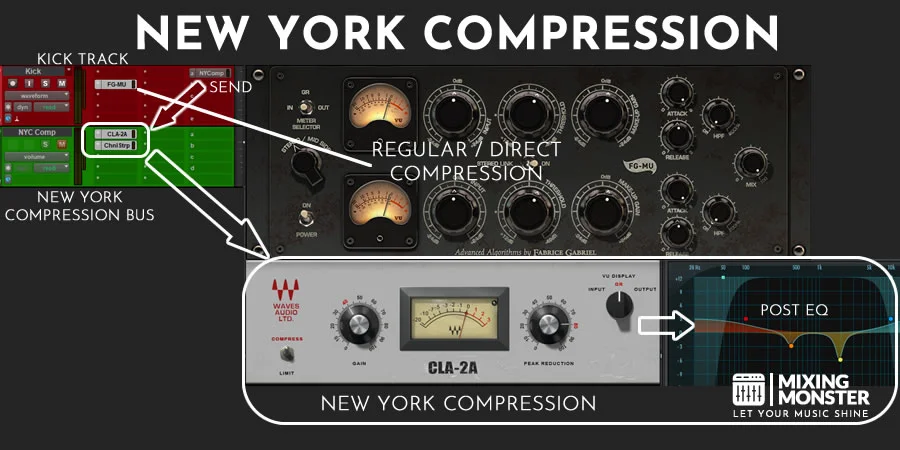
Learning how to use parallel compression effectively requires proper bus routing, careful compressor selection, and precise signal balancing. This setup allows you to build a powerful parallel compression chain that enhances your mix. The technique demands attention to gain reduction settings and aux send levels to achieve the desired punch.
Setting Up Parallel Compression Buses
Engineers can establish parallel compression using three primary methods. The most straightforward approach is to duplicate the original track and compress the copy while leaving the original untouched.
Aux Send Method:
- Create a new aux track or return channel in the DAW
- Route the source track to the aux track via a pre-fader send
- Insert the compressor on the return channel
- Adjust the send level to control how much signal feeds the compressor
Track Duplication Method:
- Duplicate the original audio track
- Apply compression only to the duplicated track
- Use channel faders to balance the two signals
- Pan both tracks identically to maintain the stereo image
The aux send approach offers greater flexibility for processing multiple sources simultaneously. Engineers can send drums, bass, and vocals to the same parallel compression bus for cohesive treatment.
Modern DAWs make it easy to create buses and adjust routing during mixing. The key lies in maintaining clean signal paths and avoiding phase issues between the parallel channels.
Choosing The Right Compressor Plugins Or Hardware
Compressor selection significantly impacts the character of the parallel compression effect. Different compressor types produce distinct sonic signatures that suit various musical applications.
Aggressive Digital Compressors:
- Fast attack times for transient control
- High ratio settings (8:1 or higher)
- Minimal threshold settings for heavy gain reduction
Analog-Modeled Compressors:
- VCA compressors for punch and clarity
- FET compressors for aggressive coloration
- Optical compressors for smooth, musical compression
Engineers often favor compressors with a built-in mix knob for simplified workflow. This mix knob handles the parallel routing internally, eliminating the need for complex bus setups.
Hardware compressors like the DBX 160X or SSL bus compressor remain popular choices for their distinctive sound characteristics. The compressed signal benefits from the harmonic saturation these units provide.
Essential Compressor Settings:
- Attack: 1-10ms for transient preservation
- Release: 100-300ms for natural decay
- Ratio: 4:1 to 10:1 for parallel applications
- Threshold: -20dB to -10dB for consistent triggering
Discover Best Audio Gear & Equipment


Balancing Dry And Compressed Signals
The blend between compressed and uncompressed signals determines the effectiveness of New York compression. Engineers must carefully balance these elements to achieve the desired impact without overwhelming the mix.
Start with the compressed signal at 100% wet to dial in the compression settings. Focus on achieving heavy, but musical, gain reduction before reintroducing the dry signal into the blend.
Signal Balance Guidelines:
- Drums: 70% dry, 30% compressed for natural punch
- Vocals: 80% dry, 20% compressed for subtle enhancement
- Bass: 60% dry, 40% compressed for sustained weight
The compressed signal should enhance rather than replace the original dynamics. Engineers can use automation to adjust the parallel blend during different song sections.
Monitor the combined signal on both speakers and headphones to ensure translation across playback systems. The parallel compression should add body and presence without creating obvious pumping artifacts.
Phase alignment between the dry and compressed signals prevents cancellation issues. Most DAWs provide delay compensation, but manual adjustment may be necessary when using external hardware.
Avoiding Over-Compression Pitfalls
Excessive parallel compression creates more problems than benefits in modern mixes. Engineers must recognize the warning signs and implement strategies to maintain musical results.
Common Over-Compression Symptoms:
- Audible pumping or breathing effects
- Loss of transient clarity and punch
- Reduced stereo width and imaging
- Competing frequency buildup in the mix
Prevention Strategies:
- Use moderate compression ratios (4:1 to 6:1)
- Set longer release times for natural decay
- Monitor gain reduction meters during loud passages
- A/B compare with bypassed compression frequently
The goal is to enhance the source material rather than dramatically alter its character. Compression settings should complement the original dynamics while adding controlled density.
Engineers should pay attention to how parallel compression interacts with other elements of the mix. Heavy compression on drums can cause masking issues with bass frequencies or vocal clarity.
Regular breaks during mixing sessions help maintain objective judgment about compression amounts. Fresh ears often reveal over-compression that becomes normalized during extended work periods.

3
Best Use Cases For New York Compression
New York compression excels in situations where audio tracks need both punch and dynamics preserved simultaneously. The technique works particularly well on drums, vocals, bass, and full mix buses where traditional compression would sacrifice too much of the original character.

Punchier Drums And Percussion
Drum tracks benefit most from the technique because they contain sharp transients that regular compression often diminishes. Parallel compression on drums adds weight and sustain while preserving the initial attack.
Snare drums respond exceptionally well to this approach. Engineers can apply heavy compression with fast attack and release times on the parallel channel. This creates a dense, sustained sound that blends with the natural crack of the original snare.
Kick drums gain significant low-end power through parallel processing. The compressed signal fills out the tail of each hit without reducing the punch that cuts through dense mixes.
For drum overheads, parallel compression adds cohesion to the entire kit. It helps glue individual elements together while maintaining the spatial information captured by the overhead microphones.
|
Drum Element |
Typical Settings |
Benefits |
|
Snare |
Fast attack, medium release |
Sustain + crack |
|
Kick |
Medium attack, slow release |
Power + punch |
|
Overheads |
Slow attack, medium release |
Glue + space |
The technique works across multiple music genres, from rock's aggressive sound to hip-hop's punchy beats.
Adding Warmth To Vocals
Vocal tracks often require delicate handling to maintain their natural character. Parallel compression provides controlled color without overwhelming the original performance.
Lead vocals benefit when the parallel channel uses slower attack times and moderate ratios. This preserves the initial consonants while adding body to sustained notes.
Aggressive compressor settings on the parallel channel can add character without making the vocal sound over-processed. Engineers often push the threshold low and use high ratios on the wet signal.
The dry signal maintains clarity and intelligibility. Meanwhile, the compressed version adds density and presence, helping vocals sit properly in busy arrangements.
Backup vocals and vocal stacks respond well to parallel treatment. The technique creates fullness without reducing the clarity needed for harmonic content to remain distinct.
Colored compressors with tube or transformer modeling work particularly well for this application.
Your Song Mixed & Mastered By Mixing Monster


Enhancing Bass And Low-End Energy
Bass guitar tracks, especially direct-input recordings, often lack the natural compression that occurs with amplifier recording. Parallel compression recreates this effect digitally.
DI bass tracks benefit from medium attack settings that allow the initial pluck to pass through. Long release times maintain note sustain throughout each note's duration.
The compressed channel fills gaps between notes and adds harmonic content. This creates a more consistent low-end foundation without sacrificing the attack that defines each note's beginning.
Synth bass and electronic bass sounds gain additional weight through parallel processing. The technique works particularly well when the original sound feels thin in the mix context.
Low-frequency instruments require careful monitoring during parallel compression setup. Too much compressed signal can create muddiness in the mix's foundation.
Gluing The Full Mix Together
Mixing bus compression with parallel techniques provides cohesion without the pumping artifacts that traditional bus compression can create. This application requires subtle settings and careful monitoring.
The parallel compressor on the mix bus typically uses slow attack times and gentle ratios. Fast-release settings can add energy, while slower-release settings create more sustained compression.
Stereo imaging remains intact because the dry signal preserves the original spatial relationships. The compressed signal adds density and forward momentum to the entire mix.
This technique works well for music genres that require both dynamics and energy. Rock, pop, and electronic music particularly benefit from parallel mix bus treatment.
Engineers often use analog-modeled compressors for mix bus applications. These add harmonic content, enhancing the gluing effect.

4
Advanced Tips And Tricks For New York Compression
Professional engineers push New York compression beyond basic parallel processing by combining it with multiband techniques, saturation, and strategic EQ choices. These advanced methods preserve dynamic range while creating distinctive sonic signatures that set amateur productions apart from professional ones.
Blending With Multiband Compression
Multiband New York compression targets specific frequency ranges without affecting the entire signal. Engineers split the compressed signal into three or four bands, applying different ratios to each frequency range.
The low frequencies typically exhibit 4:1 to 6:1 ratios, with slower attack times of 30-50ms. Mid frequencies handle 8:1 to 10:1 ratios with faster attacks between 1-5ms. High frequencies use gentler 3:1 to 4:1 ratios to preserve transient detail.
Frequency Band Settings:
- Low (20-200Hz): Slow attack, medium release
- Mid (200Hz-3kHz): Fast attack, quick release
- High (3kHz+): Medium attack, slow release
This approach maintains the punch of drums while controlling muddy low-mids. The technique works particularly well on full mixes where standard broadband compression creates pumping artifacts.
Using Saturation And EQ With Compression
Adding saturation before or after the compressor creates harmonic content that enhances the parallel blend. Tape saturation works best before compression, while tube saturation often sounds better post-compression.
The traditional New York compression technique includes EQ adjustments on the compressed signal. Engineers commonly apply a gentle smile curve with slight high-frequency boosts around 8-12kHz and low-end enhancement below 100Hz.
EQ Chain Order:
- High-pass filter at 40-60Hz
- Compression stage
- Gentle boost at 100Hz (+1-2dB)
- Slight cut at 400-800Hz (-1dB)
- Presence boost at 8-12kHz (+2-3dB)
Saturation plugins like tape emulations add perceived loudness without reducing dynamic range. The harmonics fill gaps in the frequency spectrum while maintaining transient information.
Related Articles
Creative Applications Beyond Standard Mixing
New York compression extends beyond drums and vocals into creative sound design. Reverse compression sends create swelling effects by compressing a reversed audio signal, then flipping it back to normal.
Parallel Processing Variations:
- Frequency-shifted compression: Pitch the compressed signal up or down slightly
- Time-delayed compression: Add 5-20ms delay to the compressed signal
- Stereo width manipulation: Process only mid or side information
Side-chain triggers from other instruments can control the compressor rather than the source material itself. A kick drum might trigger the parallel compression chain on a bass guitar, creating rhythmic pumping effects.
Sound designers use extreme ratios above 20:1 with very fast attacks to create pumping textures. These heavily processed signals blend at low levels to add movement without obvious compression artifacts.

How Top Engineers Use The Technique Differently
Andrew Scheps uses rear bus compression as a variation of the New York technique, applying heavy compression to a mix bus rather than to individual elements. This approach creates cohesion across all mix elements simultaneously.
Professional engineers often use multiple parallel compression stages rather than single heavy compressors. The first stage applies moderate compression (4:1 ratio), while the second stage hits harder (10:1 or higher).
Multi-Stage Setup:
- Stage 1: 4:1 ratio, medium attack, auto release
- Stage 2: 12:1 ratio, fast attack, 100ms release
- Blend: 15% stage 1, 8% stage 2, 100% dry signal
Top music production professionals automate the blend percentages throughout songs. Verses might use 5% compressed signal while choruses push up to 15-20% for additional impact.
Some engineers process the parallel compression through analog hardware summing or tape machines before blending digitally. This hybrid approach combines digital precision with analog character, preserving dynamic range while adding musical compression artifacts.

5
Tools And Plugins For New York Compression
Modern producers have access to numerous compressor plugins designed specifically for parallel compression techniques. Both stock DAW compressors and specialized third-party plugins offer unique features that make implementing New York-style compression more effective and intuitive.
Popular DAW Stock Plugins That Work Well
Pro Tools includes several stock compressors that excel at parallel compression tasks. The Dyn3 Compressor delivers clean gain reduction with precise attack and release controls that work well for drum-bus compression.
Logic Pro's Vintage VCA compressor delivers the analog-style compression characteristics that make New York compression effective. Its transparent sound allows the dry signal to blend seamlessly with the compressed version.
Ableton Live's Compressor device includes a built-in Mix control, eliminating the need for auxiliary sends. Users can dial in heavy compression settings while maintaining the original transients through the dry/wet blend.
Cubase users benefit from the VintageCompressor plugin, which emulates classic hardware units. Its musical compression curve responds well to percussive instruments such as drums and bass guitar.
Hardware Compressors Loved By Engineers
The SSL G-Series Bus Compressor remains the gold standard for New York compression on mix buses. Its gentle ratio and program-dependent release create the glue that holds mixes together while preserving dynamics.
API 2500 compressors offer multiple compression curves and feed-forward/feed-back options. Engineers appreciate its punch and clarity when blending with uncompressed signals.
The Empirical Labs Distressor provides extreme flexibility with its multiple ratio settings and harmonic distortion options. Its aggressive compression characteristics work particularly well on drum rooms and vocal parallel chains.
DBX 160X units deliver fast attack times and musical release curves. Many engineers use them specifically for parallel drum compression because they can add density without losing transient information.
Third-Party Plugins For Precision And Character
Baby Audio's I Heart NY plugin was designed specifically for parallel compression applications. Its XY pad interface allows users to control compression intensity and wet/dry blend simultaneously.
FabFilter Pro-C 2 includes multiple compression styles and a built-in mix control. Its transparent algorithms preserve the character of the original signal while adding the desired compression effects.
Waves SSL G-Master Buss Compressor emulates the famous console compressor used in countless hit records. Its program-dependent release and gentle knee provide musical compression that works well in parallel setups.
Universal Audio's 1176 emulations capture the aggressive compression characteristics of the original hardware. Their fast attack times make them ideal for adding punch to parallel drum and bass tracks.
Free Vs Paid Options For Beginners
Free options include Reaper's ReaComp, which offers comprehensive compression controls and a built-in mix parameter. OrilRiver's Rough Rider provides vintage-style compression with simple controls ideal for learning parallel techniques.
Paid plugins typically offer more sophisticated algorithms and better analog emulations. Specialized parallel compression plugins often include preset systems and visual feedback that accelerate the learning process.
Budget-conscious producers should start with stock DAW compressors before investing in premium options. Most stock compressors can achieve professional parallel compression results when used correctly.
Premium plugins justify their cost through improved sound quality, additional features, and workflow enhancements. They often include modeling of specific hardware units that shaped the original New York compression sound.

6
Key Takeaways For Mastering New York Compression
Start with conservative settings when first implementing New York compression. Begin with a medium attack of 30-50 ms and medium release of 100-200 ms to avoid overprocessing the signal.
Balance is crucial between the compressed and uncompressed signals. Engineers should gradually increase the compressed track's fader from a low level until achieving the desired effect without overpowering the original signal.
Choose the right compressor for the specific application. FET compressors like the 1176 work well for aggressive drum compression, while optical compressors provide smoother results for vocals and acoustic instruments.
Monitor for phase issues during signal blending. Timing differences between the original and compressed tracks can cause unwanted artifacts or reduce low-frequency content.
|
Element |
Best Compressor Type |
Typical Ratio |
|
Drums |
FET |
6:1 - 20:1 |
|
Vocals |
Opto |
3:1 - 5:1 |
|
Mix Bus |
Variable-Mu |
1.5:1 - 4:1 |
EQ the compressed signal when necessary. Adding a high-pass filter to the parallel track prevents low-frequency buildup while maintaining the technique's punch and energy.
Practice restraint to avoid the common overuse mistake. The technique should enhance musicality without making tracks sound lifeless or overly processed.
Experiment with different attack and release settings based on the source material. Faster settings produce more aggressive sounds, while slower settings yield smoother, more transparent results.
Happy New York compressing!

Frequently Asked Questions
1
How does New York compression differ from traditional compression techniques?
New York compression blends compressed audio with the original, unaffected signal in parallel processing chains. Traditional compression applies gain reduction to the entire signal path, thereby losing the original dynamics.
The parallel approach allows mixing engineers to use heavy compression settings while maintaining the transient information from the dry signal. This creates punchy, sustained sounds without the flat character that often results from aggressive traditional compression.
Recording studios implement this technique by duplicating tracks or using auxiliary sends to create separate compressed and uncompressed signal paths. The engineer then balances these signals using channel faders or dedicated mix controls.
2
What are the typical settings for effective New York compression?
Effective New York compression settings typically use fast attack times of 1-10 milliseconds to clamp down on transients aggressively. Release times range from short, pumping effects to longer, sustain-focused settings, depending on the material.
Compression ratios often range from 4:1 to 10:1 or higher since the parallel blend softens the aggressive character. Threshold settings are set low enough to trigger significant gain reduction on most of the signal.
The wet/dry blend usually sits between 20% and 50% compressed signal mixed with the original. This balance point depends on the source material and desired effect intensity. Balancing this mixing technique correctly ensures that the added density doesn't result in the same artifacts as heavy downward compression.
3
In which contexts is New York compression most beneficially applied?
Drums and percussion benefit most from New York compression due to their transient-heavy nature. This mixing technique allows you to thicken the drum sound without sacrificing the initial hit. The method adds weight and sustain while preserving the initial attack that defines percussive sounds.
Vocal processing represents another common application where mixing engineers need controlled compression without losing the natural character. Parallel compression techniques help retain original vocal timbre while adding consistency and presence.
Direct-recorded bass guitar often requires the sustain boost that parallel compression provides. This helps bridge the gap between clean DI signals and the natural compression that occurs in amplified bass recording.
4
Can New York compression be used on all instruments, and what are its limitations?
Most instruments can benefit from New York compression, but results vary significantly based on the source material's dynamic characteristics. Instruments with strong transients like drums, plucked strings, and percussive elements respond most favorably.
Sustained instruments like strings or pads may not show dramatic improvements since they lack the transient content that makes parallel compression effective. The technique works best on sources with clear attack and decay phases.
Recording studio limitations include increased processing power requirements and more complex signal routing. Some mixing engineers find the technique less controllable than traditional compression when precise dynamic control is needed.
5
What are some common misconceptions about using New York compression in mixing?
Many producers believe New York compression automatically makes everything sound better without considering the source material's characteristics. The technique requires appropriate source selection and careful parameter adjustment to achieve musical results.
Some mixing engineers mistakenly assume that higher compression settings always yield better parallel compression results. Excessive compression can destroy the musical character even when blended with the dry signal.
Another misconception involves thinking that parallel compression eliminates the need for traditional compression techniques. Most professional mixes strategically combine both approaches rather than relying solely on parallel compression.
6
How has the application of New York compression evolved in modern music production?
Modern digital audio workstations have simplified New York compression implementation through dedicated plugin controls and preset configurations. Plugin manufacturers now include mix controls that handle parallel processing internally, eliminating the need for complex routing.
Contemporary mixing engineers apply the technique more broadly across different genres and instruments compared to its original drum-focused applications in 1990s New York recording studios. Electronic music production has particularly embraced parallel compression for creative sound design.
Advanced plugin processing now allows for frequency-specific parallel compression and multiband applications that weren't practical with analog equipment. This evolution has expanded the technique's versatility in modern production workflows.