


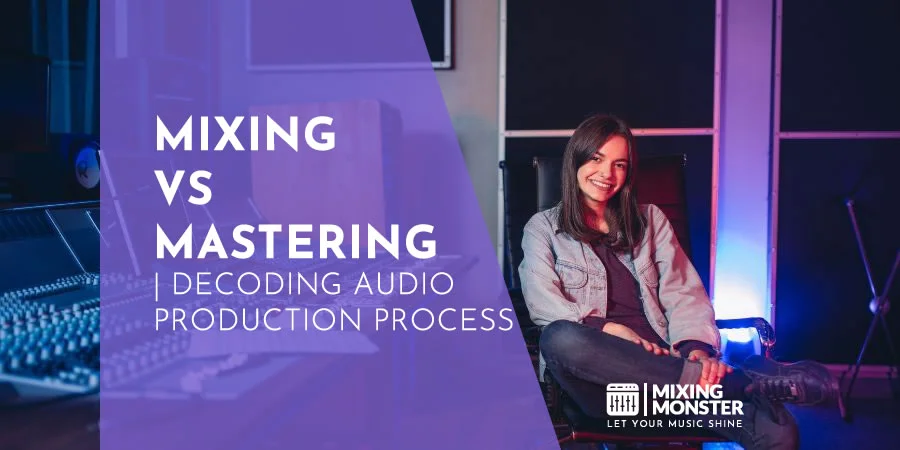



Mixing vs mastering often confuses, yet both play a crucial role in shaping professional music. Understanding the difference between mixing and mastering ensures music sounds clear, consistent, and competitive.
The difference between mixing vs mastering is that they are two distinct stages in the audio production process. Mixing balances individual tracks into a cohesive song, while mastering polishes the finished mix and prepares it for release.
What is mixing in the context of professional audio? Professional music mixing requires both a creative ear and technical knowledge of signal processing. It is the process of adjusting levels, panning, EQ, compression, and effects to create a balanced and engaging track. Understanding what mixing is helps engineers organize their session for a smoother transition to the next phase.
What is mastering exactly? It is the stage that works with the final stereo mix, applying subtle adjustments such as EQ, limiting, and sequencing to optimize playback across formats. Learning what mastering is allows producers to finalize their tracks for the commercial market. While mixing shapes the creative vision, mastering ensures consistent quality and readiness for distribution.
Both are essential steps in delivering music at a professional standard. Exploring this topic reveals how each process fits into the production workflow, the tools engineers rely on, and the challenges they face. By learning the essentials of mixing vs mastering, anyone can better understand how raw recordings become polished tracks ready for streaming, radio, or physical release.
Key Takeaways / TL;DR
- Mixing shapes individual tracks into a balanced and cohesive song
- Mastering enhances the final mix for consistency and distribution
- Both stages are essential for professional-quality music production

1
Key Differences Between Mixing Vs Mastering
A mix engineer shapes the balance of individual tracks, while audio mastering refines the entire mix. Each mix engineer uses critical listening to ensure every instrument has its own space. Mastering is the concluding step of post-production, preparing the song for the world.
Purpose and Goals Of Mixing Vs Mastering
The mixing process combines multiple recorded tracks into a single stereo file. A mixing engineer adjusts volume levels, panning, and frequency balance to ensure instruments and vocals fit together naturally. Effects such as reverb, delay, and compression are often applied to enhance clarity and depth.
In contrast, the mastering process works with the completed stereo mix. A mastering engineer ensures consistency across playback systems and formats. This includes optimizing loudness, correcting tonal imbalances, and sequencing tracks for an album.
Some artists use services like E-mastered for quick turnarounds when budgets are limited. Mixing is more creative and detailed, while mastering is more technical and subtle.
The goal of mixing is to make each element of a song work together, while mastering aims to polish the final product for release. Once the mixdown is complete, the single stereo file is ready for the mastering engineer to review.
Workflow and Stages
Mixing involves multiple stages. Engineers start by setting levels and panning, then apply equalization and compression to individual tracks. Effects are added to create space and cohesion. The process can take hours or days, depending on the track complexity.
Once the mix is finalized, it is exported as a stereo file and passed to mastering. Mastering engineers work with fewer elements but focus on precision. They use tools like multiband compression, limiting, and stereo enhancement to prepare the track for distribution.
A simple comparison can be shown below:
|
Stage |
Mixing |
Mastering |
|
Input |
Individual tracks |
Final stereo mix |
|
Focus |
Balance of instruments and vocals |
Consistency and polish |
|
Tools |
EQ, compression, effects, automation |
EQ, limiting, stereo imaging, loudness |
This structured workflow ensures both processes complement each other without overlap.
Impact on Final Sound
Mixing has the greatest influence on how a song feels. A poorly balanced mix can make vocals buried or instruments overpowering. The mixing process determines clarity, dynamics, and emotional impact.
Mastering, however, affects how the song translates across platforms. A track may sound strong in the studio but weak on headphones or in a car. The mastering process corrects these issues by ensuring playback consistency.
Mastering cannot fix a bad mix. Instead, it enhances what is already there, adding cohesion and competitive loudness.
Together, mixing defines the artistic shape of a track, while mastering gives it professional polish and readiness for distribution.

2
The Mixing Process Explained
Mixing shapes how a song is heard by balancing recorded elements, controlling dynamics, and enhancing clarity. Engineers use both technical precision and creative choices to make tracks sound cohesive across different playback systems.
Balancing Individual Tracks
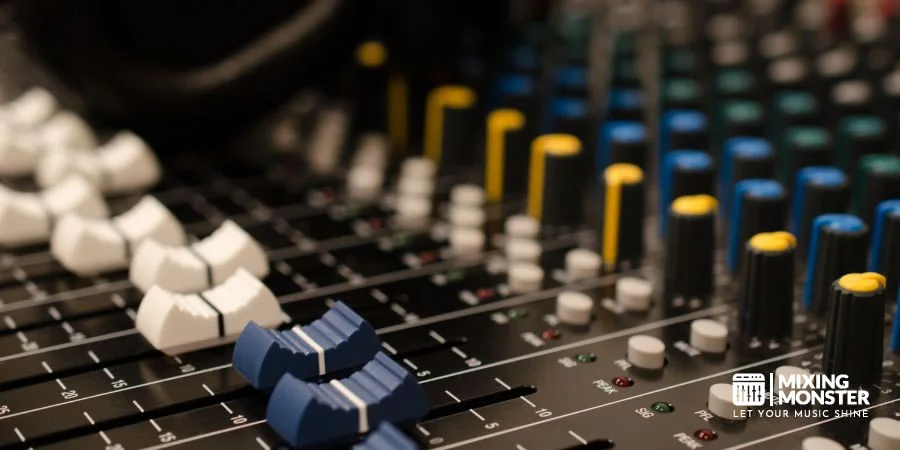
When considering what mixing is, we look at how a mix engineer begins by setting volume levels. This ensures no instrument overwhelms the others during the initial balance. Vocals often sit at the center of the mix, while drums and bass provide rhythmic and tonal foundations. Careful adjustment ensures each track contributes without masking another.
Panning and spatial placement create space by placing instruments across the stereo field. This intentional use of the stereo field improves clarity and prevents frequency buildup. Effective spatial placement ensures that every element has its own room in the mix. For example, guitars may sit left and right, while kick and snare remain centered.
Engineers also monitor frequency balance. Equalization (EQ) removes clashing frequencies, such as cutting low-end rumble on vocals or reducing harshness in cymbals. By carving space for each instrument, the mix achieves definition and avoids muddiness.
Maintaining headroom is critical. Tracks must leave space on the master output to prevent distortion, allowing the mastering stage to finalize the loudness without clipping.
Essential Mixing Tools
Mixing relies on a range of tools within a DAW and through outboard gear. The compressor is one of the most important, controlling dynamic range by reducing peaks and raising quieter parts. This creates consistency, especially on vocals and drums.
EQ is used both surgically and creatively. Engineers apply high-pass filters with tools like FabFilter Pro-Q to remove unnecessary low frequencies and boost presence in the 2–5 kHz range for vocal clarity.
Reverb and delay are essential time-based effects that add depth, simulating natural spaces or creating rhythmic textures. Subtle reverb helps a vocal sit naturally in the mix, while delay can expand a track's width.
Other tools include saturation and distortion, which add harmonic richness. Transient shaping is another technique used to control the punch and impact of percussive elements. Plugins like iZotope Neutron help analyze track relationships, while stereo wideners expand the soundstage.
Monitoring on studio monitors ensures these adjustments translate well to all systems. Avoid common mixing mistakes, such as over-processing, to keep the sound natural. In some workflows, engineers work with stems instead of individual tracks. This can simplify complex projects while maintaining control over groups like drums or vocals.
Discover Best Audio Gear & Equipment

Creative Effects and Automation
Beyond technical adjustments, mixing involves creative decision-making. Automation allows engineers to change volume levels, panning, or effect intensity over time. For instance, raising a vocal slightly in a chorus can emphasize energy without altering the track as a whole.
Effects like reverb, delay, and modulation can be automated to evolve throughout the song. This creates movement and keeps listeners engaged.
Creative use of distortion or saturation can give guitars character or warmth to digital instruments. Subtle changes on the mix bus—such as gentle compression or EQ—help glue the track together. Processing on the stereo bus ensures the final mixdown has a cohesive texture before it reaches the mastering stage.
By combining precision with creativity, a mixing engineer shapes both the technical balance and the emotional impact of a song.
3
The Mastering Process Unveiled
Mastering refines a finished mix into a polished track that translates well across playback systems. It ensures consistent loudness, balanced frequencies, and proper formatting for platforms like Spotify, Apple Music, and SoundCloud.
Finalizing the Stereo Mix
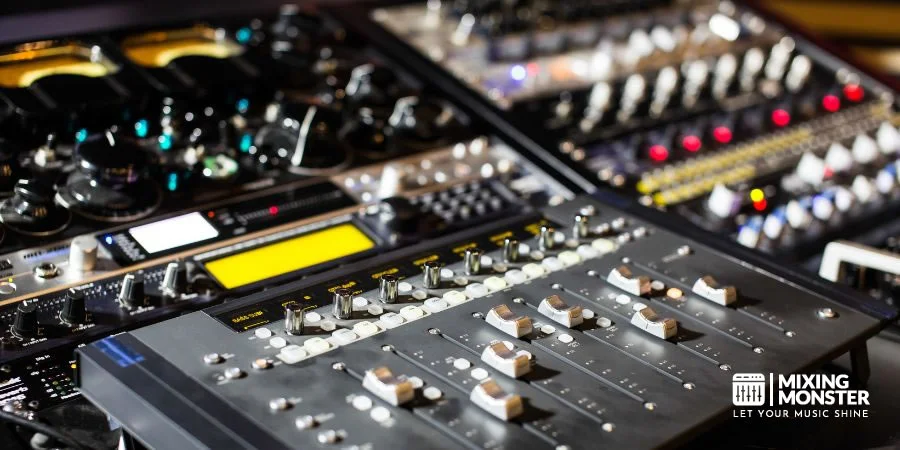
A mastering engineer works with a single stereo file rather than multiple tracks. When asking what mastering is, one must view the song as a single unit. A standard mastering workflow involves improving the overall sound rather than adjusting individual instruments. A repeatable mastering workflow ensures all tracks on an album sound cohesive.
The engineer checks frequency balance, dynamic range, and headroom to make sure the track has clarity and impact. For example, muddy low frequencies are corrected with EQ, while vocals that sit too far back can be subtly lifted.
Professional mastering also prepares the audio for its final medium. A track intended for streaming may require different adjustments than one pressed on vinyl or distributed on CD. File formats, bit depth, and sample rate are carefully chosen to avoid distortion or quality loss.
Mastering engineers often serve as a fresh set of ears, catching issues that went unnoticed during mixing. This stage provides the final polish required to make a track sound professional. This objectivity helps ensure the track sounds professional and competitive in today's market.
Mastering Tools and Techniques
The mastering process relies on a small yet precise set of tools, often called the mastering chain. Specialized mastering compressors and software like Wavelab allow for a high degree of precision. EQ shapes the tonal balance, while compression controls dynamics.
Many studios use iZotope Ozone to manage these processing stages efficiently. High-quality mastering tools like iZotope Ozone provide transparency for final adjustments. Engineers use metering and critical listening to identify small artifacts or imbalances. These tools help provide the final polish that commercial music requires.
A limiter is often applied at the final stage. A brickwall limiter prevents peaks from clipping, while plugins like FabFilter Pro-L provide transparent gain. A brickwall limiter is essential for achieving commercial volume without digital distortion. To add character, engineers might also use tape saturation for subtle harmonic warmth. These subtle enhancements contribute to the track's final professional feel.
Stereo image adjustments help widen or narrow the sound field. Subtle changes in width can make a track feel more immersive on headphones or balanced on studio monitors.
Professional mastering engineers often work in acoustically treated rooms with accurate monitoring systems. This environment is essential for critical listening and making precise decisions. Excellent translation across car speakers, earbuds, and home audio systems is the hallmark of professional mastering.
Your Song Mixed & Mastered By Mixing Monster


Loudness and Distribution Standards
Streaming platforms enforce specific loudness standards to provide consistent playback. Spotify, for example, normalizes tracks to around -14 LUFS, while Apple Music uses a similar target. Engineers monitor these loudness units to ensure their tracks aren't overly penalized by streaming normalization.
If a track is mastered too loud, these services reduce its volume, often making it sound flat compared to properly prepared masters. The loudness war historically led to overly squashed tracks, but modern standards focus on a better balance.
Maintaining proper headroom before limiting ensures the track can reach optimal loudness without distortion. Engineers balance dynamic range, perceived loudness, and RMS levels to ensure the music feels powerful yet not fatiguing. Before exporting the final master, dithering is applied to prevent quantization errors during bit-depth reduction.
Different platforms may also require unique file formats. A master for SoundCloud may not need the same specifications as one for Apple Music. Mastering also serves as final quality control, ensuring the right metadata is included.
This includes embedding the ISRC for tracking and royalty purposes. Professional mastering ensures each version is optimized for its intended destination. This is part of the rigorous QC process and overall quality control that ensures the audio is technically flawless. Diligent quality control identifies technical issues before the track reaches streaming platforms.
By following these standards, a track can maintain clarity, punch, and consistency across all major distribution channels. This step allows the music to compete fairly with other professionally released material. The goal is to ensure the audio meets the technical requirements for commercial distribution on all major platforms.

4
Role of Engineers in Mixing and Mastering
Mixing and mastering require different skill sets, even though both aim to deliver a polished final product. The engineers involved focus on distinct stages of production, each with specific technical and creative responsibilities.
Mixing Engineer Responsibilities
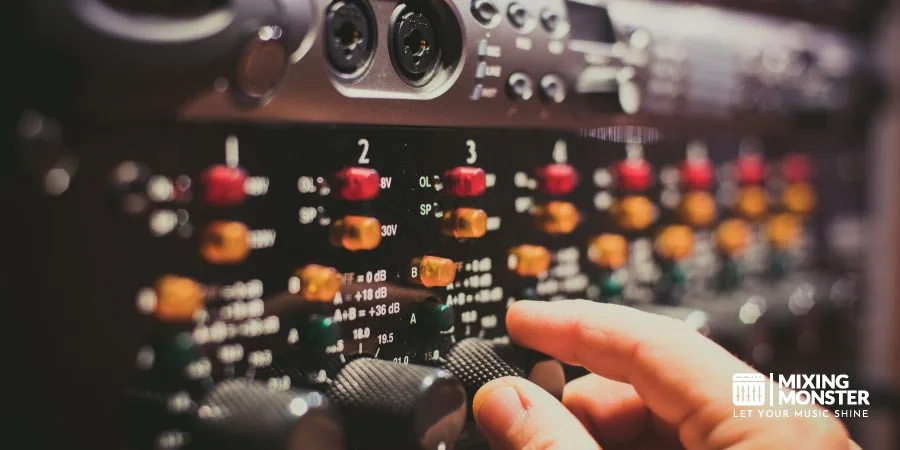
A mixing engineer works with multiple individual tracks, such as vocals, drums, guitars, and synths. Their primary task is to balance levels so that no instrument overpowers another. They use tools such as EQ, compression, reverb, and panning to create a clear, cohesive sound.
They also manage dynamics, making sure quiet parts remain audible without losing the impact of louder sections. Automation is often applied to control volume or effects across different parts of a song.
Collaboration with the artist or producer is critical. The mixing engineer interprets creative direction while ensuring technical accuracy. For example, a vocal may be emphasized to match the artist's vision, while background instruments are blended smoothly.
The result is a stereo mix that feels balanced and complete in the studio environment. At this stage, the track is not yet optimized for all playback systems, which is where the mastering engineer takes over.
Related Articles


Mastering Engineer Expertise
A mastering engineer works with the final stereo mix rather than individual tracks. Their role is to prepare music for distribution across streaming, digital downloads, and physical formats. This requires adjustments that ensure the track translates well across headphones, speakers, and car stereos.
Professional mastering engineers refine tonal balance, adjust overall loudness, and apply limiting to control peaks. They may also enhance stereo imaging and correct minor mix imperfections without altering the artistic intent.
Consistency across an album or EP is another key responsibility. Tracks are leveled to ensure seamless transitions, creating a unified listening experience. Metadata, sequencing, and export in multiple formats such as WAV, MP3, or AAC are also handled at this stage.
Unlike mixing, mastering is more about subtle, precise changes. This process ensures that the music sounds polished and professional on every playback system.

5
Mixing Vs Mastering in the Music Production Workflow
Mixing organizes and balances the elements of a song, while mastering finalizes the mix for release. Each step requires a different focus, set of tools, and listening approach to ensure the music translates well across playback systems.
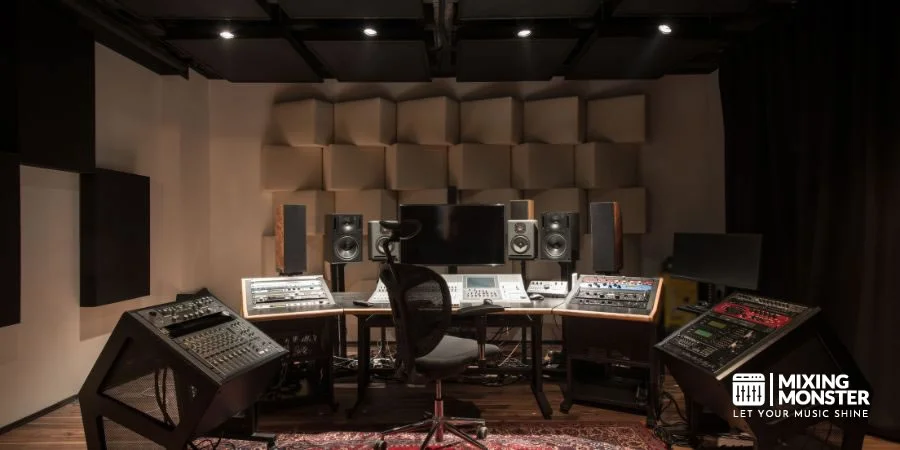
Order of Operations
In music production, mixing comes after recording and editing but before mastering. The mixing process involves adjusting levels, EQ, compression, panning, and effects to create a balanced and cohesive sound from multiple individual tracks.
A rough mix often starts with volume balancing and panning to establish clarity. Engineers then refine the details by controlling dynamics, shaping frequency ranges, and adding spatial effects. Each decision aims to make instruments and vocals work together without masking one another.
Once the song feels cohesive, engineers route all tracks through a mix bus. Here, light compression, EQ, or saturation may be applied to glue the mix together. However, heavy processing at this stage is avoided to leave room for mastering adjustments.
The end goal of mixing is not loudness but balance. The output should remain clean, dynamic, and below clipping levels. For example, many engineers leave around -3 to -6 dBFS of headroom when exporting the final mix. This ensures the mastering engineer has adequate space to work.
Transition from Mixing to Mastering
The mastering process begins with the stereo mix file exported from the mixing stage. Unlike mixing, which focuses on separate tracks, mastering treats the song as a single audio file. The goal is to create consistency, polish, and proper loudness for distribution.
A mastering engineer checks tonal balance, stereo width, and overall dynamics. They may apply EQ to correct frequency buildups, compression to control peaks, and limiting to raise perceived loudness. These adjustments ensure the track translates well across headphones, car speakers, club systems, and streaming platforms.
When preparing an album or EP, mastering also addresses track sequencing, spacing, and level matching. This ensures the listening experience flows naturally from one song to the next.
Automated tools exist, but human mastering offers more precision and creative judgment. Automated platforms cannot interpret artistic intent or provide tailored feedback. For professional distribution, mastering remains a critical final step in the workflow.

6
Essential Tools and Equipment For Mixing Vs Mastering
Both mixing and mastering rely on precise tools that allow engineers to control sound, balance frequencies, and create a consistent listening experience. The right combination of software, monitoring equipment, and processors ensures that music translates well across headphones, speakers, and streaming platforms.
Digital Audio Workstations (DAWs)
A Digital Audio Workstation (DAW) serves as the central hub for all mixing and mastering tasks. Popular DAWs include Pro Tools, Logic Pro, Ableton Live, and Cubase. Each offers multitrack recording, editing, and plugin support, making them flexible for different workflows.
Within a DAW, engineers use plugins such as EQ, compressors, reverb, and delay to shape sound. Automation features allow precise adjustments over time, such as gradually raising the vocal volume or adjusting reverb tails between sections.
Many DAWs also include stock tools that handle 90% of essential tasks, proving that skill often matters more than expensive hardware. For example, a built-in parametric EQ can provide the same frequency control as third-party options when used effectively.
Cloud-based platforms like BandLab extend this flexibility by offering online mixing and mastering features, making them accessible without costly software.
Studio Monitors and Listening Environments
Accurate monitoring is critical for making informed mix-and-master decisions. Studio monitors differ from consumer speakers because they aim for a flat frequency response, revealing details without coloration. Popular models include Yamaha HS series, KRK Rokit, and Genelec monitors.
Headphones can supplement monitors but should not replace them, since headphones often exaggerate stereo width and low frequencies. A treated room with acoustic panels, bass traps, and diffusers ensures that the engineer hears accurately.
Room acoustics play a larger role than many realize. Even high-end monitors will mislead if placed in an untreated space. Engineers often combine nearfield monitors with reference headphones to cross-check balance, stereo imaging, and low-end accuracy.
Effects and Processors
Mixing and mastering rely on a core set of processors to shape dynamics and tone. Equalizers (EQs) balance frequencies, ensuring instruments occupy their own space. Compressors control dynamics, while limiters prevent peaks from clipping during mastering.
Spatial effects like reverb and delay add depth and dimension. Subtle stereo wideners can enhance the soundstage, but overuse risks phase issues. Saturation plugins emulate analog warmth, adding harmonic richness that helps tracks feel more cohesive.
Automation plays an equally important role. Engineers automate volume rides, EQ sweeps, or reverb levels to maintain clarity and energy throughout a track. This level of control ensures that every section feels intentional and polished.
Professional mastering often combines these tools with precision metering to meet loudness standards for streaming platforms and physical media.

7
Common Challenges and Best Practices In Mixing And Mastering
Engineers often face issues with tonal balance, dynamics, and playback translation. Addressing these areas ensures that a track sounds clear, controlled, and consistent across different systems and streaming platforms.
Achieving Frequency Balance
A balanced mix avoids buildup in certain ranges while keeping all instruments audible. Too much low-end can mask kick drums and bass, while harsh highs can cause listener fatigue. Engineers use EQ to carve space for each element and prevent overlapping frequencies.
A useful approach is to identify the dominant frequency ranges of instruments. For example:
|
Instrument |
Primary Frequency Range |
|
Kick Drum |
50–100 Hz |
|
150 Hz–4 kHz |
|
|
Hi-hats |
8–12 kHz |
By referencing professional tracks and using spectrum analyzers, engineers can compare their mix to industry standards. Using reference tracks helps engineers maintain an objective perspective on their frequency balance.
Managing Dynamic Range and Headroom
Dynamic range defines the difference between the quietest and loudest parts of a track. Too much compression can flatten the mix, while too little can make it inconsistent. Engineers must balance dynamics so that the music feels alive but controlled.
Headroom is equally important. Leaving around -6 dB of headroom before mastering allows the mastering engineer to apply EQ, limiting, and compression without distortion. A poor mix with no headroom will limit what can be achieved later.
Best practices include:
- Use compression in stages rather than relying on one limiter.
- Automate volume rides instead of over-compressing.
- Check loudness against streaming standards like Spotify or Apple Music, which normalize playback to around -14 LUFS.
Ensuring Consistency Across Platforms
Listeners stream music on Spotify, Apple Music, SoundCloud, and countless other platforms. Each applies its own loudness normalization, which can cause a track to sound different if not properly prepared.
Mastering engineers test playback on multiple systems, from studio monitors to earbuds. They also ensure stereo width and bass response translate well across devices.
A practical step is to export reference masters and audition them on car speakers, laptops, and phones. Mastering should polish the mix, so it holds up across all environments.
Consistency requires technical precision and repeated listening in diverse playback contexts. This ensures the track feels cohesive across platforms and devices.
8
Key Takeaways For Mixing Vs Mastering
Mixing and mastering are two separate but connected stages in music production. Mixing focuses on shaping individual tracks, while mastering finalizes the overall sound for distribution.
Mixing involves tasks such as:
- Balancing the volume levels of instruments and vocals
- Applying EQ, compression, and effects
- Creating stereo placement and depth
Mastering centers on:
- Enhancing the final stereo mix
- Adjusting loudness for consistency
- Ensuring playback translates across different systems
|
Aspect |
Mixing |
Mastering |
|
Focus |
Individual tracks |
Final stereo mix |
|
Tools |
EQ, compression, reverb, automation |
EQ, compression, limiting |
|
Goal |
Balance and clarity |
Cohesion and polish |
|
File Type |
Multi-track session |
Single stereo file |
A poor mix cannot be fixed in mastering. Instead, mastering highlights the strengths of a well-prepared mix.
Mixing often requires more creative decisions, while mastering leans on technical precision. Professional engineers may specialize in one area, since each demands unique skills and environments.
Both stages are essential. Mixing shapes the song's character, and mastering ensures it sounds consistent and competitive across platforms.
Happy mixing / mastering!

Frequently Asked Questions
1
What are the key differences between mixing and mastering in music production?
Mixing focuses on balancing individual tracks such as vocals, drums, and guitars. Engineers use EQ, compression, panning, and effects to create a cohesive stereo image.
Mastering works with the finished stereo mix to adjust loudness, EQ balance, and consistency across playback systems. It prepares the track for release and ensures it meets industry standards.
2
How does the role of a producer differ from that of a mixing engineer?
A producer oversees the creative direction of a project, guiding song structure, performance, and overall vision.
A mixing engineer works on the technical side, shaping the sonics of each track to fit together. While a producer may influence mixing decisions, the engineer handles the detailed adjustments that define the soundstage.
3
Can mixing and mastering be effectively done online?
Online tools and services can provide accessible options for independent musicians. Automated mastering platforms deliver quick results, though they may lack the nuance of human engineers.
For professional-level releases, many still recommend hiring an experienced engineer, but online services can be useful for demos or sharing ideas.
4
What should one expect from professional mixing and mastering services?
Professional mixing often costs more than mastering because it requires more time to balance multiple tracks. Mixing can range from hundreds to over a thousand dollars per song, depending on complexity.
Mastering typically costs less, averaging $50-$200 per track. The investment helps music compete with commercial releases.
5
Are there reliable free resources available for learning mixing and mastering?
Many educational websites, forums, and YouTube channels provide tutorials on EQ, compression, and workflow. Artists who want to learn mixing often start with basic signal flow and balance.
Platforms like iZotope also publish free guides and articles that explain the processes in detail. These resources can help beginners build a foundation before investing in paid training or software.
6
How has artificial intelligence impacted the process of mixing and mastering?
AI-driven tools now assist with tasks like EQ matching, dynamic balancing, and automated mastering. They can speed up workflow and provide useful starting points.
However, AI cannot fully replace human decision-making. Engineers still deliver the creative judgment and context that algorithms cannot replicate.