





Have you ever wondered how some songs transport you to vast cathedrals or intimate jazz clubs? The secret lies in reverb, a powerful tool that shapes the spatial character of sound.
Reverb simulates the natural reflections of sound waves in different environments, adding depth, richness, and dimension to audio. By adjusting parameters like decay time, pre-delay, and early reflections, audio engineers can craft immersive sonic landscapes that shape the listener's experience and open up creative possibilities.
Mastering reverb opens up creative possibilities in music production and sound design. Whether you're adding subtle ambiance to a vocal track or creating expansive, otherworldly atmospheres, understanding reverb is crucial.
This article explores different reverb types, essential parameters, and techniques like parallel processing to help you push your creative boundaries.
Key Takeaways / TL;DR
- Reverb simulates sound reflections in various environments, adding depth to audio
- Different reverb types and parameters allow for diverse sonic characteristics
- Proper use of reverb can enhance spatial depth and create immersive soundscapes
1
Understanding Reverb Effect: The Key To Spatial Depth
Reverb effects play a crucial role in shaping the spatial characteristics of audio. They add depth, dimension, and realism to sound by simulating the natural reflections that occur in various acoustic environments.
What Is Reverb, And How Does It Work?
Reverb, short for reverberation, is the persistence of sound after its initial production. It occurs when sound waves bounce off surfaces in a space, creating multiple reflections that reach the listener's ears at different times. This natural reverberation provides the brain with information about the surroundings. In audio production, reverb effects simulate these reflections to create a sense of space and depth.
The reverb process begins with the direct sound, followed by early reflections and then a complex series of later reflections. These reflections gradually decrease in intensity, creating a smooth decay. The characteristics of the reverb depend on factors such as:
- Room size and shape
- Surface materials (e.g., tile, wood, carpet)
- Position of the sound source and listener
Reverb plugins and hardware units use algorithms or impulse responses to recreate these acoustic properties digitally.
Natural Vs. Artificial Reverb: Pros And Cons
Natural reverb occurs in real acoustic spaces, while artificial reverb is created using electronic devices or software. Both have their advantages and drawbacks.
Natural reverb:
- Pros: Authentic sound, unique character
- Cons: Limited control, potential for unwanted noise
Artificial reverb:
- Pros: Precise control, consistency, versatility
- Cons: Can sound artificial if not used carefully
Artificial reverb offers greater flexibility in shaping sound, and tools like AI and binaural reverb expand your creative possibilities and inspire innovation.
Reverb significantly influences how listeners perceive sound and music by providing cues about space and mood. It affects spatial awareness, emotional response, and depth perception, helping the brain interpret the acoustic environment and guiding the listener's immersive experience by manipulating reverb characteristics.Reverb significantly influences how listeners perceive sound and music. It affects:
- Spatial awareness: Reverb provides cues about the size and nature of the acoustic space.
- Emotional response: Different reverb characteristics can evoke specific moods or emotions.
- Depth perception: Reverb adds distance and dimension to sound sources.
- Coherence: It can help blend different elements of a mix, creating a sense of unity.
The human brain uses reverb to interpret the acoustic environment. Longer reverb times often suggest larger spaces, while shorter times suggest smaller, more intimate settings. By manipulating reverb, producers can guide the listener's perception and create immersive sonic experiences.

2
Types Of Reverb And Their Unique Characteristics
Reverb effects come in various forms, each with distinct sonic characteristics. These different types simulate spaces and create unique ambiances that can dramatically shape the sound of instruments and vocals in a mix.
Room And Hall Reverbs: Simulating Real Spaces
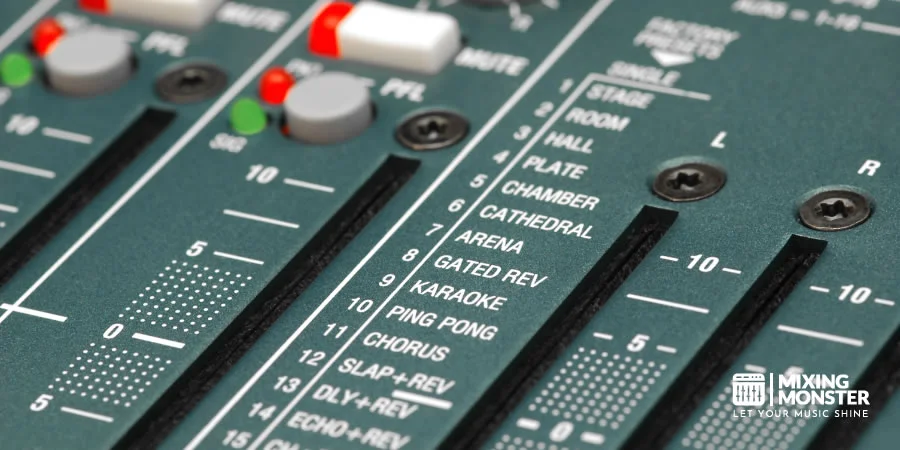
Room reverb emulates the sound reflections in small to medium-sized spaces. It typically features fast decay times and strong initial reflections. This type of reverb adds depth without overwhelming the original sound.
Hall reverb mimics larger spaces like concert halls or cathedrals. It produces a fuller, more expansive sound with longer decay times and more complex reflections. Hall reverbs can create a sense of grandeur and spaciousness in a mix.
Cathedral reverb, a subset of hall reverb, simulates the vast, echoing spaces of large churches. It's characterized by extremely long decay times and rich, evolving tails that can last several seconds.
Plate And Spring Reverbs: Classic Analog Sounds
Plate reverb doesn't mimic a real-world space. It's created using a large metal plate vibrated by a transducer. Plate reverb has a bright, shimmering quality with a smooth decay.
This type of reverb is often used on vocals and percussion due to its unique tonal characteristics. Higher frequencies tend to be more prominent at the start of the reverb tail, while lower frequencies linger longer.
Spring reverb uses metal springs to create its effect. It has a distinctive, bouncy sound often associated with vintage guitar amps. Spring reverb can add character and warmth to guitar sounds or be used creatively on other sources.
Discover Best Audio Gear & Equipment

Convolution And Algorithmic Reverbs: Digital Precision
Convolution reverb uses impulse responses to recreate the acoustic properties of real spaces. It can produce highly realistic reverbs by sampling actual rooms, halls, or even hardware units.
This type of reverb offers unparalleled accuracy in recreating specific acoustic environments. It's particularly useful for post-production work where matching a specific space is crucial.
Algorithmic reverb uses complex mathematical models to generate reverb. It offers extensive control over parameters like decay time, pre-delay, and diffusion. This flexibility lets you create both realistic and fantastical reverb effects.
|
Type of Reverb |
Key Characteristics |
Common Uses |
|
Room |
Fast decay, strong early reflections |
Adding depth to drums, vocals |
|
Hall |
Longer decay, complex reflections |
Creating spaciousness in orchestral music |
|
Plate |
Bright, shimmering sound |
Enhancing vocals, snare drums |
|
Spring |
Bouncy, characterful tone |
Guitar amplifiers, vintage effects |
|
Convolution |
Highly realistic recreations |
Film sound, precise acoustic matching |
|
Algorithmic |
Highly controllable, versatile |
Creative sound design, general mixing |
3
Essential Parameters For Shaping Your Reverb Sound
Mastering key reverb parameters allows precise control over the effect's character and impact. These settings shape how reflections interact with the original sound, creating depth and space.
Pre-Delay: Setting The Stage For Clarity
Pre-delay determines the time between the dry signal and the reverb onset. Shorter pre-delays (0-20ms) create immediacy, suggesting smaller spaces. Longer pre-delays (30-100ms) increase separation and improve clarity.
For vocals, a pre-delay of 40-80ms can prevent muddiness. Drums often benefit from 20-40ms to maintain punch. Adjust pre-delay to match your track's tempo for rhythmic cohesion.
Experiment with extreme settings. Very short pre-delays (<10ms) can thicken sounds without obvious reverb. Long pre-delays (>100ms) create distinct echoes, useful for special effects.
Decay Time: Controlling The Length Of Reflections
Decay time defines how long reflections persist. Short decays (0.1-0.5s) suit fast, percussive sources. Medium decays (0.5-2s) work well for vocals and instruments. Long decays (2-10s+) create atmospheric washes.
Match decay to your track's tempo. For 120 BPM, try 1s decay (half note length). Adjust for genre: rock often uses shorter decays, while ambient music embraces longer ones.
Consider the source material. Snare drums might use 0.8-1.2s, while piano ballads could employ 2-3s for lush tails. Always listen in context of the full mix.
Your Song Mixed & Mastered By Mixing Monster


Early Reflections Vs. Late Reflections: Crafting The Perfect Balance
Early reflections arrive within the first 50-80ms and define room character. Late reflections form the reverb tail, creating sustain and ambiance. Balancing these elements is crucial for a natural sound.
Increase early reflections to add depth without washing out the mix. This works well for drums and percussion. Emphasize late reflections for dreamy, less defined spaces on pads or ambient elements.
Room size affects this balance. Smaller rooms have more prominent early reflections, while larger spaces emphasize the reverb tail. Adjust the ratio to simulate different environments or create unique effects.
Use diffusion to control reflection density. Higher diffusion creates smoother tails, ideal for sustaining instruments. Lower diffusion can add texture and character to percussive sources.

4
Reverb Mixing Techniques For Creating Depth And Space
Reverb mixing techniques can transform flat recordings into immersive sonic landscapes. These methods enhance spatial perception and add dimensionality to tracks.
The "Less Is More" Approach: Subtle Reverb Application
When you add reverb to audio, a subtle application often yields the most natural-sounding results. Start with a low wet signal level, then gradually increase it until the effect is just perceptible. This technique preserves the clarity of the original audio file while adding depth.
Use short decay times for rhythm instruments to maintain punch. Longer decays work well for sustained sounds like pads or vocals. Experiment with pre-delay to separate the dry signal from the reverb tail and enhance definition.
Pre-delay helps maintain clarity while still providing depth. It lets you hear the original sound before the reverb kicks in.
Parallel Processing: Blending Dry And Wet Signals
Parallel processing routes the audio to both dry and wet paths, then blends them. This method offers precise control over the reverb's intensity and character.
Set up an aux send for the reverb. Adjust the send level to control how much of each track goes to the reverb. Use the aux return fader to blend the wet signal back into the mix.
This approach lets you use different reverb levels on different elements, adding depth without muddying the mix. It's particularly effective for adding space to drums or vocals while maintaining their presence.
Related Articles
Stereo Widening Techniques Using Reverb
Reverb can significantly widen a mix, creating a more expansive sound. Use a stereo reverb plugin and adjust its width parameter to spread the effect across the stereo field.
Apply different reverb settings to the left and right channels to increase width. For instance, use a shorter decay on one side and a longer decay on the other.
Pan dry signals towards the center and their corresponding reverb returns wider. This technique creates a sense of space around centered elements, enhancing the overall stereo image without compromising mono compatibility.

5
Genre-Specific Reverb Strategies
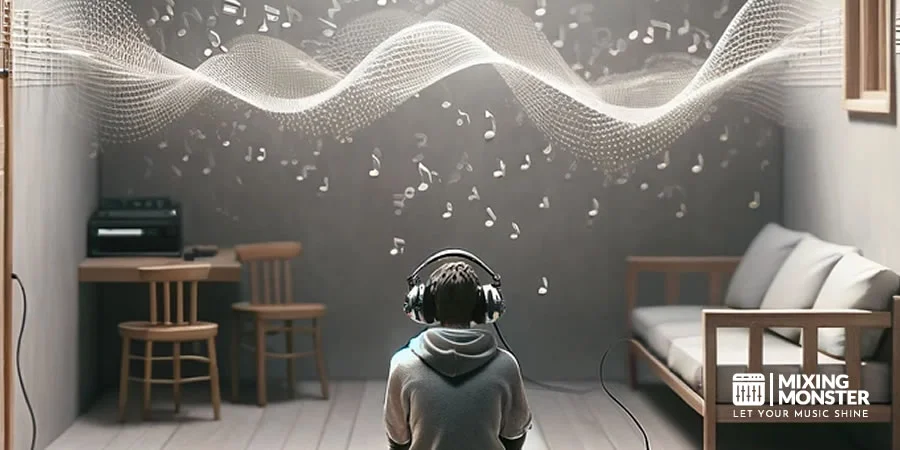
Different musical genres require unique reverb approaches to achieve their distinctive sounds. The choice of reverb type, settings, and application techniques varies significantly across electronic dance music, rock and pop, and ambient genres.
Electronic Dance Music: Creating Expansive Drops And Breakdowns
In EDM, reverb plays a crucial role in crafting immersive sonic experiences. Producers often use large hall or plate reverbs to create expansive drops and breakdowns.
A common technique is to automate reverb parameters. This involves increasing the wet signal and decay time during buildups, then abruptly cutting the effect at the drop for impact.
You can sidechain the reverb return, ducking it in time with the kick drum. This maintains low-end clarity while preserving the spacious feel.
For lead synths and vocal chops, short plate reverbs with pre-delay can add depth without muddying the mix. Producers often use reverb sends to blend dry and wet signals effectively.
Rock And Pop: Enhancing Vocals And Instruments
In rock and pop, reverb enhances vocals and instruments while maintaining clarity. For vocals, a combination of short room and longer hall reverbs can create depth and dimension.
Guitars often benefit from spring or plate reverbs that emulate classic amp sounds. Drums may use room reverbs to add natural ambiance, with gated reverb on snares for that iconic 80s sound.
Key reverb techniques for rock and pop:
- Use pre-delay to separate dry and wet signals
- Apply high-pass filters to reverb returns to prevent low-end buildup
- Experiment with stereo widening on reverb returns for spatial enhancement
Balancing wet/dry mix is crucial. A 10-20% wet mix often suffices for most instruments, while vocals may use up to 30-40% for ballads.
Ambient And Experimental: Crafting Immersive Soundscapes
Ambient and experimental music relies heavily on reverb to create vast, immersive soundscapes. Long decay times and high wet/dry ratios are common, often pushing reverb to extremes.
Layering multiple reverbs is a key technique. For example, combining a short room reverb with a long hall or even infinite reverb can create complex, evolving textures.
Reverb modulation adds movement to static sounds. Producers might use:
- Shimmer reverbs for ethereal highs
- Reverse reverbs for swelling effects
- Convolution reverbs with unique impulse responses
Automation plays a significant role, with reverb parameters evolving throughout a track. This creates a sense of journey and keeps the listener engaged in the expansive sonic environment.

6
Advanced Reverb Techniques
Cutting-edge reverb techniques push the boundaries of spatial processing and sound design. These methods leverage technology and creative approaches to craft immersive soundscapes and unique sonic textures.
AI-Powered Reverb Plugins: The Future Of Spatial Processing
AI-driven reverb plugins are revolutionizing spatial audio processing. These tools use machine learning algorithms to analyze and recreate complex acoustic environments with unprecedented accuracy.
Some AI reverb plugins can generate hyper-realistic room simulations based on photos or 3D models. Others use neural networks to emulate vintage hardware reverbs with remarkable fidelity.
AI reverb can adapt in real-time to the input signal, adjusting parameters like decay time and diffusion to maintain clarity and depth. This dynamic response creates more natural-sounding reverbs that sit better in the mix.
Binaural Reverb For Immersive Audio Experiences
Binaural reverb techniques create highly immersive 3D audio experiences, especially for headphone listening. This method simulates how sound interacts with the human head and ears.
By applying head-related transfer functions (HRTFs), binaural reverb plugins can position sounds accurately in a 360-degree space. This creates a sense of depth and directionality that surpasses traditional stereo reverb.
Binaural reverb is particularly effective for virtual reality audio, gaming soundtracks, and immersive music productions. It can make listeners feel as if they're physically present in the simulated acoustic space.
Combining Reverb With Other Effects For Unique Textures
Blending reverb with other effects can yield distinctive sonic textures. This approach opens up new creative possibilities for sound design and mix enhancement.
Combining reverb and delay creates rich, evolving echoes. Feeding a reverb into a chorus effect can produce shimmering, ethereal atmospheres. Applying distortion to a reverb tail adds grit and character to the spatial effect.
Dynamic reverb automation techniques allow for real-time control over effect blending. This can create dramatic transitions or subtle variations in spatial character throughout a track.
Experimenting with effect order and parallel processing can yield unexpected and inspiring results. These hybrid reverb techniques are essential tools for modern producers and sound designers.

7
Common Reverb Mistakes And How To Avoid Them
Reverb can make or break a mix. Mastering its use requires understanding common pitfalls and how to sidestep them. Let's explore key mistakes and how to fix them.
Overusing Reverb: Finding The Right Balance
Overusing reverb is a frequent error that can muddy a mix. Too much reverb can obscure clarity and definition.
To avoid this, mixers should start with minimal reverb and gradually increase it. A good practice is to turn the reverb down until it's barely noticeable, then slowly bring it up.
Different elements in a mix require varying amounts of reverb. Vocals might benefit from more reverb than drums or bass. Using a low-pass filter on reverb can prevent high frequencies from becoming harsh or overwhelming.
Neglecting EQ In Reverb Chains
Neglecting EQ in reverb chains can clutter the mix. EQ is crucial for shaping the reverb's character and preventing it from conflicting with other elements.
A high-pass filter can remove unwanted low-end rumble from reverb, keeping the mix clean. Cutting problematic mid-range frequencies can prevent the reverb from masking important elements of the dry signal.
Boosting high frequencies in the reverb can add air and sparkle, but use caution to avoid harshness. Mixers should always listen critically and adjust EQ to suit each track's needs and the overall mix.
Ignoring The Importance Of Pre-Delay Settings
Pre-delay is often overlooked but plays a crucial role in how reverb sits in a mix. It determines the time between the dry signal and the onset of reverb reflections.
Setting appropriate pre-delay can enhance clarity and separation. Shorter pre-delays can create intimacy, while longer ones can add depth and space.
For vocals, a pre-delay of 20-80ms can help maintain intelligibility. On percussive sounds, shorter pre-delays (5-20ms) can add depth without smearing transients. Experimentation is key to finding the right pre-delay for each element in the mix.
8
Key Takeaways For Mastering Reverb Effects In Music Production
Reverb is a crucial element in music production, shaping a mix's spatial characteristics and depth. Mastering its application requires understanding key concepts and techniques.
Proper reverb use starts with selecting the right type for each element in the mix. Room, hall, plate, and spring reverbs each have distinct sonic qualities suited to different instruments and genres.
Controlling reverb parameters is essential to achieve the desired effects. Pre-delay, decay time, and early reflections all contribute to the perceived size and character of the reverberant space.
EQ plays a vital role in shaping reverb. Cutting low frequencies can prevent muddiness, while subtle high-end boosts can add air and shimmer to the effect.
Balance is key in reverb application. Too much can obscure mix clarity, while too little may result in a flat, lifeless sound. The "less is more" approach often yields the best results.
Key takeaways for mastering reverb effects:
- Choose appropriate reverb types for different mix elements
- Adjust pre-delay, decay, and early reflections to shape the reverb space
- Use EQ to refine the reverb's tonal qualities
- Apply reverb judiciously to maintain mix clarity
- Experiment with mono and stereo reverb applications
- Consider using multiple reverbs for different mix sections
- Automate reverb parameters for dynamic mixes

Frequently Asked Questions
1
How does reverb affect the perception of sound in music production?
Reverb adds depth and dimension to tracks, creating a sense of space and atmosphere. It simulates the natural reflection of sound waves in physical environments, making recordings feel more immersive and realistic.
By manipulating reverb parameters like pre-delay and decay time, producers can alter the perceived size and character of the space. This effect enhances the emotional impact of music and helps instruments sit better in the mix.
2
What are the differences between echo and reverb effects in audio engineering?
While both echo and reverb involve sound reflections, they differ in their timing and complexity. Reverb consists of numerous closely spaced reflections that create a smooth decay, simulating room acoustics.
Echo, on the other hand, produces distinct, delayed repetitions of the original sound. It typically has longer delay times and fewer repetitions than reverb, resulting in a more pronounced, rhythmic effect.
3
Why is reverb a popular effect in vocal recordings?
Reverb is widely used in vocal recordings to add warmth, depth, and presence. It helps vocals blend seamlessly with other instruments and creates a sense of space around the singer's voice.
The effect can make vocals sound more polished and professional, smoothing out imperfections and adding a pleasing ambiance. Reverb also helps vocalists achieve specific stylistic effects, from intimate, up-close sounds to distant, ethereal textures.
4
What should one consider when choosing a reverb effect pedal for live performances?
When selecting a reverb pedal for live use, consider the reverb types offered, such as room, hall, or plate. Look for adjustable parameters like decay time and mix level to fine-tune the effect on stage.
Durability and ease of use are crucial for live settings. Some performers prefer pedals with preset options for quick changes between songs. Placement in the signal chain is also important, typically at the end of the chain or in the amplifier's effects loop.
5
How can one simulate the reverb effect in an online or digital environment?
Digital reverb plugins offer a wide range of options for simulating various acoustic spaces. These tools often include impulse responses (IRs) of real spaces, providing highly realistic reverb emulations.
Virtual studios and online collaboration platforms frequently incorporate reverb effects. Users can adjust parameters like room size, decay time, and early reflections to create convincing spatial effects in digital environments.
6
What techniques are used to create a 'slowed and reverb' track?
The 'slowed and reverb' technique involves reducing a song's tempo and applying heavy reverb. This creates a dreamy, atmospheric sound popular in certain genres.
Producers typically use digital audio workstations to slow down the track, often by 10-20%. They then apply a long, spacious reverb with extended decay times. They may also use pitch-shifting or filtering to enhance the ethereal quality.