





In audio production, understanding audio polarity vs. phase can mean the difference between a professional mix and a muddy, lifeless recording. These technical concepts confuse even experienced engineers, yet they fundamentally shape how signal phase and sound waves interact in any recording or mixing environment.
Audio polarity refers to the positive or negative orientation of a sound wave's direction, while phase deals with the timing relationship between multiple waveforms as they move through their cycles. Polarity indicates whether a waveform moves up or down first from its equilibrium point, acting as a static attribute that can be flipped, like reversing a battery's terminals. Phase refers to when sound waves begin their cycles relative to each other, typically when multiple microphones capture the same source from different distances.
When these concepts are mismanaged, they lead to phase cancellation, where frequencies disappear or clash, resulting in thin, weak recordings. Understanding the distinction between polarity and phase helps engineers make informed decisions during tracking, mixing, and mastering.
This article explores practical applications of polarity and phase manipulation in recording and mixing scenarios. Learn techniques to identify problems, find software tools for correction, and follow best practices to prevent issues before they occur.
Key Takeaways / TL;DR
- Polarity is the direction of a waveform, while phase is the timing relationship between waveforms
- Misalignment in polarity or phase causes cancellation that weakens recordings and removes clarity
- Proper microphone placement and phase checking during recording prevents most polarity and phase problems

1
Audio Polarity Vs. Phase Overview
Polarity describes the positive or negative orientation of an audio waveform at any given moment, while phase relates to the timing relationship between multiple waveforms. Understanding how polarity differs from phase prevents common mixing mistakes and helps engineers make informed decisions when combining audio signals.
What Audio Polarity Means In Signal Flow
Audio polarity indicates whether a waveform's initial movement begins with positive or negative air pressure. When a microphone diaphragm moves forward, it creates positive polarity, and when it moves backward, it creates negative polarity.
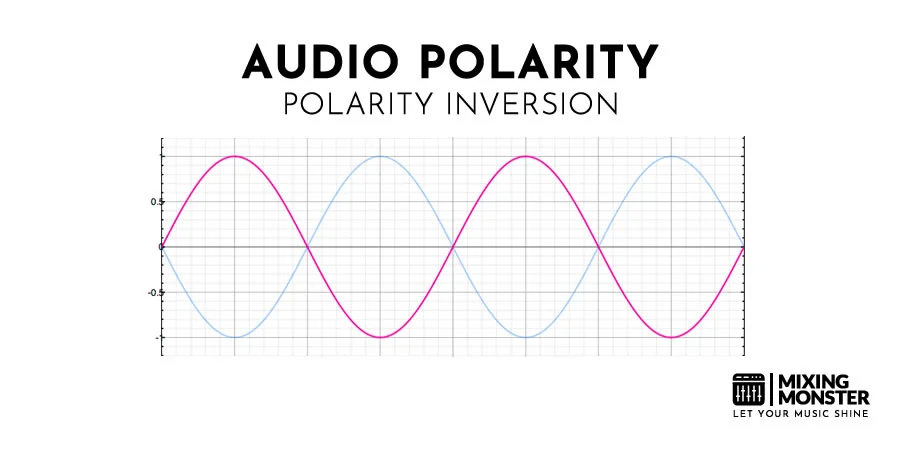
Reversing polarity flips the entire waveform upside down. The peaks become troughs, and the troughs become peaks. This reversal happens instantaneously across the entire signal.
Polarity depends on positive and negative voltage or sound pressure rather than timing. Engineers encounter polarity issues when multiple microphones capture the same sound source from different positions. A polarity flip button on a mixing console inverts the waveform completely.
When two identical signals with opposite polarity combine, they cancel each other entirely. This complete cancellation produces silence because the positive pressure of one signal perfectly opposes the negative pressure of the other.
What Audio Phase Means In Time And Frequency
Phase measures the timing relationship between waveforms as they progress through their cycles. Phase depends on time rather than signal orientation.
Two waveforms are in phase when their peaks and troughs align at the same moments. They are out of phase when their timing differs, causing peaks and troughs to occur at different times.
Phase relationships exist on a continuum from 0° to 360°. A 180° phase shift represents the maximum timing difference, where one waveform's peak aligns with another's trough. Smaller phase shifts create partial interference rather than complete cancellation.
Phase issues commonly arise when multiple microphones capture sound at different distances from the source. The sound waves reach each microphone at slightly different times, creating phase misalignment when the signals combine during mixing.
Why Polarity And Phase Are Often Confused
Many audio manufacturers label polarity controls as "phase" buttons on their equipment. This labeling creates widespread confusion between the two concepts among audio professionals.
The visual symbol Ø often appears on polarity-reversal buttons, even though it represents phase mathematically. This misuse of terminology reinforces the misconception that polarity and phase are interchangeable terms.
Both polarity and phase affect how waveforms interact when combined. They both can cause cancellation effects in a mix. These similarities lead engineers to conflate the two concepts.
Key differences between polarity and phase:
- Polarity is static and represents waveform direction
- Phase is dynamic and represents timing relationships
- Polarity reversal is instantaneous across the entire signal
- Phase shifts vary across different frequencies
The confusion persists because reversing polarity creates a 180° phase shift at all frequencies simultaneously. However, adjusting phase typically affects different frequencies differently.
How Polarity And Phase Interact In Real Mixes
When recording drums with multiple microphones, both polarity and phase problems can occur together. The snare drum sound captured by overhead microphones may have opposite polarity compared to the close snare microphone and arrive at different times.
Flipping polarity on one track sometimes resolves phase issues, but not always. Understanding that polarity and phase are distinct helps engineers choose the correct solution for each situation.
In stereo recording, phase relationships between left and right channels determine how sounds localize in the stereo field. Poor phase correlation can make the mix sound unfocused or lose power when summed to mono.
Low frequencies suffer more audible problems from phase misalignment than high frequencies. Bass and kick drum tracks particularly benefit from careful attention to both phase alignment and polarity checking between related tracks.
Engineers can use polarity reversal as a corrective tool or creative effect. Deliberately adjusting phase relationships between doubled guitar tracks creates width and space in the stereo image without relying solely on panning.

2
Understanding Audio Polarity In Recording And Mixing
Audio polarity determines whether a waveform's initial movement is positive or negative, which is closely related to speaker polarity and directly affects how multiple signals interact when combined. Misaligned polarity between tracks can weaken low-end punch, create tonal imbalances, and reduce overall mix clarity.
Positive Vs. Negative Waveform Polarity Explained
Audio polarity refers to the direction a waveform moves from its resting point when sound first occurs. A positive polarity waveform begins with an upward movement, while negative polarity starts with a downward movement.
When a microphone diaphragm moves forward in response to sound pressure, it typically generates a positive voltage. This creates a positive polarity signal that travels through the audio chain. The waveform's polarity stays consistent unless something in the signal path reverses it.
Engineers can visualize polarity in their digital audio workstation by examining waveforms. A kick drum hit with positive polarity shows the initial transient moving upward on the waveform display. The same hit with inverted polarity displays the transient moving downward first.
Understanding polarity versus phase differences helps engineers make informed decisions during tracking and mixing sessions.
Common Causes Of Polarity Inversion
Several factors can cause polarity reversal in recording and mixing environments. Miswired cables are one of the most common culprits, especially when pins 2 and 3 are accidentally swapped in XLR connections.
Certain equipment introduces polarity inversion by design. Some preamps, compressors, and equalizers flip polarity as part of their circuit architecture. Manufacturers sometimes indicate this with a polarity indicator, but not always.
Microphone placement creates polarity issues when capturing the same source from opposite sides. Recording a snare drum with a top mic and bottom mic naturally produces opposite polarity signals since the drumhead moves in opposite directions relative to each capsule.
Plugin processing can also cause unexpected polarity changes. Some digital processors introduce reverse polarity as a side effect of their algorithms. Engineers must remain vigilant when stacking multiple plugins on a single channel.
Discover Best Audio Gear & Equipment


Audible Effects Of Incorrect Polarity
Incorrect polarity between related tracks produces distinctive audible problems. Phase and polarity issues become most apparent when multiple microphones capture the same audio source.
The most severe consequence occurs when two identical signals with opposite polarity combine perfectly out of phase, resulting in complete cancellation. This rarely happens in real-world scenarios, but partial cancellation is common.
Low frequencies suffer most noticeably from polarity problems. Bass guitars and kick drums lose their fundamental power and impact when polarity conflicts with other low-frequency elements. The mix sounds thin and lacks the expected weight in the bottom end.
Mid-range frequencies can become hollow or distant when polarity misalignment causes comb filtering. Vocals and guitars may lose presence and sit awkwardly in the mix, even with proper level balancing.
When Flipping Polarity Improves Sound Quality
Flipping polarity often resolves conflicts between closely related tracks. When recording drums with multiple microphones, checking polarity relationships between the kick drum mic and overheads can restore low-end punch that seemed mysteriously absent.
A polarity reverse on the bass guitar track sometimes helps it lock rhythmically with the kick drum. This technique works particularly well when both instruments compete for the same frequency space. The engineer listens carefully while toggling the polarity switch to determine which setting provides better cohesion.
Bottom snare microphones almost always require inverted polarity relative to the top mic. The drumhead moves toward the top mic and away from the bottom mic at the same time, creating naturally opposite polarity signals.
Engineers should use their ears as the final judge when making polarity adjustments in recording and mixing. Toggle the polarity switch while listening to the full mix in context. The correct setting typically produces a fuller, more powerful sound with better definition across the frequency spectrum.
3
Understanding Audio Phase And Time Alignment
Phase relationships in audio involve timing differences between waveforms, ranging from subtle shifts to complete inversions. When sound waves arrive at different times or undergo frequency-dependent delays, they interact in ways that either reinforce or diminish specific frequencies.
Phase Shift And Time Delay In Audio Signals
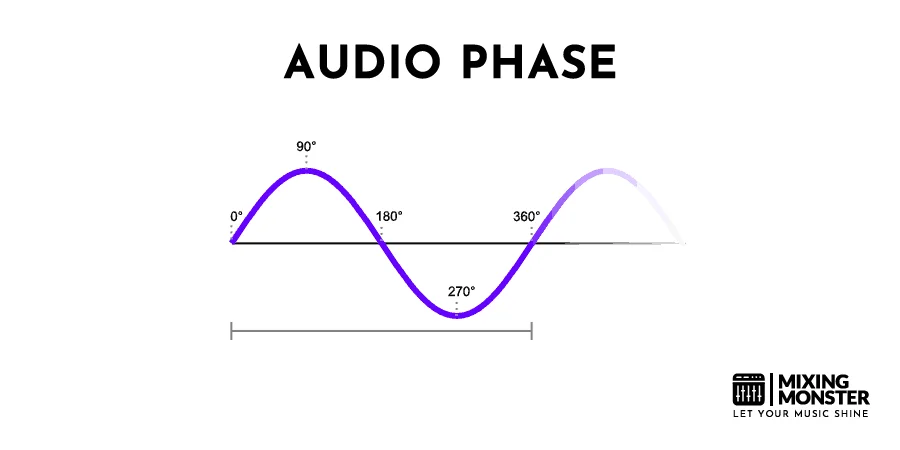
Signal phase deals with the timing of waveforms as they move through their cycle. When two identical signals are in phase, their peaks and troughs align perfectly, creating constructive interference that strengthens the sound.
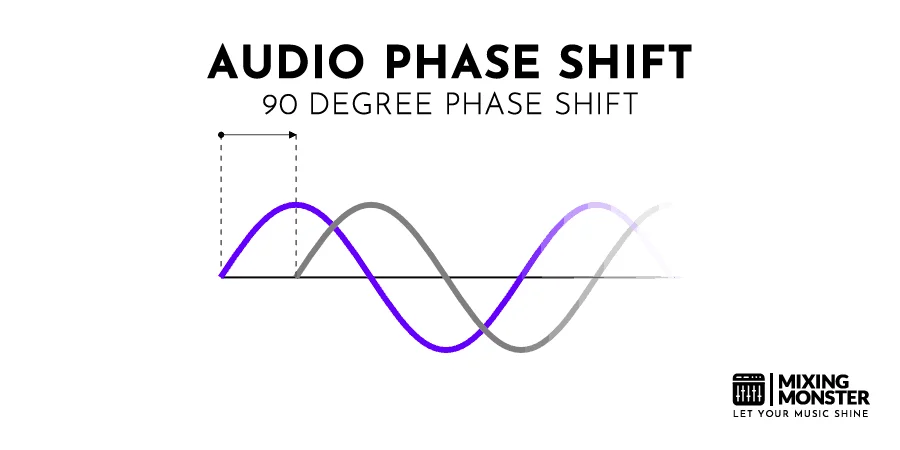
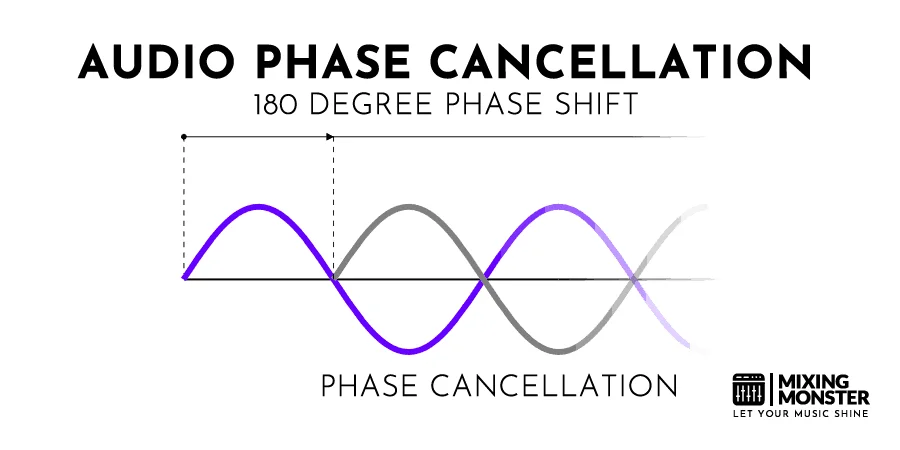
A phase shift occurs when one waveform is offset in time relative to another. This timing difference is measured in degrees, with a complete cycle representing 360 degrees. When signals are 180 degrees out of phase, they are perfectly inverted—one waveform's peak aligns with another's trough.
Time delay creates phase shift naturally in recording situations. If two microphones capture the same sound source at different distances, the audio arrives at each microphone at slightly different moments. This delay translates directly into a phase shift that varies with the sound's frequency.
Frequency-Dependent Phase Issues
Different frequencies experience phase problems in frequency-specific ways. Low frequencies have longer wavelengths, making them less susceptible to phase cancellation from small timing differences. High frequencies have shorter wavelengths and can experience significant phase issues from even millimeter-level microphone placement variations.
A 1-millisecond delay causes different phase shifts across the frequency spectrum. At 100 Hz, this delay represents only 36 degrees of phase shift. At 1000 Hz, the same delay creates 360 degrees of shift—a complete cycle. At 5000 Hz, it produces a 1800-degree shift.
Engineers must consider how phase relationships change across frequencies when working with multiple microphones or layered tracks. An adjustment that fixes phase issues in the midrange might worsen problems in the low end.
Your Song Mixed & Mastered By Mixing Monster


Phase Cancellation And Comb Filtering
When two identical signals are out of phase, they create phase cancellation that reduces or eliminates frequencies. Complete cancellation occurs when signals are exactly 180 degrees out of phase with equal amplitude—the positive pressure of one wave perfectly opposes the negative pressure of the other.
Comb filtering emerges when signals with varying phase relationships across different frequencies combine. This creates a series of peaks and notches in the frequency response, even for a simple sine wave, that resembles the teeth of a comb. This effect commonly occurs in multi-microphone setups where sound arrives at different times at each capsule.
The frequency of the first notch in comb filtering depends on the time delay between signals. A 1-millisecond delay creates the first cancellation at 500 Hz, with subsequent notches every 1000 Hz. These artifacts can make recordings sound hollow, thin, or unnatural.
Phase Coherence In Multi-Mic Setups
Managing phase relationships is a constant challenge when recording with multiple microphones. Drum kits present particular difficulties because dedicated microphones capture each drum, plus overhead and room microphones. The sound from a snare drum reaches the snare microphone first, then arrives at overhead microphones milliseconds later.
Phase coherence requires careful microphone placement to minimize timing differences. The 3-to-1 rule suggests placing microphones at least three times farther apart than they are from the sound source. This approach reduces the sound level reaching the distant microphone, minimizing phase interference.
Engineers can verify phase relationships using phase meters that display the correlation between channels. Values near +1 indicate signals that are in phase, while values near -1 show signals that are out of phase. Values near 0 suggest uncorrelated signals or severe comb filtering.
Time alignment tools allow engineers to shift tracks by milliseconds or samples to improve phase coherence. This technique proves especially valuable when combining close microphones with room microphones or aligning layered recordings of the same instrument.

4
Key Differences Between Audio Polarity And Audio Phase
Polarity represents a fixed reversal of an audio signal's orientation, while phase involves timing relationships between sound waves. Understanding the difference between phase and polarity prevents confusion when diagnosing audio issues in recording and mixing environments.
Binary Polarity Vs. Continuous Phase Shift
Polarity operates as a binary switch with only two possible states: normal or inverted. When polarity is reversed, the entire waveform flips 180 degrees, changing positive pressure movements to negative and vice versa. This reversal happens instantaneously across the entire signal.
Phase shift exists on a continuous spectrum from 0 to 360 degrees. Phase relationships between multiple audio signals depend on timing differences as waveforms move through their cycles. A 90-degree phase shift means one waveform reaches its peak one-quarter cycle before another, while a 45-degree shift represents an eighth of a cycle.
The distinction matters because polarity inversion always produces a 180-degree shift, but a 180-degree phase shift doesn't necessarily mean reversed polarity. Phase shifts can occur at any degree increment, creating varying amounts of constructive or destructive interference between signals.
Visual Differences In Waveforms And Meters
Polarity inversion appears as a complete vertical flip of the waveform on a digital audio workstation display. The peaks become troughs and troughs become peaks, creating a perfect mirror image across the center line. This visual change is immediate and affects the entire signal uniformly.
Phase relationships require specialized metering tools to visualize properly. A phase correlation meter displays the relationship between two signals, showing values from +1 (perfectly in phase) to -1 (perfectly out of phase). A goniometer reveals stereo phase relationships through a visual representation of left- and right-channel interaction.
Oscilloscope displays show phase timing differences as horizontal shifts between waveforms when comparing multiple signals. Engineers can observe how one waveform leads or lags behind another, revealing the precise timing offset causing phase interference.
Related Articles

Sonic Impact On Mono And Stereo Signals
Inverting polarity on a single mono track produces no audible change when heard in isolation. The sound remains identical because the waveform's relative movement matters more than its absolute direction. However, when combined with other tracks, polarity mismatches cause phase cancellation that weakens low frequencies and creates a hollow sound.
Phase relationships become particularly critical in stereo mixing. When stereo signals sum to mono, phase issues show up as frequency loss or complete cancellation at specific frequencies. A mix that sounds full in stereo but thin in mono indicates poor phase relationship management between left and right channels.
Multi-microphone recordings suffer most from phase problems. Recording a drum kit with overhead and close mics creates multiple arrival times for the same sound source. These timing differences create comb filtering that removes specific frequencies, altering the instrument's tonal character in ways polarity correction alone cannot fix.
Why Fixing Phase Is Not The Same As Flipping Polarity
Flipping polarity takes a single button press and occurs instantaneously. This simple inversion either improves or worsens the interaction between tracks, but it cannot address timing-based phase problems. A polarity flip works only when two identical signals are 180 degrees out of phase because of reversed connections.
Correcting phase issues requires adjusting the timing relationship between audio signals through delay compensation or by repositioning microphones. Time-aligning tracks involves shifting one signal forward or backward by milliseconds until the waveforms align properly. This process demands careful listening and often uses specialized phase alignment plugins.
Engineers sometimes mistake polarity problems for phase issues and vice versa. A polarity reversal between a kick drum's inside and outside microphones creates cancellation that a polarity flip solves immediately. However, when overhead cymbals arrive at slightly different times due to microphone placement, only time-based phase correction restores the natural sound.

5
Impacts Of Polarity And Phase Issues On Audio Production
Polarity and phase problems create specific technical challenges that directly affect how music translates across different playback systems. These issues compromise frequency response balance, alter spatial characteristics, and create compatibility problems when audio is summed to mono or processed during mastering.
Effects On Low-End And Bass Response
Low-frequency content suffers most dramatically from polarity and phase misalignment. When bass guitar and kick drum tracks have opposing polarity or are out of phase, their waveforms cancel each other instead of combining constructively. This creates a weak, undefined low end that lacks the power and presence these instruments should provide.
The physical nature of low frequencies makes them particularly vulnerable to phase cancellation. Bass frequencies have longer wavelengths, meaning even small timing differences between microphones can create significant phase relationships that reduce impact. Engineers often notice that a mix sounds powerful in stereo but loses bottom-end definition in mono, indicating phase problems between low-frequency elements.
Multi-microphone bass recording setups frequently introduce these problems. A direct input signal combined with a microphone on a bass cabinet can create phase conflicts if the signals arrive at different times. The result is a thin sound that lacks the fullness proper phase alignment provides.
Stereo Imaging And Spatial Clarity Problems
Phase and polarity issues severely compromise the stereo image and spatial characteristics of a mix. When left and right channels conflict in phase, the soundstage becomes unstable and poorly defined. Instruments that should occupy specific positions in the stereo field instead sound diffuse or appear to shift location unnaturally.
The center image particularly suffers from polarity inversions between channels. Vocals or other centered elements can weaken or partially cancel, creating a hollow sonic character. This happens because the left and right speakers reproduce opposing waveforms that destructively interfere at the listening position.
Stereo imaging width can also collapse when phase relationships are mismanaged. Overhead microphones on drums, when out of phase with close microphones, create an unstable stereo picture where cymbals and room ambiance lack coherence. The result is a mix that sounds narrow and fails to create the intended sense of space.
Issues During Summing And Mono Compatibility
Mono compatibility becomes severely compromised when phase and polarity problems exist in a mix. When you sum stereo content to mono, out-of-phase signals can partially or completely cancel. This creates dramatic tonal shifts where certain frequencies or entire instruments disappear from the mix.
Club sound systems, smartphones, and broadcast environments frequently reproduce audio in mono or near-mono conditions. A mix with phase issues may sound acceptable in stereo but becomes unrecognizable when played through these systems. Critical elements like vocals, snare drums, or bass lines can vanish entirely.
Testing for mono compatibility requires checking the mix with both channels summed together. Engineers flip tracks to mono during mixing to identify phase problems before they become issues in real-world playback. Addressing these problems during production prevents the disappointment of hearing a mix fall apart on certain playback systems.
Mastering Complications Caused By Phase Errors
Phase errors inherited from mixing create major obstacles during mastering. Mastering engineers apply broad frequency adjustments using equalization and multiband compression, which can exacerbate existing phase problems. A mix with phase issues may respond unpredictably to mastering processing, limiting the final sonic improvements you can achieve.
Stereo widening techniques used in mastering rely on controlled phase manipulation. When a mix already contains unintended phase problems, these enhancement tools either fail to work as intended or make the existing issues worse. The mastering engineer must spend time correcting phase relationships rather than enhancing the music.
Loudness maximization during mastering also suffers from phase problems. Limiters and maximizers respond to peak levels, and phase cancellation creates an inconsistent peak structure that prevents the mastering engineer from achieving competitive loudness levels. The mix may require phase correction before proper mastering processing can be applied effectively.

6
Best Practices To Avoid Polarity And Phase Problems
Preventing polarity and phase issues requires attention at every stage of production, from initial microphone placement through final mastering. Engineers who implement systematic checks and corrections throughout their workflow produce clearer, more powerful mixes with better frequency response and stereo imaging.
Recording Techniques To Maintain Phase Alignment
Proper microphone placement underpins phase-coherent recordings. When using multiple microphones on a single source, engineers should apply the 3:1 rule: place each microphone at least three times farther from other microphones than it is from its intended sound source. This spacing minimizes phase interference between adjacent microphones.
The equidistant technique proves particularly effective for drum overheads and stereo miking. Positioning microphones at equal distances from the sound source ensures that audio waves arrive simultaneously at each capsule. Engineers can measure these distances with a tape measure or cable to verify accuracy.
When recording with phase alignment tools during setup, engineers should check polarity relationships between close and distant microphones. A kick drum captured by both a close mic and overhead mics often exhibits phase cancellation if not properly aligned. Testing polarity by flipping the phase switch while monitoring reveals whether the low end strengthens or weakens.
Engineers should document microphone positions and polarity settings for each session. This documentation allows for consistent results across multiple recording sessions and helps troubleshoot problems during mixing.
Editing And Timing Adjustments In DAWs
Digital audio workstations provide precise tools for correcting timing relationships between tracks. Engineers should zoom into waveforms at the sample level to align transients across multiple tracks. Drum recordings particularly benefit from this approach, as even minor timing discrepancies between direct and room microphones can cause phase problems.
Time-shifting tracks by small amounts often resolves phase issues caused by microphone placement. Moving a track forward or backward by 5-10 milliseconds can dramatically improve low-frequency coherence. Engineers should make these adjustments while monitoring in mono to hear phase cancellation more clearly.
Most DAWs include polarity inversion buttons on each channel. Engineers should test polarity on every track, especially bass-heavy sources and layered instruments. The bass guitar and kick drum relationship often requires polarity adjustment to achieve maximum low-end impact.
Automatic phase alignment plugins can speed up this process, but manual listening remains essential. Engineers should trust their ears and verify that corrections actually improve the sound rather than following visual displays unthinkingly.
Mixing Strategies For Phase-Coherent Tracks
Phase meters provide visual feedback about the relationship between left and right channels during mixing. A correlation meter reading close to +1 indicates good phase coherence, while readings approaching -1 suggest significant phase cancellation. Engineers should monitor these meters while making panning and EQ decisions.
Bass frequencies prove most susceptible to phase problems. Engineers should check low-end sources in mono frequently throughout the mixing process. If the bass loses power when summed to mono, phase correction becomes necessary. Narrowing the stereo width of bass frequencies below 100 Hz helps maintain mono compatibility.
Understanding polarity in sound systems helps engineers make better decisions about track layering. When stacking multiple recordings of the same instrument, each layer should complement, not cancel, the others. Flipping polarity on alternate layers and listening for the fullest sound often yields the best results.
Engineers should avoid excessive stereo widening plugins on low frequencies, as these processors can introduce phase problems. Keeping bass elements centered and applying stereo enhancement only to mid and high frequencies maintains mix coherence across playback systems.
Mastering Checks For Polarity And Phase Accuracy
Mastering engineers must verify that the final stereo mix maintains phase coherence across all frequencies. Playing the master in mono reveals any remaining phase cancellation that might cause problems on mono playback systems like smartphones and some PA systems. Critical frequency ranges should remain audible and balanced when summed to mono.
Professional mastering engineers use spectrum analyzers to identify frequency-specific phase issues. If certain frequency ranges disappear or become unnaturally boosted in mono, corrective measures become necessary. Mid-side processing lets you adjust center and side information independently without compromising stereo imaging.
The final polarity check ensures that both channels share the same absolute polarity. Some mastering engineers deliberately invert polarity on certain material for creative effect, but this decision should be intentional, not accidental. Testing the master against reference tracks helps identify any polarity problems that might affect how the music translates across different systems.
Engineers should export multiple versions during mastering to compare phase relationships. A/B testing between corrected and uncorrected versions confirms that adjustments actually improve rather than degrade the sound. Documenting all polarity and phase corrections ensures consistency if the master needs revision later.

7
Tools And Methods To Fix Polarity And Phase Issues
Fixing polarity and phase problems requires both technical tools and careful listening. Engineers can use hardware switches, specialized plugins, visual analysis tools, and critical listening to identify and resolve these issues in their recordings and mixes.
Using Polarity Invert Buttons And Utility Plugins
Most audio interfaces and mixing consoles include a polarity switch that reverses the waveform direction with a single button press. This hardware control offers the quickest solution for polarity conflicts between microphones.
In digital audio workstations, utility plugins can invert polarity on individual tracks or channels. These plugins typically feature a simple interface with a polarity flip button that instantly reverses the signal. Many DAWs include built-in channel strip utilities that provide this function without requiring third-party software.
The polarity switch proves particularly useful when recording instruments with multiple microphones. Flipping the polarity on one microphone can restore low-end punch and clarity lost to cancellation. Engineers should test polarity settings while monitoring the fullness and depth of the combined signals.
Phase Alignment And Time Adjustment Tools
Specialized phase alignment plugins analyze timing relationships between tracks and provide correction options. Tools like Waves InPhase offer visual waveform displays that show timing discrepancies between two audio sources.
These plugins let engineers shift tracks forward or backward by milliseconds to achieve proper alignment. The visual feedback helps identify where peaks and troughs should align for constructive interference. Some advanced tools include automatic alignment features that detect and correct timing issues without manual adjustment.
Time alignment becomes essential when combining room microphones with close microphones on the same instrument. Adjusting the timing by small increments can transform a thin sound into one with proper weight and presence. Engineers should make adjustments in small steps while monitoring the combined output.
Correlation Meters And Phase Scopes
Correlation meters display the phase relationship between left and right channels using a scale from -1 to +1. A reading of +1 indicates perfect correlation, while -1 shows complete phase opposition. Readings near zero suggest significant phase cancellation that may weaken the mix.
Phase scopes provide visual representations of stereo information through geometric displays. These tools show whether signals are centered, wide, or experiencing cancellation issues. The display helps engineers spot problems that might not be immediately apparent through listening alone.
Together, these tools provide comprehensive phase analysis. Engineers can monitor these displays while adjusting microphone positions or plugin settings to achieve optimal phase relationships. Regular monitoring during mixing prevents phase issues from reaching the mastering stage.
Manual Listening Techniques For Verification
Critical listening remains the most reliable way to identify phase and polarity problems. Engineers should listen for hollow, thin, or weak sounds that suggest cancellation issues. Bass frequencies that lack power or drums that sound distant often indicate phase conflicts.
Switching to mono playback reveals phase problems that stereo might mask. When combining tracks causes a noticeable loss of volume or frequency content in mono, phase issues are present. This test proves particularly valuable since many listeners experience music in mono situations.
A/B comparison while toggling polarity switches helps determine the correct setting. Engineers should listen for which position provides more weight, clarity, and presence. The setting that produces a fuller, more defined sound typically represents the correct polarity alignment for that particular track.
8
Key Takeaways For Audio Polarity Vs. Phase
Audio polarity and phase represent two distinct concepts that significantly impact sound quality in recording and mixing. Polarity refers to the direction of a waveform, specifically whether it moves up or down first from its equilibrium point. Phase concerns the timing relationship between waveforms as they move through their cycles.
The primary distinction lies in their fundamental nature. Polarity is a static attribute involving positive and negative orientation, while phase is dynamic and time-dependent. When two identical sounds with opposite polarities combine, they cancel each other out completely.
Critical Differences:
- Polarity - Direction of the waveform (positive or negative)
- Phase - Timing relationship between multiple waveforms
- Polarity reversal - Flipping the entire signal 180 degrees
- Phase shift - Time-based displacement between signals
Phase issues typically emerge when multiple microphones capture the same sound source at different distances. This causes sound waves to reach each microphone at slightly different times. When combined during mixing, these timing differences create phase cancellation that results in a hollow or thin sound.
Engineers can address polarity problems with a simple flip of the polarity switch. Phase issues require more nuanced solutions, like time-alignment adjustments or microphone repositioning. Understanding both concepts enables producers to craft clearer, more powerful mixes with proper low-end definition and overall frequency balance.

Frequently Asked Questions
1
How does reversing polarity impact sound quality in audio systems?
Reversing polarity flips an audio signal's waveform so positive pressure becomes negative and vice versa. When a single speaker or audio channel has its polarity reversed in isolation, the sound quality remains largely unchanged to the human ear.
The impact becomes significant when multiple audio sources interact. If two identical signals with opposite polarities combine, they cancel each other out completely, resulting in silence or severe attenuation of specific frequencies.
In practical applications, polarity reversal can affect how sound waves interact between different speakers or microphones in a system. This is especially noticeable in the low-frequency range, where bass response can either reinforce or diminish dramatically.
2
What are the effects of incorrect phase alignment on speakers?
Incorrect phase alignment between speakers causes timing mismatches in how sound waves reach the listener. When speakers are out of phase, their waveforms arrive at different times, creating interference patterns that weaken certain frequencies.
The most common symptom is a thin or hollow sound, especially in the midrange. Bass response suffers significantly as low-frequency waves from misaligned speakers work against each other rather than reinforcing.
Phase problems also degrade stereo imaging. The soundstage becomes less defined, and instruments lose their precise positioning in the mix.
3
Can phase issues influence an audiophile's listening experience?
Phase issues directly impact the listening experience by reducing clarity, depth, and tonal accuracy in audio reproduction. Audiophiles may notice that music lacks punch or presence when phase problems exist between speakers or within the recording itself.
The spatial characteristics of a recording become compromised. Instruments that should appear at specific locations in the soundstage may seem diffuse or poorly defined.
Critical listeners often detect phase issues as a lack of coherence in the overall presentation. The music may sound less engaging even when individual elements seem technically correct.
4
What are the implications of wiring speakers with reverse polarity?
Wiring a single speaker with reverse polarity means connecting the positive terminal to the negative wire and vice versa. For one speaker in isolation, this produces no audible difference, as the waveform moves in the opposite direction.
The problem emerges in multi-speaker setups. When one speaker has reverse polarity while others maintain correct polarity, the speakers work against each other acoustically.
In stereo systems, reverse polarity on one channel causes phase cancellation when sound from both speakers reaches the listening position. This results in weak bass, poor center imaging, and an unnatural sound character.
5
In audio production, how do phase and polarity contribute to reverb and delay effects?
Phase and polarity play essential roles in creating spatial effects like reverb and delay. Many reverb algorithms utilize phase-shifted copies of the original signal to simulate the complex reflections that occur in physical spaces.
Delay effects can introduce phase relationships between the original and delayed signals. When these signals combine, constructive and destructive interference creates comb filtering effects that color the tone.
Audio engineers manipulate polarity and phase deliberately to achieve specific sonic textures. Inverting the polarity of certain delayed signals can create wider stereo images or hollow resonant tones.
6
How does polarity rotation differ from phase alteration in sound engineering?
Polarity rotation involves inverting the entire waveform instantaneously, flipping all positive values to negative and all negative values to positive. This binary operation happens across all frequencies simultaneously.
Phase alteration involves shifting the timing relationship of a waveform relative to another signal or reference point. Unlike polarity, phase shifts can be frequency-dependent and occur gradually across the spectrum.
Understanding the distinction between polarity and phase helps engineers choose the correct tool for solving audio problems. Polarity adjustments fix wiring errors or alignment between similar sources, while phase corrections address timing discrepancies in multi-microphone recordings.
Related Articles
You Might Also Be Interested In