






The debate between analog vs digital recording continues to shape how music and audio are captured. Both methods have distinct technical approaches and sonic characteristics that influence everything from home studios to professional recording environments.
Analog recording captures sound as continuous electrical signals stored on physical media like magnetic tape, while digital recording converts audio into discrete binary data through sampling and quantization. The fundamental difference between analog and digital recording lies in how audio information is represented and preserved. Analog systems maintain the original waveform's continuous nature, whereas digital systems measure sound at specific intervals and store those measurements as numerical values.
This article examines the technical foundations of both recording methods, including how they handle dynamic range, frequency response, and signal degradation.
Discover how analog and digital audio technologies differ in practical applications, from workflow considerations to sound quality characteristics. The guide covers sampling rates, bit depth, editing capabilities, and the increasingly popular hybrid workflow that helps audio professionals and enthusiasts make informed decisions about their recording approach.
Key Takeaways / TL;DR
- Analog recording uses continuous signals on physical media, while digital recording converts sound into binary data through sampling
- Digital systems offer superior dynamic range and exact duplication without generation loss compared to analog formats
- Modern recording often combines both technologies to leverage the technical precision of digital with analog characteristics

1
Defining Analog And Digital Recording
Analog recording captures sound as continuous electrical signals on physical media, while digital recording converts those signals into numerical binary data. The fundamental distinction lies in how each method represents and stores audio information.
What Is Analog Recording?
Analog recording preserves sound by capturing the continuous waveforms produced by sound. When audio enters a microphone, it generates electrical signals that mirror the physical variations in air pressure caused by the original sound.
These electrical signals are then imprinted onto a physical medium. Magnetic tape stores audio as variations in magnetic particles arranged along the tape's surface. Vinyl records contain grooves that physically represent the sound-wave patterns that a stylus traces during playback.
A tape machine records by magnetizing particles on analog tape in patterns that correspond to the incoming audio signal. The recording captures every nuance of the original performance without breaking it into discrete units. This continuous representation means the recorded signal maintains a direct physical relationship to the source material throughout the entire recording and playback chain.
What Is Digital Recording?
Digital recording transforms sound waves into a series of numbers through an analog-to-digital conversion process. A converter samples the incoming audio signal thousands of times per second, measuring the amplitude at each point. These measurements become binary data—sequences of ones and zeros that computers can process and store.
The sampling rate determines how many measurements occur per second, while bit depth defines the precision of each measurement. Standard CD quality uses 44,100 samples per second at 16-bit resolution. Higher rates capture more detail from the original sound wave.
Digital audio files store this numerical information on hard drives, memory cards, or other digital storage media. Unlike physical media that degrades over time, digital recordings maintain their quality through multiple copies without loss. The binary format enables digital signal processing, which allows for precise editing, manipulation, and transmission of audio data.
Key Differences Between Analog And Digital Methods
The core distinction between these methods lies in their representation of sound:
|
Aspect |
Analog |
Digital |
|
Signal Type |
Continuous electrical waveform |
Discrete numerical samples |
|
Storage Medium |
Magnetic tape, vinyl |
Hard drives, memory cards |
|
Signal Degradation |
Occurs with each copy |
No degradation in copying |
|
Editing Capability |
Physical splicing required |
Non-destructive digital editing |
Analog systems record the complete waveform as an uninterrupted signal. Digital systems break that waveform into individual snapshots. Each approach introduces different types of artifacts—for example, analog recordings may add noise and distortion from the physical medium. In contrast, digital recordings can produce quantization effects if the sampling parameters are insufficient.
The debate between these recording methods continues among audio professionals and enthusiasts. Analog advocates point to the warmth and character imparted by tape machines and physical media. Digital proponents emphasize the flexibility, consistency, and practical advantages of working with binary data that never degrades through normal use.

2
The Recording Process: From Sound Wave To Storage
The journey from live sound to playback involves distinct pathways for analog and digital methods, each using different equipment to capture and store audio signals. Analog systems preserve sound as continuous electrical signals on physical media, while digital workflows convert these signals into binary data through specialized converters and interfaces.
How Analog Recording Captures Audio Signals
When sound waves reach a microphone during analog audio recording, they generate electrical signals that mirror the original acoustic vibrations. These audio signals flow directly to recording equipment without any conversion to numerical data.
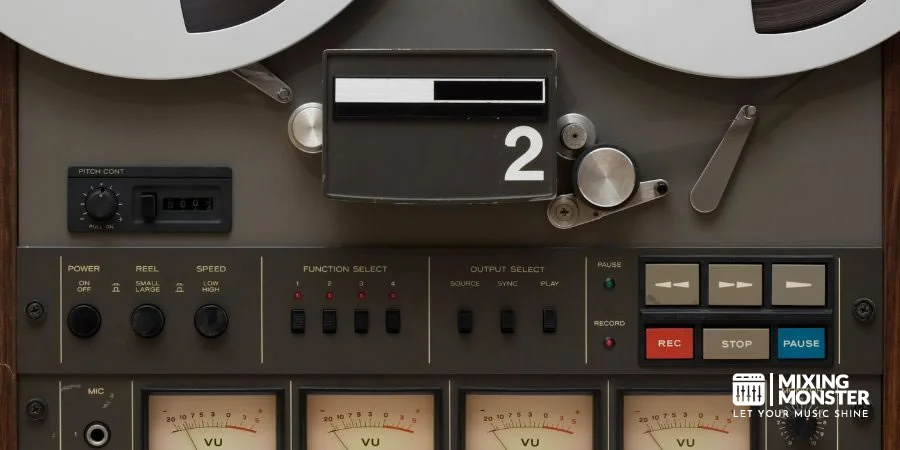
Analog tape recorders magnetize particles on tape as the signal passes through the recording head. The magnetic pattern on cassette tapes or reel-to-reel tape creates a physical representation of the sound wave's amplitude and frequency characteristics.
Vinyl records use a different approach, in which a cutting lathe carves grooves into a master disc. The depth and width of these grooves correspond to variations in the audio signal, creating a mechanical imprint of the original performance.
The continuous nature of analog recording means no sampling or quantization occurs. The electrical signal remains intact from the microphone to the storage medium, preserving the wave's natural characteristics throughout the process.
Digital Recording Workflow And Audio Conversion
Digital recording relies on an analog-to-digital converter to transform continuous audio signals into discrete numerical values. This converter samples the incoming signal thousands of times per second, typically at rates like 44.1 kHz or 48 kHz.
Audio interfaces serve as the bridge between microphones and computers, housing the converters and preamplifiers needed for digital capture. These devices send the converted data to a digital audio workstation (DAW), where it can be edited and manipulated.
Popular DAW platforms include Pro Tools and Logic Pro, which store recordings as files on hard drives or solid-state storage. Earlier digital systems like ADAT used magnetic tape to store digital information, combining tape's physical nature with digital's precision.
Playback requires a digital-to-analog converter to transform the stored binary data back into electrical signals that speakers can reproduce. The bit depth and sample rate determine how accurately the digital system represents the original sound wave.
Discover Best Audio Gear & Equipment

The Role Of Recording Equipment And Media
Recording equipment varies significantly between analog and digital approaches. Tape recorders require precise mechanical alignment and regular maintenance to keep recording heads clean and properly positioned.
Digital audio workstations need computers with sufficient processing power and storage capacity to handle multiple tracks simultaneously. The choice of audio interfaces affects signal quality, with higher-end models offering better converters and lower noise floors.
Storage media durability differs between formats. Cassette tapes and analog tapes degrade over time due to repeated playback and exposure to magnetic fields. Compact discs and hard drives offer greater longevity but remain vulnerable to physical damage or data corruption.
Modern studios often combine both worlds, using analog equipment for initial capture before transferring to digital systems for editing. This hybrid approach leverages the characteristics of each format while providing flexibility in the production workflow.
3
Sound Quality And Audio Characteristics
Analog and digital recording introduce distinct sonic characteristics that affect how listeners perceive audio quality. The differences stem from how each format captures, stores, and reproduces sound waves.
Dynamic Range And Signal-To-Noise Ratio
Dynamic range measures the difference between the loudest and quietest sounds a format can capture. Digital audio recording can achieve dynamic ranges exceeding 120 dB with modern 24-bit systems, while analog tape typically delivers 60-70 dB.
Signal-to-noise ratio compares the desired audio signal to background noise. Digital systems maintain consistent signal-to-noise ratios across the entire recording, while analog gear introduces tape hiss that reduces this ratio. A 16-bit digital recording provides approximately 96 dB of signal-to-noise ratio.
Analog audio handles peaks differently from digital formats. Tape naturally compresses loud signals rather than clipping them abruptly, creating a smoother response to transients. Digital recordings clip harshly when the signal exceeds 0 dBFS unless properly limited.
Warmth, Harmonic Distortion, And Tape Saturation
The warm sound associated with analog recordings comes from harmonic distortion introduced by magnetic tape and analog gear. This distortion adds even-order harmonics that enhance perceived richness and body, contributing to the sought-after analog character.
Tape saturation occurs when recording levels push tape beyond its linear range. The resulting compression and harmonic content create the characteristic warmth many musicians seek. This effect becomes more pronounced at higher recording levels.
Digital sound captures audio with minimal harmonic distortion, producing a clean and accurate representation. Some listeners perceive this accuracy as sterile or cold compared to the natural sound of analog systems. Modern tape emulation plugins use digital signal processing to recreate the characteristics of tape saturation in digital workstations.
Your Song Mixed & Mastered By Mixing Monster


Noise Floor And Artifacts
The noise floor represents the level of background noise present in a recording. Analog audio carries an inherent noise floor due to tape hiss, typically around -60 dB in consumer-grade equipment. Professional analog gear achieves lower noise floors through better electronics and tape formulations.
Digital recordings can exhibit quantization noise, particularly at lower bit depths. A 16-bit recording has a theoretical noise floor of -96 dB, while 24-bit recordings push this to -144 dB.
Each format produces distinct artifacts. Analog recordings accumulate noise with each generation of copying, and tape exhibits wow and flutter from speed variations. Digital systems can introduce aliasing, jitter, and artifacts from data compression when using lossy formats.
4
Technical Concepts: Sampling, Bit Depth, And Bandwidth
Digital audio conversion relies on three interconnected parameters that determine recording quality: the sampling rate of analog signals, the precision of each sample, and how digital signal processing prevents unwanted frequency artifacts.
Sample Rate And Nyquist Frequency
Sample rate determines how many times per second an analog-to-digital converter (ADC) samples an audio waveform. Common sample rates include 44.1 kHz for CD audio, 48 kHz for video production, and 96 kHz for high-resolution recordings.
The Nyquist frequency establishes that the sample rate must be at least twice the highest frequency being captured. Human hearing extends to approximately 20 kHz, which is why 44.1 kHz captures frequencies up to 22.05 kHz without distortion.
Higher sample rates preserve more ultrasonic information and provide additional headroom during processing. However, they also increase file sizes and processing demands. PCM (pulse-code modulation) recordings at 192 kHz are used in specialized mastering applications where extreme frequency precision matters.
Bit Depth And Audio Resolution
Bit depth defines the dynamic range and precision of each audio sample captured by the ADC. Each bit adds approximately 6 dB of dynamic range to the recording.
|
Bit Depth |
Dynamic Range |
Application |
|
16-bit |
96 dB |
CD audio standard |
|
24-bit |
144 dB |
Professional recording |
|
32-bit float |
Theoretical unlimited |
Mixing and mastering |
Lower bit depths introduce quantization noise, where amplitude values are rounded to the nearest available level. This creates audible distortion in quiet passages. Professional studios use 24-bit recording to capture both whispers and loud sounds without loss of quality.
Dither adds low-level noise when reducing bit depth, smoothing transitions between quantization levels and preventing truncation artifacts during format conversion.
Related Articles

Aliasing And Anti-Aliasing Filters
Aliasing occurs when frequencies above the Nyquist frequency are incorrectly represented as lower frequencies during digital conversion. This creates unwanted distortion that cannot be removed after recording.
Anti-aliasing filters prevent this problem by removing frequencies above half the sample rate before the analog-to-digital conversion process begins. These filters are built into ADC hardware and must be properly implemented to maintain audio fidelity.
If an instrument produces harmonics above 20 kHz and the recording uses a 44.1 kHz sample rate without adequate filtering, those harmonics fold back into the audible spectrum as false tones. Modern converters use steep digital filters that eliminate aliasing while preserving bandwidth within the audible range.

5
Editing, Workflow, And Flexibility
Digital recording converts audio into binary data, enabling unlimited edits without degrading quality, while analog requires physical tape manipulation that permanently alters the original recording. These fundamental differences shape how engineers approach music production from tracking through final delivery.
Editing Power And Non-Destructive Processes
Non-destructive editing is one of the most significant advantages of digital in modern recording studios. Engineers can cut, copy, move, and process audio files without permanently altering the original recordings. This allows unlimited experimentation during music production.
Analog tape editing requires physical cutting and splicing with razor blades. Each edit permanently modifies the tape, leaving no option to undo mistakes. Digital systems store every edit as metadata, preserving the source files intact.
The editing power extends to pitch correction, time stretching, and detailed waveform manipulation. Engineers working in Pro Tools or Logic Pro can zoom into individual samples and make microscopic adjustments. They can also apply effects chains that remain adjustable throughout the entire recording process.
Key Digital Editing Capabilities:
- Unlimited undo/redo operations
- Copy and paste audio regions instantly
- Time-align multiple tracks with sample accuracy
- Apply real-time effects without committing
Workflow Differences Between Analog And Digital
The recording process differs dramatically between formats. Analog sessions demand careful planning since tape reels have limited tracks and editing options remain restrictive. Engineers must commit to sounds during tracking.
Digital workflows offer total recall, meaning every setting can be saved and restored instantly. A music studio can pause a session, work on different projects, and return to exact console positions and plugin settings. Analog consoles require manual documentation and resetting.
Recording to analog tape and then transferring to digital provides warmth with editing flexibility. Many audio engineering professionals adopt this hybrid workflow to capture tape saturation while maintaining digital convenience.
File sharing represents another workflow advantage. Digital recordings transfer between devices without quality loss, enabling remote collaboration across multiple recording studios simultaneously.
Efficiency In Music Production And Audio Engineering
Digital systems dramatically accelerate music production timelines. Engineers can comp vocal takes by selecting the best phrases from multiple performances in minutes rather than hours. Automated mixing allows saving and recalling complex fader moves.
Storage efficiency also favors digital. A single hard drive can hold thousands of hours of multitrack recordings, while analog tape requires climate-controlled storage space. Digital backups ensure projects never disappear due to tape degradation.
The learning curve differs between approaches. Digital audio workstations require computer literacy and an understanding of complex software interfaces. Analog tape machines need mechanical maintenance knowledge and calibration skills. However, digital recording offers flexibility that benefits beginners and professionals alike.
Processing speed matters in commercial environments. Engineers can deliver finished mixes hours after recording ends with digital systems, meeting tight deadlines that analog workflows cannot accommodate.

6
Media Formats And Playback
Recording methods determine which physical and digital formats can store and reproduce sound. Analog recordings exist on tangible media such as vinyl records and magnetic tape, while digital audio encompasses formats ranging from compact discs to compressed files and cloud-based streaming.
Analog Media: Tape, Vinyl, And Physical Formats
Vinyl records store sound as continuous grooves cut into PVC discs. A playback device reads the physical medium and converts the analog signal back into audible sound through a turntable and needle. The format remains popular among collectors and audiophiles who value its tactile nature.
Cassette tapes use a magnetic coating on plastic film to capture audio waves. Tape decks read these magnetic patterns during playback, though the format has largely fallen out of mainstream use. Reel-to-reel tape offers higher fidelity for professional recording but requires specialized equipment and careful handling.
Physical analog formats share common characteristics:
- Direct representation of sound waves
- Susceptibility to wear and degradation over time
- Required dedicated playback hardware
- No easy duplication without quality loss
These formats deliver what many describe as a warmer, more natural sound quality. However, they remain vulnerable to physical damage from scratches, dust, heat, and repeated use.
Digital Formats: CD, MP3, And Streaming
Compact discs encode audio as binary data read by lasers. CDs sample sound at 44.1 kHz with 16-bit depth, providing consistent playback without degradation—the format dominated music distribution from the 1980s through the early 2000s.
MP3 files compress digital audio by removing frequencies that the human ear struggles to detect. This compression reduces file sizes significantly while maintaining acceptable quality for most listeners. Other formats like AAC, FLAC, and WAV offer different balances between file size and audio fidelity.
Streaming services deliver digital audio over the internet without requiring local storage. Platforms use various compression levels and bitrates, typically ranging from 128 kbps for basic quality to 320 kbps or lossless options for premium tiers. The process involves converting samples back into electrical signals via digital-to-analog converters before they reach speakers.
Digital formats excel in portability and accessibility. Users can store thousands of songs on devices smaller than a single cassette tape case.
Longevity And Preservation
Analog physical media deteriorates through use and environmental exposure. Vinyl records develop surface noise from repeated needle contact. Magnetic tape loses signal strength as particles shed from the backing material over decades.
Digital files face different preservation challenges. Unlike physical analog media, digital files can be lost due to system crashes, data corruption, or lack of proper backups. File format obsolescence also poses risks as playback software evolves.
Preservation considerations for each format:
|
Format Type |
Primary Threats |
Expected Lifespan |
|
Vinyl |
Scratches, warping, dust |
50-100 years with proper care |
|
Tape |
Magnetic degradation, stretching |
10-30 years depending on storage |
|
CD |
Disc rot, scratches on read surface |
20-100 years varying by quality |
|
Digital files |
Corruption, format obsolescence, hardware failure |
Indefinite with proper backup systems |
Digital formats offer perfect duplication capability. Creating backup copies prevents data loss without quality degradation. Analog recordings require re-recording onto new media, which introduces generational loss of quality each time the process repeats.
Professional archivists often digitize analog recordings to ensure long-term preservation. This approach captures the original performance while providing the redundancy and stability digital storage offers.

7
Practical Applications And Current Trends
Studios increasingly blend analog warmth with digital precision, while the music industry adapts to technologies that serve specific genres and project needs. Artists and engineers now select recording methods based on sonic goals rather than ideology.
Hybrid Approaches In Modern Music Studios
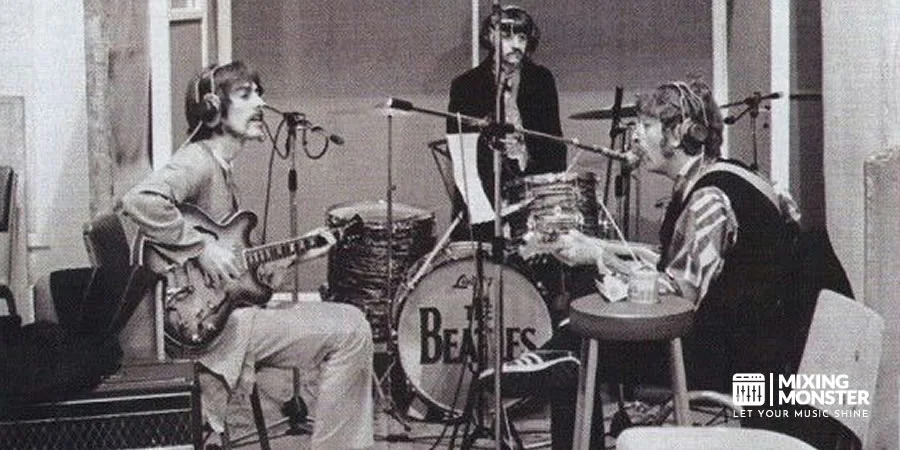
Modern recording setups combine analog and digital methods to capture the best qualities of each format. Engineers track vocals or instruments through analog gear like tape machines and tube preamps, then transfer the recordings into digital audio workstations for editing and mixing. This workflow provides the tactile warmth of analog equipment while maintaining the flexibility of digital tools.
Boutique studios in 2025 offer specialized analog-to-digital services. They record to tape, capturing natural compression and harmonic saturation, before digitizing at high sample rates like 96 kHz or 192 kHz. Software plugins that emulate tape saturation and vintage compressors allow producers working entirely in digital environments to approximate analog characteristics without the cost or maintenance requirements of physical hardware.
The approach proves particularly valuable for indie rock bands and jazz musicians seeking organic texture. A single reel of professional tape costs between $50 and $100, making full analog production expensive. Many studios use analog summing to combine digital tracks through high-end outboard gear.
This hybrid workflow lets artists selectively apply analog character to key elements like lead vocals or live drums while keeping production budgets manageable. By incorporating analog summing, engineers can achieve a level of depth and space that is often difficult to replicate purely within a digital environment.
Impact On The Music Industry And Genres
The music industry shows clear format preferences across different production contexts. Digital music dominates commercial releases, streaming platforms, and podcast production due to its low cost and distribution efficiency. A basic digital setup with a laptop and USB microphone costs under $500, making professional recording accessible to bedroom producers.
Certain genres maintain stronger ties to analog equipment. Lo-fi hip-hop producers deliberately introduce tape hiss and wow-flutter effects to achieve their signature sound. Folk and acoustic artists often record to tape for a natural dynamic response. Pop and electronic music rely almost exclusively on digital production for precise editing and sound design capabilities.
Vinyl sales continue growing among audiophiles, but audio technology advancements make the analog versus digital debate less clear-cut. Most listeners on earbuds or streaming services cannot distinguish between formats. The choice reflects artistic intent more than technical superiority.
Choosing The Right Path For Your Project
Project goals determine the most suitable recording approach. Artists prioritizing speed, editability, and online distribution benefit from fully digital workflows. Those seeking specific tonal characteristics or working in genres where analog aesthetics matter should consider hybrid approaches or targeted use of analog gear.
Budget constraints factor heavily into format decisions. A music studio equipped with professional tape machines and vintage preamps charges premium rates. Digital recording offers unlimited takes and non-destructive editing without material costs. Creators should evaluate whether analog's sonic qualities justify the expense for their particular audience and release format.
Key decision factors:
- Project timeline: Digital allows faster editing and revisions
- Target platform: Streaming requires digital files regardless of source
- Genre expectations: Some styles demand specific analog or digital characteristics
- Technical expertise: Analog equipment requires specialized maintenance and operation skills
- Distribution method: Vinyl releases may warrant analog recording; digital platforms do not
Engineers with fluency in both analog and digital processes can select the appropriate medium for each stage of recording. This flexibility serves clients better than rigid adherence to either format.

Frequently Asked Questions
1
What are the differences in sound quality between analog and digital recordings?
Analog recording captures sound as continuous electrical signals that mirror the original waveforms, while digital recording converts audio into binary data through sampling. The continuous nature of analog creates a direct representation of sound waves, often described as organic.
Digital systems offer superior signal-to-noise ratios by isolating audio signals from background interference. Analog recordings typically exhibit a higher noise floor due to inherent hiss and hum from physical media like tape and vinyl. The enhanced signal clarity of digital systems makes them preferred in professional studio environments that require pristine audio.
Digital recording provides wider frequency ranges through higher sampling rates, capturing audio nuances that analog systems may miss. Analog systems face limitations in frequency response at both high and low ends of the spectrum due to the physical characteristics of recording media.
2
How does the recording process differ between analog and digital technologies?
Analog recording stores sound by creating physical or magnetic impressions on media such as tape or vinyl records. The audio waves directly influence the recording medium, producing a tactile representation of the original performance.
Digital recording uses analog-to-digital converters to sample sound waves at specific intervals, encoding them as numerical values. These rapid snapshots create digital files that processors can manipulate without touching physical media. The binary nature of digital files enables precise editing capabilities unavailable in analog workflows.
Analog systems require specialized playback equipment matched to the recording format. Digital files transfer seamlessly across multiple platforms and devices without requiring format-specific hardware.
3
What are the advantages and disadvantages of using analog recording over digital?
Analog recording offers tonal characteristics valued by audiophiles who appreciate the warmth and saturation that physical media imparts. The continuous signal path creates harmonic distortions that some listeners find musically pleasing. Vinyl records and tape recordings provide tangible, collectible formats with nostalgic appeal.
However, analog recordings degrade through repeated playback and environmental exposure. Surface noise, distortion, and decreased fidelity accumulate over time, compromising long-term audio preservation. Each generation of copying introduces additional quality loss.
Analog systems require more maintenance and specialized knowledge to operate effectively. The equipment demands regular calibration and careful handling to maintain optimal performance.
4
Can modern digital recordings achieve the same 'warmth' as analog?
Digital systems can emulate analog warmth through digital signal processing within software plugins and hardware processors designed to replicate tape saturation and tube characteristics. Modern digital audio workstations include tools that simulate the harmonic distortions and compression behaviors of analog equipment.
Many recording engineers use hybrid approaches, tracking through analog equipment before converting to digital for editing and mixing. This workflow captures the tonal qualities of analog gear while maintaining the flexibility of digital production.
The perception of warmth relates partly to the subtle compression and harmonic enhancement that analog circuits introduce naturally. Digital processing can recreate these effects, though debates continue about whether the results match the original analog experience.
5
In what ways does analog recording still hold relevance in the music industry today?
Vinyl records continue experiencing a nostalgic comeback among collectors and music enthusiasts who value the physical format and ritual of playing records. Many artists release albums on vinyl alongside digital formats to serve this dedicated market.
Professional studios maintain analog equipment for tracking and mixing, particularly for genres where analog characteristics enhance the artistic vision. The tactile interface of analog consoles offers workflow advantages that some engineers prefer over screen-based digital systems.
Tape machines remain tools for adding character during mastering and mixing stages. Engineers route digital recordings through analog gear to impart specific sonic qualities before final digital rendering.
6
Why might audiophiles prefer analog recordings to digital ones?
Audiophiles often cite the continuous waveform of analog as more faithful to the original sound source compared to digital sampling. They argue that the gaps between digital samples, however minute, represent a loss of information that analog systems avoid through their uninterrupted signal path.
The physical interaction with analog formats creates a listening experience that extends beyond pure audio quality. Handling records, observing rotating platters, and engaging with large-format album artwork contribute to the overall enjoyment.
Some listeners perceive digital audio as harsh or fatiguing during extended listening sessions. They attribute this to the mathematical reconstruction of waveforms in digital playback, though controlled studies show mixed results. The subjective nature of audio perception means individual preferences vary significantly based on personal experience and listening conditions.
Related Articles


You Might Also Be Interested In