






Sharp drum hits, crisp claps, and the snap of a plucked string all share one thing in common—audio transients. These quick bursts of energy define the punch and clarity of a sound, making them one of the most important elements in music production.
Audio transients are the short, high-energy peaks at the very beginning of a sound that give it impact and definition. Audio transients in speech and instruments shape how the ear perceives sharpness. Without these peaks, music would lack clarity and separation, as they play a key role in dynamics.
Engineers often focus on controlling transients to balance a mix, whether by enhancing them for punch or softening them for smoothness. Their influence extends across genres, instruments, and production styles.
Understanding how to shape and control transients opens the door to cleaner, more professional mixes. By learning how they affect instruments, producers gain more control over the emotional impact of their music.
Mastering the art of shaping transients ensures that a mix remains punchy and professional. Preserving transients during the recording process is equally important for a natural sound. Exploring this topic reveals practical techniques, mixing strategies, and mastering tips that can transform the way sound is crafted.
Key Takeaways / TL;DR
- Transients are the short, high-energy peaks at the start of sounds
- They shape clarity, punch, and dynamics in music
- Controlling them is key to balanced and professional mixes

1
Understanding Audio Transients
Audio transients are short bursts of energy that shape how sounds are perceived in recordings and live environments. They influence clarity, timing, and impact, making them central to both audio signal processing and acoustics.
Audio Transients: Definition and Characteristics
A transient is the initial peak of a sound, such as the strike of a snare drum, the pluck of a guitar string, or the start of a vocal consonant. It occurs before the sustained part of the sound becomes audible. The transient response of your gear determines how well it captures these peaks.
Transients are brief, high-energy, and often irregular compared to the steady waveform that follows. They differ from the tonal body of a note because they emphasize attack rather than pitch.
In an audio signal, transients appear as sharp spikes in the waveform. These spikes convey important timing and articulation information, helping listeners distinguish between instruments or performances.
Key characteristics:
- Duration: Extremely short, often milliseconds.
- Energy: High amplitude relative to the sustained sound.
- Function: Defines the start of a sound event.
Because of their speed and intensity, transients are more difficult to capture and reproduce accurately than sustained tones.
Audio Transients Role in Audio Signal and Acoustics
Transients play a critical role in how humans perceive sound. The brain uses them to localize instruments in space and to identify the nature of a sound source. For example, the click of a piano key or the snap of a snare drum provides cues about attack and position.
In acoustics, transients determine how a sound interacts with a room. A sharp transient may reflect strongly off surfaces, creating a sense of brightness, while a softer transient produces a smoother, less defined character.
In audio production, engineers often adjust transients to improve mix clarity. Enhancing them can make instruments stand out, while reducing them can help control harshness. Tools like compression, transient shapers, and saturation are commonly used.
Transients provide vital clues about the quality and realism of a source, making their control essential in both recording and playback systems.
Transient Attack and Sustain Explained
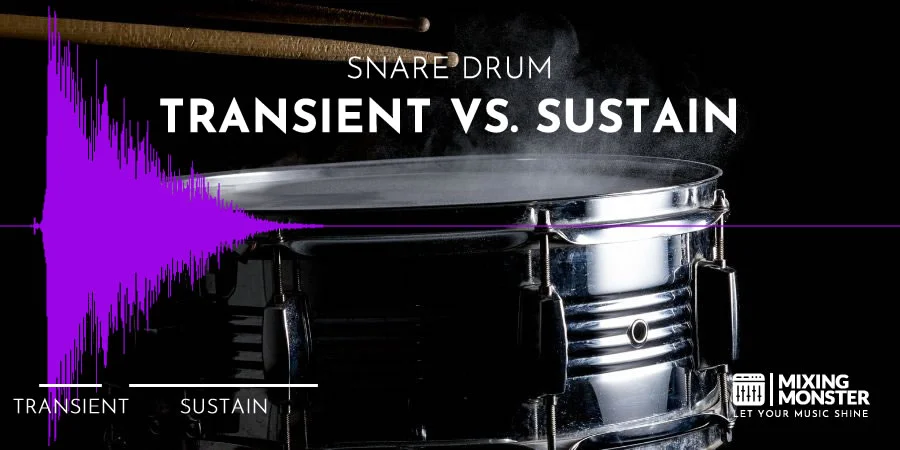
The attack is the very beginning of a sound, defined by the transient. It is the moment of impact—such as the stick hitting a drumhead or a pick striking a string—the faster and sharper the attack, the more pronounced the transient.
The sustain follows the transient and represents the body of the sound. It is steadier, carrying the tonal and harmonic content that persists after the initial strike.
Attack and sustain are components of the ADSR envelope, which describes how a sound evolves. Understanding ADSR helps engineers shape transients to meet specific musical needs. For instance:
- Percussive sounds → strong attack, short sustain.
- String instruments → variable attack, longer sustain.
- Vocals → softer attack, sustained vowels.
In mixing, balancing attack and sustain ensures instruments remain clear without overwhelming the overall audio signal. Even subtle changes in transient shaping can alter how wide, tight, or smooth a mix feels.
Understanding this relationship helps engineers preserve natural dynamics while still controlling impact and clarity.

2
The Importance of Transients in Music Production
Transients shape how instruments cut through a mix, influence timing perception, and determine how clearly one sound stands apart from another. Understanding transients in music production is vital for achieving professional results. They also affect the tonal balance of a track.
Transient Impact on Rhythm and Groove
Transients define the attack phase of a sound and directly influence rhythm and groove. A kick drum's sharp transient signals the downbeat, while a snare's snap emphasizes backbeats, locking instruments together in time. Without clear transients, rhythmic elements blur, and the groove loses precision.
Producers often use compression to adjust transient levels. A slower attack setting allows the transient to pass through, keeping the drums punchy. A faster attack softens the impact, which can smooth out overly aggressive hits.
In dance and hip-hop production, engineers often enhance drum transients to maintain energy on club systems. By contrast, in acoustic or orchestral recordings, preserving natural transients ensures realistic timing and dynamic feel.
Articulation and Clarity
Transients play a critical role in how clearly instruments and vocals are articulated. The initial burst of energy from a plucked guitar string or consonant in a vocal phrase provides definition. If these short peaks are lost, the performance can sound flat and indistinct.
Mix engineers frequently use transient shapers to fine-tune articulation. Increasing the attack emphasizes clarity, while reducing it can soften harsh consonants or string noise. This control helps balance instruments without masking one another.
For example, plosives in vocals are high-pressure bursts that act as unwanted audio transients. These plosives are managed during recording with a pop filter to prevent distortion. High-quality audio equipment ensures these bursts are captured cleanly, which is vital for preserving transients later. This avoids muddiness while preserving essential articulation.
Discover Best Audio Gear & Equipment

Harmonic Content and Frequency Ranges
Transients are not limited to volume spikes; they also carry unique harmonic content. The sharp strike of a cymbal produces high-frequency transients, while a bass guitar pluck emphasizes low and mid frequencies. These details help define each instrument's tonal identity.
Multiband transient processors allow engineers to control specific frequency ranges. For instance, they can enhance the snap of high frequencies in a snare while leaving the body untouched. This precision prevents over-processing and maintains balance.
Transients are essential for shaping both impact and clarity across the spectrum. By carefully managing them, producers can achieve mixes that feel both powerful and controlled.
3
Transients Across Different Instruments
Transients shape the clarity, punch, and presence of instruments by defining how the initial attack of a sound is perceived. They determine whether a drum hit cuts through a dense mix, whether a guitar strum feels sharp or smooth, and how a vocal consonant stands out against sustained notes.
Drums and Percussion Transients
Drums and percussion rely heavily on transients to deliver impact. A kick drum produces a strong, low-frequency transient that sets the rhythmic foundation, while a snare drum generates a sharp, high-frequency transient that cuts through the mix.
Producers often use transient shapers to emphasize or soften this attack. For example, increasing the transient on a snare can add more snap, while reducing it can make the sound blend more smoothly with other instruments.
Different drum elements create unique transient profiles:
| Instrument | Transient Characteristic | Effect in Mix |
|---|---|---|
| Kick Drum | Low-frequency, punchy attack | Adds weight and groove |
| Snare Drum | Sharp, high-frequency spike | Provides snap and presence |
| Hi-Hats | Fast, bright transients | Adds rhythmic detail and drive |
Managing these transients ensures the rhythm section maintains clarity without overwhelming the mix.
Guitars and Bass Guitar Transients
Stringed instruments also produce distinct transients. An electric guitar played with a pick has a sharper initial attack compared to fingerpicking, which creates a softer transient. The strength of this attack influences how the guitar sits in the mix.
A rhythm guitar often benefits from controlled transients to avoid clashing with drums, while a lead guitar may need enhanced attack to cut through. Adjusting transient response can be done with compression, EQ, or saturation.
The bass guitar produces powerful low-frequency transients that give weight to the track. However, excessive bass transients can muddy the low end. Engineers often tame these with compression or shape them with saturation to add harmonics, helping the bass remain clear and audible across playback systems.
Your Song Mixed & Mastered By Mixing Monster


Vocal Transients and Other Instruments
Vocals contain subtler transients, often found in consonants like "t," "k," or "p." These short bursts of energy help define intelligibility and articulation. Without proper transient control, vocals may sound dull or lack clarity.
Compression with carefully set attack and release times can preserve the natural dynamics of a voice while enhancing presence. Subtle saturation can also add harmonic richness to vocal transients without making them harsh.
Other instruments, such as the piano or acoustic guitar, generate transients that vary with playing style and dynamics. For example, a piano key strike has a fast transient followed by resonance, while a softly plucked acoustic guitar string creates a gentler attack. Recognizing these differences allows for precise mixing decisions that maintain balance and definition.

4
Techniques for Shaping and Controlling Transients
Engineers adjust transients to manage clarity, punch, and balance in a mix. This involves shaping attack and sustain, controlling frequency content, and applying dynamics or harmonic processing to achieve precise transient control.
Transient Shaping Tools
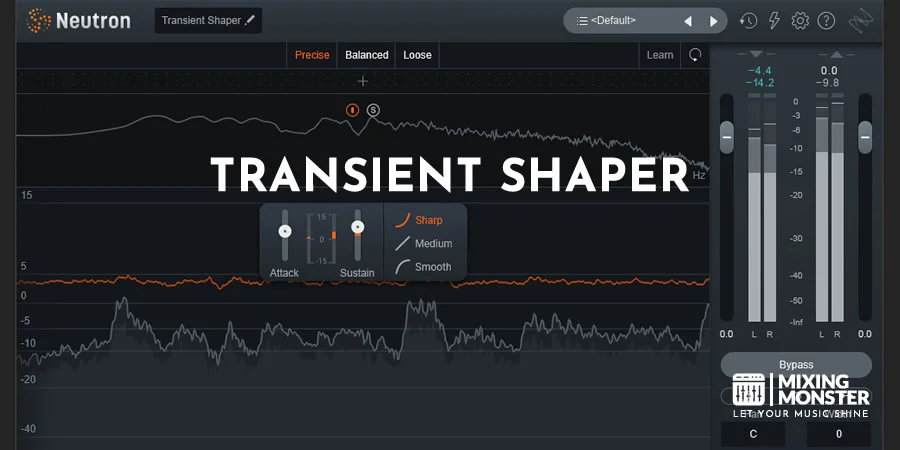
A transient shaper allows direct adjustment of attack and sustain without relying on threshold-based compression. Using a transient processor gives you control over the impact of your sound. By boosting attack, drums or plucked instruments can cut through dense arrangements.
For example, a kick drum can be made punchier by increasing attack by a few dB while reducing sustain to keep the low-end tight. Snare drums benefit from sustain reduction to remove excess ambiance.
Modern transient shaping tools often include frequency-specific processing, allowing the engineer to target only the low or high frequency ranges. Some also offer parallel mix controls for blending dry and processed signals. Many engineers rely on transient processors like the SPL Transient Designer or Native Instruments Transient Master for transparent shaping.
Transient EQ and Frequency Processing
Transient control can also be achieved with EQ when targeting specific frequency ranges of the transient. Boosting the upper mids (2–5 kHz) increases percussive hits, while reducing low-mid sustain can prevent muddiness.
Dynamic EQs or multiband processors add more precision. For instance, a multiband transient shaper can emphasize the attack of a snare in the midrange while leaving the low-end of the kick untouched.
A multiband transient processor allows engineers to isolate frequency bands, applying attack boosts only where clarity is most needed. This prevents overprocessing the full audio signal. Using a multiband transient processor provides surgical control over the attack of complex sounds.
A practical workflow is to use a narrow EQ boost on the transient-heavy range of a guitar or piano, then follow with transient shaping to refine the articulation. This combination balances tone and transient definition.
Related Articles

Transient Compression and Dynamic Processing
Compression remains a key tool for transient control, though it functions differently from transient shapers. A compressor reacts to signal level, reducing peaks above a threshold. With fast attack times, it can tame sharp transients; with slower attack, it allows the transient through while controlling sustain.
For drums, engineers often combine transient shaping and compression. A transient shaper boosts the attack, then compression evens out the dynamic range. This preserves punch while avoiding inconsistent peaks.
Parallel compression is another useful technique for balancing punch and body. By blending a heavily compressed signal with the dry track, the sustain is reinforced while the audio transients remain intact. Many producers rely on parallel compression to thicken drums while maintaining their snap.
Dynamic processing also includes limiters and expanders, which can emphasize or suppress transients depending on settings. Used carefully, these tools add consistency without removing natural character.
Transient Saturation for Transient Control
Saturation introduces harmonic content that smooths harsh transients while adding perceived warmth. Unlike EQ or compression, it alters the harmonic structure, making peaks less sharp and more integrated into the mix.
For example, applying tape saturation to a snare can soften its initial snap while enhancing its body. Tube or analog-style saturation often adds subtle compression, musically reducing overly spiky transients.
Different types of saturation—tape, tube, or digital emulation—affect transients uniquely. Tape saturation compresses and rounds off peaks, while tube saturation enhances even harmonics, adding richness.
Engineers often use saturation in combination with transient shaping. A transient shaper first defines attack and sustain, while saturation glues the sound into the mix. This layered approach ensures both precision and tonal character in transient control.

5
Mixing and Mastering with Transients
Transients shape how instruments interact in a mix and influence how a master translates across playback systems. They determine clarity, impact, and perceived loudness, making them central to both creative and technical decisions.
Cut Through the Mix
Engineers rely on transients to help instruments stand out without excessive volume boosts. A snare drum's crack or a guitar pick attack provides definition, allowing these sounds to cut through the mix.
Transient shapers or compressors with slower attack times can emphasize these peaks. This technique highlights the initial hit while letting the body of the sound remain natural.
Common strategies include:
- Boosting transients on percussive instruments for clarity.
- Reducing transients on competing elements to prevent masking.
- Using EQ to carve space around transient-heavy instruments.
By carefully managing these details, mixers ensure that each part has its own place without cluttering the arrangement. Tools like transient designers are often more precise than EQ alone, making them valuable for shaping impact in a digital audio workstation (DAW).
Balancing Attack and Sustain
The relationship between the transient (attack) and the sustain portion of a sound affects how it sits in a mix. If the attack is too sharp, it may feel unnatural and dominant. If sustain overwhelms, the instrument may lose punch.
Compression plays a key role. A fast attack compressor reduces peaks, smoothing harsh transients, while a slower attack lets them pass through, adding presence. Release times then control how the sustain decays.
For example:
- Kick drums often benefit from stronger attack and controlled sustain.
- Vocals may need softened transients for smoother delivery.
- Guitars can be shaped by emphasizing pick attack or sustaining chords.
Dynamic EQ can refine this balance by targeting specific frequencies within the transient or sustain portion. This allows engineers to adjust articulation without affecting the full tonal range.
Mastering Considerations
In mastering, transients must be preserved while achieving competitive loudness. Over-compression can flatten dynamics, while under-processing can leave peaks uncontrolled.
Limiters and intelligent clipping are common tools for managing these elements. A limiter with carefully set attack and release smooths aggressive transients while maintaining transparency. Soft clipping can round peaks in a controlled way, maximizing level without harsh distortion as noted in advanced transient processing.
Stereo imaging also matters. Slightly widening transient-heavy elements can improve separation, while narrowing them can tighten focus. Subtle adjustments ensure clarity across playback systems.
Mastering engineers often compare processed and unprocessed versions to confirm that transient handling enhances clarity and punch without sacrificing musicality. This step ensures the final product translates well to streaming platforms and varied listening environments.

6
Key Takeaways For Understanding Audio Transients
Audio transients are the short, high-energy bursts at the start of a sound. They define the attack of instruments such as drums, guitars, and pianos, making them critical for clarity and impact in a mix.
They play a key role in how listeners perceive timing, punch, and articulation. For example, the snap of a snare or the pluck of a string is shaped largely by its transient.
Important points to remember:
- Transients carry a large portion of an instrument's identity.
- They influence both the dynamics and perceived loudness of a track.
- Tools such as compressors, limiters, and transient shapers help control them.
| Aspect | Why It Matters | Example |
|---|---|---|
| Attack | Defines character | Drum hit clarity |
| Dynamics | Shapes energy | Kick drum punch |
| Presence | Helps instruments stand out | Vocal consonants |
Engineers often adjust transients to balance impact without distortion. For instance, fast-attack compression can smooth peaks, while dynamic EQ can target specific frequencies of a transient for refinement.
In mastering, techniques like intelligent limiting and clipping help manage peaks while preserving musicality. Subtle use of saturation can also add warmth and strengthen transient definition.
Understanding transients allows producers to make mixes more precise. By carefully shaping them, engineers can improve separation between instruments and create a clearer, more controlled soundstage.
Happy transient shaping!


Frequently Asked Questions
1
How do audio transients affect sound quality in music production?
Audio transients define the attack and presence of a sound. If preserved, they add clarity and separation between instruments, but if lost, a mix can sound flat or blurred. They are especially important in percussive elements where precision and impact are critical.
2
What techniques are used to manage transients in audio mixing?
Engineers often use transient shaper plugins, compressors, and EQ adjustments. For example, peak detection and envelope detection methods help isolate and control sudden amplitude changes. These techniques allow finer control over attack and sustain.
3
Can audio transients be manipulated to enhance a recording?
Yes, transients can be boosted to make instruments cut through a mix or reduced to smooth harsh sounds. A transient boost can add punch to drums, while transient cuts can reduce sharpness in cymbals or vocals. This flexibility makes them a key tool in shaping mix dynamics.
4
What role do transients play in the perception of rhythm and dynamics?
Transients provide the initial impact that helps the ear detect timing and groove. They make rhythmic elements like kick drums and snares feel tight and defined. Without clear transients, rhythm can feel less precise, and dynamics can feel less engaging.
5
How do different audio compression settings impact the preservation of transients?
Fast attack compression can reduce or flatten transients, softening the sound's impact. Slower attack times allow the transient to pass through before compression begins, preserving punch. Release settings also influence how much sustain follows the transient.
6
In what ways do transients contribute to the timbre of an instrument?
Transients carry critical information that helps distinguish one instrument from another. For example, the pluck of a guitar string or the strike of a piano key is shaped by its transient. These quick bursts of energy influence how listeners identify and perceive an instrument's unique timbre.