





Audio panning transforms flat recordings into immersive soundscapes that engage listeners and create professional-quality mixes. This fundamental technique separates amateur productions from polished tracks.
Audio panning is the process of positioning sounds at specific locations within the stereo field, allowing engineers to place instruments anywhere between the left and right speakers. The technique works by controlling how loudly sounds play from each speaker, exploiting how the human brain perceives sound location through timing and volume differences between ears.
Engineers use pan pots or balance controls to adjust these positions, creating the illusion that instruments occupy distinct spatial locations. This positioning also extends to controlling stereo width, making instruments sound narrow and focused or wide and expansive.
Whether working in music production or sound design, mastering audio panning techniques enables creators to build dimensional mixes that guide listener attention and prevent frequency masking between similar instruments.
This guide covers core panning principles, practical instrument placement strategies, advanced techniques for creating width and depth, and common pitfalls that compromise mix quality.
Key Takeaways / TL;DR
- Audio panning positions sounds between left and right speakers by controlling relative volume levels to each side
- Central placement works best for important elements like vocals, kick drums, and bass instruments below 120Hz
- Symmetrical distribution of panned elements creates balanced mixes that remain comfortable for extended listening

1
What Is Audio Panning In Audio Engineering?
Audio panning serves as a fundamental technique for positioning sounds within the stereo field, allowing engineers to create width, separation, and spatial dimension in their mixes. Understanding panning principles helps producers craft more immersive, professional-sounding recordings.
Definition Of Audio Panning And Stereo Placement
Audio panning refers to positioning sounds at specific locations in a mix's stereo image. Mastering the art of panning instruments ensures that each sound source has a distinct home within the stereo field. Engineers use pan pots (panoramic potentiometers) to control how loudly a sound plays from the left speaker compared to the right speaker.
When a sound is panned to the center, it plays at equal volume from both speakers. This creates what's called "phantom center" - the brain perceives the sound as coming from directly in front, even though no center speaker exists.
Panning techniques allow engineers to distribute audio signals between left and right channels. Moving the pan pot clockwise sends more signal to the right channel, while moving it counterclockwise favors the left channel.
Key Panning Positions:
- Hard Left/Right: 100% signal to one channel
- Center: Equal signal to both channels
- Partial Pan: Varying degrees between center and extremes
Why Panning Matters In Mixing And Mastering
Panning creates essential separation between instruments that occupy similar frequency ranges. Without proper panning, multiple elements compete for the same sonic space, resulting in muddy and unclear mixes.
Audio panning is a powerful tool that allows engineers to create a sense of space and immersion within a mix. Strategic placement prevents frequency masking and allows each element to maintain its distinct character.
Professional mixing relies on panning to establish hierarchy and focus. Lead vocals, kick drums, snare drums, and bass typically stay centered because of their importance and low-frequency content.
Panning Benefits:
- Reduces frequency competition
- Creates stereo width
- Establishes mix balance
- Enhances listener engagement
Mono Vs Stereo: Understanding The Basics
Mono signals contain identical information in a single channel, while stereo signals carry separate left and right channel information. Panning mono tracks involves routing the signal to different speakers at varying levels.
Stereo tracks require different panning approaches. Some DAWs provide dual pan pots for stereo channels, letting engineers control position and width independently.
Balance pots offer limited control compared to true stereo panning. Balance controls only adjust the relative levels between existing left and right channels without repositioning the stereo image.
Mono Panning Characteristics:
- Single signal source
- Position controlled by level distribution
- Creates phantom imaging
Stereo Panning Features:
- Separate left/right signals
- Width and position control
- Natural spatial information
The Role Of Panning In Creating Depth And Space
Panning creates a wider sonic experience by distributing elements across the stereo field. This three-dimensional approach transforms flat recordings into immersive soundscapes.
Engineers often visualize the stereo field as a stage, positioning instruments where they would naturally appear in live performance. This spatial reasoning helps create logical and musical panning decisions.
Effective panning maintains symmetrical balance while providing each element with distinct placement. Complementary positioning prevents one side from becoming overly dense or sparse.
Spatial Considerations:
- Width: How spread out elements appear
- Depth: Forward/backward positioning through volume and effects
- Height: Perceived vertical placement through frequency content
- Movement: Dynamic panning for special effects

2
Core Principles Of Audio Panning
Effective panning relies on understanding how the pan knob controls signal distribution and how different positions affect the stereo field. Strategic instrument placement with panning creates separation and prevents frequency masking in any mix.
Center, Left, And Right Explained
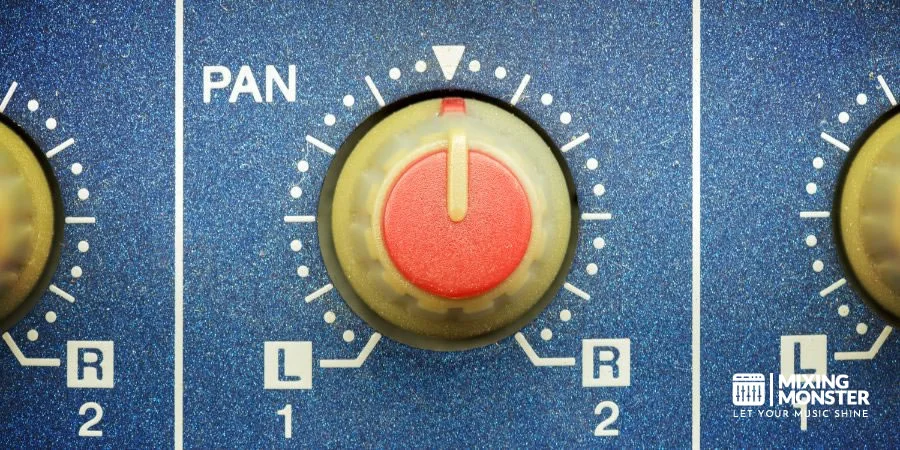
The center position represents the most powerful location in any stereo mix. When a pan knob sits at 12 o'clock, the signal feeds equally to both left and right speakers, creating what engineers call "phantom center."
Lead vocals, kick drums, snare drums, and bass instruments typically occupy this prime real estate. These elements anchor the mix and provide the foundation that listeners expect to hear directly in front of them.
The left and right positions offer creative placement opportunities for supporting instruments. Hard panning places sounds at 9 o'clock (full left) or 3 o'clock (full right), while soft panning uses positions like 10 o'clock or 2 o'clock for subtler placement.
| Position | Typical Instruments | Purpose |
| Center | Vocals, kick, snare, bass | Foundation and focus |
| Soft Left/Right | Hi-hats, guitars, keys | Support and width |
| Hard Left/Right | Percussion, effects, doubles | Excitement and space |
Balancing Instruments For A Clean Mix
Symmetrical panning strategies prevent the mix from feeling lopsided or uncomfortable to listeners. Engineers distribute instruments evenly across the stereo field to maintain sonic balance.
Guitar parts work well when panned to opposite sides - rhythm guitar at 10 o'clock and lead guitar at 2 o'clock. This approach gives each instrument its own space while maintaining symmetry.
Drum overheads should avoid extreme hard panning. Positioning them at 10 o'clock and 2 o'clock creates width while keeping the drum kit focused and cohesive.
When asymmetry occurs naturally, engineers use delay returns or reverb sends panned opposite to sparse areas. This technique maintains the perception of balance without adding new instrument tracks.
Discover Best Audio Gear & Equipment

The 80/20 Rule Of Panning Decisions
Most panning decisions follow predictable patterns that work across genres and styles. Approximately 80% of panning controls follow established conventions that prioritize clarity and listener comfort.
Keep low-frequency instruments below 120Hz centered to prevent power imbalances between speakers. Mid-frequency instruments like guitars and keyboards benefit from strategic left/right placement to avoid masking.
The remaining 20% of decisions involve creative choices that serve the song's artistic vision. Background vocals might sweep across the stereo field, or percussion elements might dance between left and right for rhythmic interest.
Mono compatibility testing ensures panning decisions translate to single-speaker systems. Engineers regularly check their mix in mono to verify that no instruments disappear or become severely attenuated.
Avoiding Phase Issues While Panning
Phase problems occur when identical or similar signals reach the listener's ears at slightly different times. Panning controls can either create or solve these issues depending on how engineers apply them.
Stereo microphone recordings require careful attention to phase relationships. When panning stereo piano recordings, both left and right channels must maintain their original phase relationship to avoid hollow or thin sounds.
Double-tracked instruments need strategic panning to avoid phase cancellation. Placing identical performances at different pan positions helps, but slight timing or tonal differences work better than exact duplicates.
Phase meters and correlation meters help identify problematic relationships between panned elements. These tools show when signals work against each other rather than supporting the overall mix clarity.
3
How To Pan Instruments In A Mix
Effective instrument panning creates width, separation, and balance by positioning each element strategically across the stereo field. Proper panning enhances the spatial depth and clarity while preventing frequency masking between similar instruments.

Panning Vocals For Presence And Clarity
Lead vocals should remain centered in the mix to maintain focus and prominence. This positioning allows the main vocal to cut through the instrumental elements without competing for space.
Backing vocals require different treatment depending on their function. Harmony vocals work best when panned slightly off center to create space while preserving their blend with the lead vocal.
Doubled vocals can be panned hard left and right at approximately 20dB below the lead vocal level. This technique adds subtle thickness and width without interfering with the main vocal presence.
Unique backing vocals benefit from wider panning positions, typically 50-80% left or right. This separation prevents register conflicts with lead vocals and gives each part distinct placement in the stereo image.
The key principle involves balancing vocal elements to support the lead while creating spatial interest through strategic placement.
Best Practices For Drums And Percussion Panning
Consistent drum panning starts with the kit's foundation. The kick and snare form the rhythmic foundation and must stay centered. Low-end-heavy instruments like the kick should always stay in the middle to keep the mix grounded and focused.
Hi-hat placement works well at 30% left or right, depending on the desired perspective. A right-handed drummer perspective places the hi-hat left, while an audience perspective positions it right.
Toms create natural stereo spread when panned 15-30% around center, moving from one side to the other. This positioning produces dynamic stereo effects during tom fills and adds perceived width to the drum kit.
Overheads provide significant stereo width when panned approximately 75% on either side. This placement captures the natural cymbal spread while leaving extreme positions available for other instruments.
Additional percussion elements like tambourine or shakers should balance against the hi-hat on the opposite side to maintain stereo equilibrium.
Your Song Mixed & Mastered By Mixing Monster


Guitars, Keys, And Synths In Stereo Space
Electric guitars offer multiple panning approaches depending on their role. Strategic guitar panning helps create a massive wall of sound or a focused lead, depending on the arrangement. Rhythm guitar parts work exceptionally well when hard-panned left and right, especially with double-tracked performances playing identical or complementary parts.
Lead guitar positioning depends on context. Solo sections benefit from center or slightly off-center placement, taking the vocal's position during instrumental moments.
Guitar riffs typically sit at 50% left or right, balanced against other mid-frequency elements like hi-hats or additional guitars to prevent frequency masking.
Piano panning varies based on mix density and recording method. Sparse arrangements can accommodate wide stereo piano recordings, using the instrument's natural 88-key range.
Dense mixes require more conservative piano placement, often positioned between center and one side with reduced stereo width to prevent clutter.
Strings and synths follow similar principles, with wide panning appropriate for sparse arrangements and tighter positioning necessary in busy mixes to maintain clarity.
Low-End Instruments And Why They Stay Centered
Bass instruments must remain centered to maintain mix focus and low-end stability. Off-center bass positioning causes the mix to lose its foundational anchor and creates an unbalanced listening experience.
The relationship between kick and bass requires careful attention to their shared center position. Proper EQ and compression ensure both elements occupy the same space without competing or creating muddiness.
Low-frequency content behaves differently in stereo systems and various playback environments. Center positioning ensures consistent bass response across different speakers and room configurations.
Subharmonic content below 80-100 Hz becomes increasingly difficult to localize spatially, making off-center positioning ineffective and potentially problematic for mono compatibility.
This centered approach applies to all low-end sources, including synth basses, bass guitars, and any instrument carrying significant sub-bass content.

4
Advanced Audio Panning Techniques
Advanced panning techniques expand beyond basic left-right positioning to create dynamic soundscapes through automation, specialized stereo imaging tools, and strategic use of spatial effects. These methods allow producers to craft three-dimensional audio experiences that respond to different playback systems.

Creative Automation And Moving Sounds
Audio panning automation creates dynamic movement within the stereo field during playback. This technique transforms static mixes into engaging soundscapes where instruments travel across the listening space.
An auto-pan plugin can generate rhythmic movement by automatically sweeping sounds left to right. These tools allow producers to add movement to synths or percussion without drawing manual automation curves. Producers can sync these movements to song tempo for musical results. Setting autopan to quarter notes creates steady motion, while eighth-note patterns add urgency.
Buildup Automation works effectively during song transitions. A synth lead can gradually pan from left to center during verses, then sweep dramatically across the stereo field before drops. This technique builds anticipation and guides listener attention.
Circular Panning creates the illusion of sounds rotating around the listener's head. This requires precise automation curves and phase manipulation. The effect works best on sustained sounds like pads or atmospheric elements rather than percussive instruments.
Panning For Headphones Vs Speakers
Headphone and speaker playback create fundamentally different stereo experiences that require specific panning approaches. Headphones provide channel separation, while speakers create acoustic crossover between left and right signals.
Speaker Considerations involve understanding how sounds blend in physical space. Hard-panned elements at 100% left or right can sound disconnected on speakers. Most professional mixes limit extreme panning to 80-90% to maintain cohesion.
Headphone Translation allows for more aggressive panning since each ear receives isolated channel information. Producers can use wider stereo fields and more dramatic automation without losing musical balance.
Mono Compatibility Testing becomes crucial since many playback systems sum stereo signals to mono. Elements that sound distinct when panned may disappear or clash when centered. Regular mono checking prevents these issues during mixing.
Related Articles

Using Reverb And Delay With Panning
Spatial effects combined with panning create convincing three-dimensional soundscapes. Strategic reverb and delay placement enhances the perceived depth and width of panned elements.
Opposing Delay Placement involves panning dry signals to one side and their delays to the opposite side. A guitar panned 60% left with its delay at 40% right creates stereo width while maintaining clarity. This technique prevents frequency buildup in single locations.
Reverb Positioning can simulate realistic acoustic spaces. Close-miked instruments panned center benefit from reverb tails spread wider in the stereo field. This mimics how reflections behave in actual rooms.
Send-return panning lets you control effect positioning independently. Producers can send centered vocals to reverb returns panned left and right at different amounts. This creates immersive ambiance without compromising lead vocal focus.
Stereo Imaging Plugins And Tools
Modern stereo imaging tools provide precise control over stereo field placement beyond traditional pan knobs. These plugins offer visual feedback and advanced stereo manipulation capabilities.
Mid-Side Processing separates mono center information from stereo side content. Producers can widen or narrow stereo images without affecting centered elements. This technique keeps bass frequencies contained while enhancing high-frequency width.
Stereo Widening Plugins use psychoacoustic processing to expand perceived stereo width. However, excessive widening can cause phase issues and mono compatibility problems. Conservative settings of 10-20% widening often provide optimal results.
Vector Scopes display real-time stereo field information, showing exactly where sounds sit in the mix. These visual tools help identify panning imbalances and ensure even stereo distribution across frequency ranges.

5
Common Mistakes To Avoid In Audio Panning
Audio engineers frequently make predictable errors that damage their stereo imaging and create unprofessional-sounding mixes. Hard panning essential elements destroys mono compatibility, while clustering multiple instruments in identical positions creates frequency-masking issues.
Over-Panning And Listener Fatigue
Hard panning creates an unnatural listening experience that exhausts listeners over time. When engineers place instruments at extreme left or right positions without consideration, the mix becomes disjointed and difficult to follow.
This approach forces listeners to shift their attention between channels constantly. The brain works harder to process the spatial information, leading to mental fatigue during longer listening sessions.
Professional mixing guidelines recommend avoiding hard panning for essential mix elements like kick drums, bass, and lead vocals. These core components should remain centered to maintain structural integrity.
Wide panning works better when applied selectively to supporting elements. Guitars, keyboards, and percussion elements benefit from moderate placement at 20-30% left or right rather than extreme positions.
The key lies in creating spatial balance without overwhelming the listener. Subtle positioning changes often produce more effective results than dramatic stereo separation.
Ignoring Mono Compatibility
Many modern playback systems collapse stereo signals to mono, making mono compatibility crucial for professional mixes. When engineers ignore this reality, their carefully crafted stereo imagery disappears on certain sound systems.
Phase coherence becomes problematic when low-frequency elements get panned away from center. Bass frequencies positioned hard left or right create destructive interference when summed to mono.
Proper panning techniques maintain punch and clarity across all playback formats. Engineers should regularly test their mixes in mono to catch potential issues before finalizing their work.
LCR panning offers a solution by limiting placement to left, center, and right. This approach ensures better mono translation while maintaining clear stereo separation.
Smart engineers use subtle displacement for bass elements—perhaps 5% opposite positioning for kick and bass—to enhance clarity without compromising mono compatibility.
Clashing Frequencies In The Stereo Field
Frequency masking occurs when multiple instruments occupy identical stereo positions and frequency ranges. This clustering creates muddy, indistinct mixes where individual elements lose their definition and impact.
Engineers often mistakenly group similar instruments together spatially. Two guitars panned to the same position compete for the same frequency space, reducing overall clarity.
Complementary panning solves this problem by placing similar instruments at opposing positions. When one guitar sits at 20% left, placing another at 20% right creates separation and reduces masking.
Effective stereo imaging techniques involve analyzing frequency content before making spatial decisions. Instruments sharing similar frequency ranges need different stereo positions to coexist effectively.
The solution involves strategic placement based on both frequency content and arrangement context. Each instrument should occupy its own distinct space within the stereo field.
Forgetting The Emotional Impact Of Panning
Panning serves as a powerful emotional tool that many engineers underutilize or misapply. Static positioning throughout an entire song wastes opportunities to enhance musical storytelling and listener engagement.
Dynamic panning creates emotional movement by shifting instrument positions between song sections. A guitar centered during verses can move to right-pan positioning during choruses, adding excitement and contrast.
The music's emotional context should guide panning decisions. Intimate ballads benefit from closer, more centered positioning, while energetic rock songs can handle wider stereo placement.
Engineers who treat panning as purely technical miss its artistic potential. Each positioning choice affects how listeners perceive the music's emotional content and energy level.
Automation lets you manipulate emotion through controlled stereo movement. Gradual position changes can build tension or create release at crucial musical moments.

6
Practical Audio Panning Tips For Beginners
Learning to pan effectively requires hands-on practice with proven techniques that build confidence and develop critical listening skills. These foundational approaches help beginners make informed panning decisions while avoiding common mistakes that create muddy or unbalanced mixes.
Start With Reference Tracks
Professional mixes provide the best learning template for understanding effective panning placement. New producers should load reference tracks into their DAW alongside their own projects to analyze spatial positioning.
Most professional tracks follow predictable patterns. Drums, bass, and lead vocals sit in the center. Background vocals spread across left and right channels. Lead instruments like guitars or keyboards sit at specific points between the 10 o'clock and 2 o'clock positions.
Ableton Live users can utilize the Reference plugin to switch between their mix and professional tracks instantly. Pro Tools offers similar functionality through its built-in reference features.
The key lies in identifying where each instrument sits in the stereo field. Producers should note how professional mixers distribute instruments symmetrically across the stereo image. This prevents the mix from feeling lopsided or uncomfortable to listeners.
Use Panning To Solve Mix Clutter
Panning serves as a powerful separation tool when frequency-similar instruments compete for space. Instead of reaching for EQ immediately, producers can often solve masking issues through strategic positioning.
Two electric guitars playing similar chord progressions benefit from opposite panning positions. One guitar panned hard left and another hard right creates distinct spaces for each instrument. The same principle applies to keyboards, background vocals, and percussion elements.
Logic Pro users can experiment with the Stereo Spread feature to widen stereo sources before committing to specific positions. Digital audio workstations generally provide visual representations of the stereo field to help with placement decisions.
Panning similar parts opposite each other prevents frequency masking while maintaining mix balance. This approach works particularly well for doubled parts or harmonically related instruments.
Experiment With Subtle Movements
Small panning adjustments often produce more musical results than extreme positioning. Beginners frequently make the mistake of panning everything hard left or right, creating an unnatural listening experience.
Subtle movements between 15-30% left or right can provide enough separation without disrupting the mix's cohesion. A snare drum panned slightly right of center maintains its impact while making room for other centered elements.
DAWs typically represent panning as percentage values or clock positions. Most mixing scenarios benefit from positions between 9 o'clock and 3 o'clock rather than extreme hard panning.
Professional panning techniques emphasize gradual adjustments over dramatic changes. This approach maintains the natural feel while achieving necessary separation.
Trusting Your Ears Over Rules
Mixing rules provide helpful starting points, but musical context determines the final panning decisions. Every song presents unique challenges that require flexible approaches to spatial positioning.
Some tracks benefit from unconventional panning choices. A bass guitar positioned slightly left of center might serve the song better than strict center placement. Creative panning can enhance the musical arrangement rather than following predetermined formulas.
Different genres demand different approaches. Jazz recordings often feature more adventurous panning than pop productions. Electronic music frequently uses automated panning movements that traditional mixing would avoid.
The most important skill involves developing confidence in personal judgment. Producers should trust their ears when something sounds right, even if it contradicts conventional wisdom about proper panning placement.

7
Key Takeaways For Audio Panning In Mixing
Essential elements belong in the center. Kick drums, snare drums, bass guitar, and lead vocals should stay centered for maximum impact and stability.
Keep low frequencies centered for technical reasons. Frequencies below 120Hz can cause power imbalances between speakers and vinyl pressing issues when panned off-center.
Balance creates comfort for listeners. Symmetrical panning prevents mixes from feeling lopsided and uncomfortable to hear.
| Center Position | Left/Right Placement |
| Kick, snare, bass | Guitars, keyboards |
| Lead vocals | Background vocals |
| Sub-bass elements | Percussion fills |
Similar instruments need separation. Panning comparable elements to opposite sides prevents frequency masking and creates distinct spaces for each sound.
Stereo tracks offer flexibility. These elements don't always need center placement - they can be positioned anywhere in the stereo field for better arrangement.
Drum perspective matters. Mixers should choose either audience or player perspective and apply it consistently across all drum elements.
Width control enhances focus. Instead of extreme left-right panning, position overheads at 10 and 2 o'clock to create focused yet spacious drum sounds.
Strategic placement reduces competition between instruments while maintaining musical balance.
Happy panning!

Frequently Asked Questions
1
How does audio panning enhance the listening experience?
Audio panning creates a three-dimensional soundscape that makes music feel more natural and engaging. Panning audio creates a wider sonic experience by distributing instruments across the stereo field.
The technique prevents frequency masking between similar instruments. When two guitars occupy the same frequency range, panning them to opposite sides gives each instrument its own space in the mix.
Panning adds depth and dimension that mono recordings cannot achieve. It mimics how people naturally hear sounds from different directions in real environments.
2
What are the differences between mono and stereo panning techniques?
Mono panning uses a single pan pot to move a sound source between left and right speakers. As engineers turn the pan pot right, the left speaker output decreases while the right speaker output increases.
Stereo panning involves controlling both the position and width of stereo recordings. What happens when you pan a stereo track depends on whether the DAW uses dual pan pots or a balance control.
Dual pan pot systems let you control the left and right channels independently. Engineers can position stereo instruments anywhere while adjusting their width from narrow to full spread.
Balance controls adjust only the relative levels between the left and right channels. This limits positioning options compared with true stereo panning.
3
What is the purpose of audio panning in mixing?
Audio panning serves multiple technical and creative functions in professional mixing. Panning matters in sound design because it lets engineers create immersive listening experiences through strategic placement.
Its primary purpose is to separate instruments and prevent frequency conflicts. Panning similar sounds to different positions reduces masking and improves clarity.
Panning creates spatial balance across the stereo field. Engineers distribute instruments symmetrically to avoid uncomfortable listening experiences where one side feels heavier than the other.
4
Should vocals always be panned to the center?
Lead vocals typically remain centered in most musical genres for maximum impact and clarity. Position lead vocals at the center of the stereo field for optimal presence and intelligibility.
Background vocals and harmonies often benefit from off-center positioning. Engineers commonly pan backing vocals to left and right positions to create width and support the centered lead vocal.
Genre conventions influence vocal panning decisions. Jazz, classical, and some experimental music may place lead vocals off-center for artistic effect.
Practical considerations support center panning for vocals. Center positioning ensures the vocal remains audible on both mono and stereo playback systems.
5
Can audio panning be automated in music production, and if so, how?
Modern DAWs support panning automation through recorded parameter movements over time. Engineers can create dynamic panning effects that change throughout a song's duration.
Automation allows for creative effects like auto-panning, where sounds move continuously between speakers. This technique works particularly well for synthesizer pads, percussion elements, and special effects.
Static panning automation helps during different song sections. Verses might feature centered instruments that spread wider during choruses for added impact.
Manual automation involves drawing panning curves on timeline tracks. Real-time automation captures live pan pot movements during playback for more natural-sounding results.
6
What is the role of panning in creating a balanced audio soundscape?
Panning creates visual and auditory balance by distributing sonic elements across the stereo spectrum. Proper audio panning can elevate the listening experience, making it feel more immersive and engaging.
Frequency balance improves when similar instruments occupy different stereo positions. This separation lets each element keep its distinct character without competing for the same sonic space.
Dynamic balance emerges from strategic instrument placement. Heavy, dense instruments on one side require counterbalancing elements on the opposite side to maintain stability.
Professional mixes achieve coherent soundscapes through consistent panning philosophies. Whether you use an audience perspective or a performer perspective for drums, consistency across all elements creates unified spatial relationships.