






Your favorite songs might sound louder than ever, but they're losing something crucial in the process. The loudness war represents one of the most controversial trends in modern music production. This ongoing loudness race affects everything from chart-topping hits to independent releases.
The loudness war is a trend of increasing audio levels in recorded music that reduces audio fidelity and listener enjoyment through aggressive compression and limiting. This practice emerged decades ago when producers discovered that louder tracks seemed more impressive on the radio and grabbed listeners' attention more effectively. Engineers began pushing recording levels higher and higher, compressing the dynamic range between the quietest and loudest parts of songs. The result is music that maintains a consistently high volume but sacrifices the natural ebb and flow that gives recordings their emotional depth.
Modern releases routinely push -8 LUFS or higher, with some tracks scoring as low as DR3 on dynamic range measurements.
Understanding how the loudness war impacts music production helps listeners recognize why some recordings sound fatiguing or flat. This article explores the technical aspects of hypercompression, examines famous examples of over-compressed albums, and reveals how streaming platforms attempt to address the problem through loudness normalization.
Discover best practices for maintaining dynamic range and learn why some artists successfully resist the pressure to maximize loudness at all costs.
Key Takeaways / TL;DR
- The loudness war sacrifices dynamic range for perceived loudness through aggressive compression, resulting in fatiguing and lifeless audio
- Streaming platform normalization has not ended the industry's fixation on extreme loudness levels, as producers continue mastering tracks beyond necessary thresholds.
- Listeners can distinguish between heavily compressed and dynamic recordings even on inexpensive equipment, proving that balanced mastering serves music better than maximum loudness.

1
What Is The Loudness War In Music Production
The loudness war represents a fundamental shift in audio engineering. This phenomenon involves specific technical processes that manipulate volume levels in recorded audio. This phenomenon involves specific technical processes that manipulate the audio signal to achieve maximum perceived loudness, often at the expense of the natural dynamics that give music its emotional depth and clarity.
The Loudness War Definition And Core Concept
The loudness war describes a trend in audio production characterized by the pursuit of maximum loudness in recorded music through aggressive processing. This practice emerged from the belief that louder tracks would capture more attention on the radio, in stores, and across streaming platforms.
The core concept centers on making recordings as loud as possible without technically exceeding peak amplitude limits. Producers achieve this by reducing the difference between the quietest and loudest parts of a song, creating a consistent high volume throughout the track.
This approach became particularly prevalent during the 1990s and 2000s, as digital recording technology enabled more extreme dynamic manipulation. The competitive nature of the music industry drove engineers to push the limits of loudness, believing their releases needed to match or exceed the volume of competing tracks.
Dynamic Range Versus Perceived Loudness
Dynamic range refers to the difference between the softest and loudest parts of an audio recording, measured in decibels. A recording with wide dynamic range contains quiet passages and loud peaks, creating contrast and emotional impact.
Perceived loudness differs from actual peak amplitude in crucial ways. The human ear interprets average volume levels, often measured as RMS (Root Mean Square), rather than instantaneous peaks. This means a heavily compressed track with less dynamic range can sound louder than a naturally recorded piece with higher peak levels.
Music producers exploit this perceptual difference by raising average levels through compression and limiting. A track that maintains a consistently high volume throughout its duration sounds louder to listeners, even when its peak amplitude matches that of a more dynamic recording. This manipulation of the audio signal fundamentally changes how the music sounds and feels.
The Technical Mechanics Behind Loudness Maximization
Loudness maximization relies primarily on two processing techniques: compression and limiting. Compression reduces the volume of the loudest parts of a recording while raising the overall level, effectively squashing the dynamic range into a narrower window.
Limiting acts as a brick wall, preventing any audio signal from exceeding a set threshold, typically just below digital clipping. Engineers can push average levels extremely high while the limiter catches and flattens any peaks that would otherwise cause distortion.
This digital capability stands in stark contrast to the physical limits of vinyl records. If an engineer pushed a vinyl master too hard, the needle would literally jump out of the groove.
Additional techniques include multiband compression and saturation. Saturation adds harmonic complexity, increasing perceived weight. When mastering audio, these processes occur as the final stage before distribution.
How The Loudness War Differs From Natural Volume
Natural volume in music production preserves the intentional dynamics that musicians and engineers create during recording and mixing. Instruments naturally produce varying levels of loudness, from soft piano passages to powerful drum hits, creating rhythmic and emotional variation.
The loudness war approach eliminates much of this natural variation. A drum hit that should sound punchy and distinct gets compressed to nearly the same level as the surrounding instrumentation, reducing impact and clarity.
In digital audio, this difference becomes measurable. A naturally mastered album might have a dynamic range of 12-15 dB, while a loudness war victim often measures 6-8 dB or less. The compressed version may initially sound more powerful, but extended listening typically causes fatigue as the ear craves the variation that natural dynamics provide.

2
Historical Development Of The Loudness War
The loudness war evolved through distinct phases spanning several decades, beginning with radio broadcasting competition and escalating through the CD era into the 2000s. Each phase introduced new technologies and competitive pressures that progressively increased the volume of recorded music.
Early Origins of Radio Broadcasting Competition
The foundations of the loudness war began in radio broadcasting during the mid-20th century. Radio stations discovered that broadcasts perceived as louder attracted more listeners who were scanning across frequencies. Stations began using compression and limiting equipment to maximize their transmitted signal strength within regulatory limits.
This competitive dynamic established a precedent that would later influence the music industry. Engineers developed specialized broadcast processors that could make programming sound consistently louder without exceeding transmission power restrictions. The psychological impact was clear: louder stations seemed more powerful and engaging to audiences.
AM radio stations faced particular pressure due to their limited frequency response and higher noise floors. Making content sound louder helped mask background noise and made stations more prominent on car radios, where much listening occurred.
The CD Era And The Race To Maximum Volume
The introduction of the CD format in the early 1980s was marketed with the promise of perfecting sound forever. This slogan suggested a new era of audio quality, but the transition to digital audio actually provided the technical platform for the loudness war to escalate.
The rise of CDs created new opportunities for engineers to push volume levels higher than analog allowed. While physical physics constrained vinyl records, digital audio provided 96 dB of theoretical dynamic range.
However, the industry largely ignored the potential for perfecting sound forever in favor of competitive volume. This shift prioritized immediate impact over the longevity and fidelity of the recording.
The music industry quickly noticed that louder tracks on compilation CDs and in retail listening stations grabbed more attention. This observation sparked competitive mastering practices where engineers began maximizing peak levels. Record labels pressured mastering engineers to make their releases stand out by making them sound louder than competitors'.
By the 1990s, digital limiting and compression tools became more sophisticated and accessible. Engineers could increase perceived loudness while technically staying within digital headroom limits. The practice accelerated as more music transitioned from analog to digital production workflows.
Discover Best Audio Gear & Equipment


Peak Loudness In The 2000s Music Industry
The loudness war reached its peak during the 2000s when average loudness levels increased dramatically across most commercial releases. Engineers routinely used heavy compression and brick-wall limiting to achieve maximum perceived volume. Many albums from this era measured less than 4 dB of dynamic range compared to 12-14 dB in earlier decades.
Notable examples included Red Hot Chili Peppers' "Californication" (1999) and Metallica's "Death Magnetic" (2008), both criticized for extreme loudness mastering. Audio waveforms from this period often appeared as solid blocks rather than showing natural dynamic variation. Listeners and critics began complaining about listening fatigue and distortion artifacts.
The practice became so prevalent that catalog remastering often focused on making classic albums louder than original releases. This approach prioritized competitive loudness over audio fidelity and artistic intent.
Notable Loudness War Milestones And Turning Points
Several key developments marked significant shifts in loudness-war practices. In 2010, the International Telecommunication Union adopted the BS.1770 standard for measuring loudness using LUFS (Loudness Units Full Scale). This provided an objective measurement system based on human perception rather than simple peak levels.
Streaming platforms began implementing loudness normalization between 2011 and 2014. Spotify, Apple Music, and YouTube adopted standards that automatically adjusted playback levels to a consistent target of -14 LUFS. These normalization standards effectively penalized over-compressed tracks by turning them down while leaving more dynamic content at higher relative volumes.
By 2015, major mastering engineers and artists began advocating publicly for dynamic range preservation. Industry organizations released statements encouraging engineers to prioritize sound quality over maximum loudness.
These combined factors gradually reduced the competitive pressure to produce increasingly loud masters. Mastering expert Bob Katz played a significant role in this shift by advocating for metering standards that prioritize dynamic range over raw volume.
3
Root Causes Behind The Loudness War
The pursuit of maximum loudness in music production stems from competitive market pressures, psychological assumptions about consumer preferences, and systemic industry dynamics that created a self-reinforcing cycle. These interconnected factors transformed loudness from a creative choice into an arms race that fundamentally altered how music is produced and mastered.
Competitive Advantage And Consumer Psychology
Music producers and record labels believed that louder tracks would immediately capture listeners' attention in competitive environments such as radio airplay and retail stores. The assumption was that when listeners compared songs, the louder one would sound more impressive and energetic. This perception drove the pursuit of maximum loudness levels as a perceived commercial advantage.
The psychology behind this strategy relied on the phenomenon where louder sounds are often perceived as better quality during brief comparisons. In the 1980s and beyond, as CDs offered wider dynamic ranges than vinyl, producers began pushing digital recording limits to stand out. However, this advantage only worked in direct A/B comparisons and ignored long-term listener fatigue.
The competitive landscape intensified as digital music formats and streaming services emerged. Each release needed to compete for attention in increasingly crowded markets, leading music producers to prioritize immediate impact over sustained listening quality.
The Myth That Louder Music Sells Better
Despite widespread industry belief, research has questioned the assumption that loudness correlates significantly with listener preference and sales rankings. The connection between volume and commercial success remains largely unproven, yet the myth has persisted for decades in music production.
Record labels operated on the assumption that louder recordings would generate more radio play and retail purchases. This belief became self-perpetuating as competing releases grew louder in response to each other. The actual impact on sales was never definitively established through rigorous data analysis.
Many successful albums achieved commercial triumph without extreme loudness. Audiophiles often point to these recordings as proof that listeners value a natural soundstage and clear transients over sheer power.
Daft Punk's "Random Access Memories" demonstrated that dynamic range and sonic quality could coexist with commercial success, challenging the loudness-equals-sales narrative that dominated industry thinking.
Your Song Mixed & Mastered By Mixing Monster


Industry Pressure And Producer Expectations
Music producers faced constant pressure from record labels and artists to make recordings as loud as competing releases. This expectation became standardized practice, with mastering engineers receiving explicit instructions to match or exceed the loudness of recent hits. The professional environment left little room for prioritizing dynamic range over volume.
Labels feared that quieter releases would sound weak or unfinished when compared to louder competitors. This anxiety drove production decisions regardless of artistic intent or sonic consequences. Engineers who resisted these demands risked losing clients to competitors willing to push loudness further.
The pressure created an environment in which technical excellence was defined by peak loudness rather than tonal balance or musical nuance. This shift in professional standards affected entire generations of recordings across multiple genres.
Game Theory Analysis Of The Loudness Arms Race
The loudness war can be analyzed as a classic prisoner's dilemma, where individual rational choices lead to collectively worse outcomes. Each producer who increased loudness gained a temporary advantage, but when all participants followed suit, everyone ended up with diminished audio quality while maintaining the same relative competitive position.
The optimal strategy for the industry would have been collective restraint, but without coordination mechanisms, individual incentives drove escalation. Once some producers adopted extreme loudness, others had to follow or risk sounding comparatively quiet. This created a race to the bottom, with the equilibrium point at the maximum possible loudness.
Breaking this cycle required external intervention. Streaming platforms eventually implemented loudness normalization standards that removed the competitive advantage of extreme compression, finally providing a mechanism to escape the destructive equilibrium that had dominated music production for decades.

4
Audio Effects And Consequences Of Hypercompression
Hypercompression fundamentally alters the sonic characteristics of music through aggressive gain reduction and limiting, resulting in measurable degradation of audio quality. The technical processes involved—from brickwall limiters to digital clipping—create specific auditory problems that affect both the objective fidelity of recordings and the subjective listening experience.
Loss Of Dynamic Range And Musical Expression
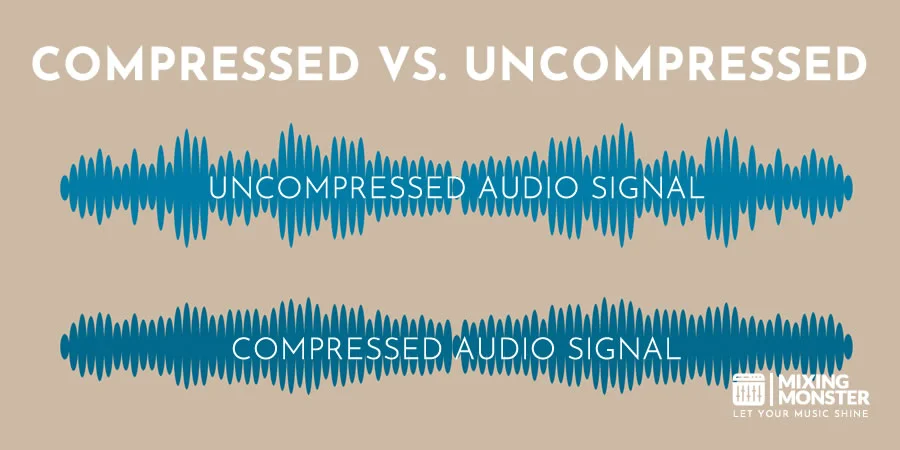
Dynamic range compression reduces the difference between the quietest and loudest parts of a recording. By failing to maintain a full dynamic range, producers eliminate the natural variations that provide emotional impact.
A typical uncompressed recording might have a dynamic range of 12-20 dB, while hypercompressed tracks often measure below 6 dB. This reduction removes the ability of soft passages to provide contrast with louder sections. Research on compression effects shows that greater compression significantly reduces overall audio quality judgments.
Brickwall limiters prevent any audio signal from exceeding a set threshold, typically -0.1 dBFS. While these limiters serve a protective function, aggressive application flattens the natural dynamics that musicians create through their performances. A drummer's subtle cymbal tap becomes nearly as loud as a full crash, and a vocalist's whispered phrase loses its intimacy when brought to similar levels as their powerful chorus.
The musical consequences extend beyond simple loudness. Compressors alter the attack and decay characteristics of instruments, changing how notes begin and end. This manipulation affects the perceived timing and groove of music, particularly in genres that rely on rhythmic precision.
Listening Fatigue And Ear Exhaustion
Compressed music maintains consistently high volume levels, requiring the ear's protective mechanisms to remain engaged continuously. The stapedius reflex, which normally activates during loud sounds, cannot relax when audio stays at elevated levels for extended periods.
Listener fatigue manifests as physical discomfort, difficulty concentrating, and reduced enjoyment after 20-30 minutes of exposure to hypercompressed material. The ear's inner hair cells experience sustained stress without the recovery periods that naturally occur in dynamic music.
Studies indicate that this exhaustion occurs even at moderate playback volumes because compression eliminates the quieter passages that would otherwise provide auditory rest.
The psychological impact compounds the physical effects. Listeners report decreased emotional engagement and a sense of monotony when experiencing heavily compressed tracks. The continuous assault of high-level audio creates a numbing effect, leading the brain to filter out musical information as a defensive response.
Related Articles

Clipping, Distortion, And Audio Artifacts
Digital clipping occurs when audio signals exceed 0 dBFS, resulting in abrupt waveform clipping. This creates harsh, square-wave-like distortions that produce audible artifacts across the frequency spectrum. Unlike analog distortion, which can sometimes add pleasing harmonics, digital clipping generates inharmonic overtones that sound distinctly unpleasant.
Common artifacts from hypercompression include:
- Pumping and breathing: Audible fluctuations in background noise or reverb
- Intermodulation distortion: Unwanted frequencies generated when multiple signals interact
- Loss of high-frequency detail: Smearing of transient information
- Pre-echo: Audible artifacts before sharp transients in lossy formats
Limiters pushed beyond their intended operation introduce these defects. The gain reduction meters on mastering compressors might show 10-15 dB of reduction on peak transients, forcing the algorithms to make extreme decisions about which audio information to preserve. This process particularly damages percussive instruments and sibilant vocal sounds.
The combination of compression and subsequent equalization often exacerbates these problems. Engineers sometimes add a high-frequency boost to compensate for the dullness compression creates, which then amplifies the distortion artifacts already present.
Impact On Different Music Genres And Styles
Classical and jazz recordings are most severely affected by hypercompression because these genres rely heavily on dynamic contrast for artistic expression. A symphony's crescendo from pianissimo to fortissimo represents the composer's intentional dramatic arc, which compression eliminates. Concert recordings lose their sense of acoustic space when limiters crush the natural room ambiance.
Electronic and pop music producers sometimes embrace compression as an aesthetic choice rather than purely for loudness. However, even within these genres, hypercompression reduces sonic clarity. Synthesizer patches lose their carefully designed envelope characteristics, and layered productions become indistinct masses of sound.
Rock and metal genres present unique challenges. The aggressive nature of these styles already features sustained high energy, but compression removes the impact of powerful drum hits and the breathing space between sections. A properly dynamic metal recording allows breakdown sections to hit harder through contrast with preceding passages.
Hip-hop and R&B face particular issues with vocal intelligibility. When compression brings the bass, drums, and vocals to similar levels, the lyrical content—central to these genres—becomes difficult to distinguish. The punch of kick drums and the snap of snares, which define the genre's rhythmic character, lose their distinctive quality when compressed to match sustained elements.

5
Famous Examples Of Loudness War Victims
Several high-profile albums became notorious for excessive compression and limiting that sacrificed sound quality for loudness. These releases sparked widespread criticism from audio engineers, fans, and music critics who recognized the detrimental effects of pushing audio levels beyond reasonable limits.
Metallica's Death Magnetic Controversy
Metallica's Death Magnetic stands out as the most frequently cited victim of excessive loudness processing. Released in 2008, the album suffered from such extreme over-compression and brick-wall limiting that critics universally complained about poor sound quality.
The distortion was so apparent that casual listeners could immediately hear the problems. The album's waveforms showed almost no dynamic range, appearing as solid blocks rather than the varied peaks and valleys typical of well-mastered recordings.
An unexpected revelation came through Guitar Hero III, which used the original multitrack stems from the recording studio. When fans played the game, they heard what the album could have sounded like without the aggressive mastering. The difference was striking—the Guitar Hero version contained actual dynamics and clarity that the retail release lacked.
This comparison garnered significant media coverage and helped educate music fans about the loudness war's impact. Audio engineers Bob Ludwig and others pointed to this release as a turning point that finally made the general public aware of how excessive loudness was degrading music quality.
Red Hot Chili Peppers Californication Backlash
Red Hot Chili Peppers' 1999 album Californication became another prominent casualty of the loudness war. The mastering pushed levels so aggressively that audible distortion and clipping plagued many tracks throughout the album.
Engineer Mick Guzauski, who mixed portions of the album, later expressed disappointment with the final mastering. The original mixes contained proper dynamics and clarity that were lost in pursuit of maximum loudness.
Fans and audio professionals created petitions requesting a remastered version with more reasonable dynamics. The album's commercial success couldn't hide the fact that its sound quality suffered significantly from excessive compression and limiting.
Oasis And Britpop Era Hypercompression
The mid-1990s Britpop movement introduced new levels of loudness to rock music. Oasis's album (What's The Story) Morning Glory is considered a landmark example of detrimental compression combined with extreme limiting, creating something remarkably loud for its time.
Released in 1995, the album coincided with the widespread adoption of digital brick-wall limiters like the Waves L1 Ultramaximizer. These tools allowed engineers to push tracks significantly louder than previously possible, though at the cost of dynamics and naturalness.
The aggressive mastering approach set new standards for rock album loudness that other artists and labels felt compelled to match or exceed.
Modern Pop Productions Pushing Loudness Limits
Contemporary pop music continues to push the limits of loudness despite streaming services implementing normalization. Many modern productions still employ heavy compression and limiting, though the motivations have shifted from competing for raw volume to achieving specific sonic aesthetics.
Mastering engineer Bob Katz has noted that while streaming normalization theoretically ended the loudness war, many producers still deliver hyper-compressed masters.
When an artist decides to remaster a classic album today, they often face the temptation to increase the RMS levels to match modern pop standards. These tracks don't gain loudness advantages on streaming platforms but lose the dynamic range that would make them more engaging to listeners.
Modern pop productions often measure at DR5 or lower on the dynamic range scale, where DR7 or lower is considered a loudness-war victim. This approach prioritizes consistency and punch over natural dynamics, though it can lead to listener fatigue during extended listening sessions.

6
Counterexamples And Dynamic Range Champions
While the loudness war has affected much of modern music production, several artists, labels, and formats have deliberately chosen to preserve dynamic range and prioritize audio quality over maximum loudness. These examples demonstrate that commercial success and critical acclaim can coexist alongside thoughtful mastering that respects the listener's experience.
Artists Who Resisted The Loudness Trend
Several prominent artists have rejected aggressive compression in favor of dynamic music that retains emotional impact.
Billie Eilish's albums feature mastering that preserves quiet passages and allows for genuine dynamic contrast, proving that streaming success doesn't require hyper-compressed tracks.
Daft Punk's "Random Access Memories" was specifically mastered with dynamics in mind, earning both commercial success and praise for its sound quality.
Steven Wilson, known for his meticulous production work, consistently masters albums at lower loudness levels to preserve audio fidelity. His remasters of classic progressive rock albums restore the dynamic range lost in earlier CD reissues.
These artists demonstrate that music with breathing room can still compete in modern listening environments, particularly as streaming platforms implement loudness normalization that negates the supposed advantages of brick-wall limiting.
Audiophile Labels Prioritizing Sound Quality
Specialized record labels have built reputations around superior mastering practices. Mobile Fidelity Sound Lab (MOFI) produces releases with exceptional dynamic range by sourcing original master tapes and employing meticulous mastering techniques. Analog Productions similarly focuses on high-fidelity releases that honor the original recordings' dynamics.
Blue Note's Tone Poet series revived classic jazz recordings with all-analog mastering that preserves the full dynamic spectrum of the original sessions. These releases command premium prices yet sell consistently, proving market demand exists for quality over loudness. Smaller labels like ECM have maintained consistent mastering philosophies for decades, building loyal audiences who value sonic integrity.
Classical And Jazz Recordings: Maintaining Dynamics
Classical music and jazz recordings largely escaped the loudness war because of the nature of these genres. Orchestral performances require substantial dynamic range to convey the contrast between delicate solo passages and full-ensemble climaxes. Labels like Deutsche Grammophon and Decca maintain mastering standards that preserve these dynamics.
Contemporary classical releases typically measure between DR12 and DR15, compared to DR4-DR6 common in compressed pop releases. Jazz labels such as Concord Jazz and Impulse! continue to release recordings that respect the original performances' dynamic characteristics. These genres prove that restraint in mastering serves the music rather than hindering its commercial viability.
Vinyl Releases As Dynamic Range Alternatives
Vinyl records often feature different mastering than their digital counterparts, sometimes with greater dynamic range. The physical limitations of the vinyl format actually discourage extreme compression, as heavily limited material can cause playback issues, including distortion and groove skipping. Many artists now request separate vinyl masters that take advantage of the format's characteristics.
Recent vinyl releases from artists like Jack White and Radiohead demonstrate how the format allows for more dynamic presentations. Analog recordings transferred to vinyl can maintain superior audio quality when mastered appropriately. However, not all vinyl releases feature better dynamics—some transfer compressed digital masters to the format, offering no sonic advantage beyond the analog medium itself.

7
Streaming Platforms And Loudness Normalization
Major streaming services measure integrated loudness and apply automatic gain adjustments to maintain consistent playback volume across different tracks. Spotify targets -14 LUFS while Apple Music uses -16 LUFS, fundamentally changing how engineers approach mastering decisions.
Spotify's Loudness Normalization Standards
Spotify offers three loudness settings that users can select: Loud mode at -11 LUFS, Normal mode at -14 LUFS, and Quiet mode at -19 LUFS. The platform measures integrated loudness using the Loudness Units Full Scale standard and applies gain offsets to match these target levels.
When a track exceeds the target loudness, Spotify turns it down, but never turns tracks up. This means a song mastered at -8 LUFS integrated gets reduced by 6 dB in Normal mode, while a track at -18 LUFS plays at its original level without adjustment.
The platform uses album normalization when two or more songs from the same album play consecutively. This mode references either the loudest track on the album or the average album level, then applies the same gain offset to all tracks to preserve the artist's intended balance between songs.
Apple Music And YouTube Loudness Matching
Apple Music implements integrated loudness normalization at -16 LUFS, providing slightly more dynamic headroom than Spotify. The service employs album normalization similar to Spotify, maintaining relative levels between tracks when playing albums or EPs.
YouTube normalizes content to -14 LUFS for its main platform, and YouTube Music uses the same standard. Both platforms apply normalization on a per-track basis rather than per-album, which can affect how album sequences play back.
|
Platform |
Target Level |
Normalization Type |
|
Spotify |
-14 LUFS (Normal) |
Track/Album |
|
Apple Music |
-16 LUFS |
Track/Album |
|
YouTube |
-14 LUFS |
Track only |
|
Tidal |
-14 LUFS |
Album only |
LUFS Measurements And Industry Standards
LUFS uses K-weighting to approximate human hearing sensitivity, rolling off frequencies below 100 Hz while emphasizing content above 2 kHz. This psychoacoustic filtering ensures measurements correlate with perceived loudness rather than raw signal amplitude.
The integrated LUFS measurement analyzes entire tracks with two gating mechanisms. Signals below -70 LUFS don't contribute to the measurement, and once that threshold is crossed, portions 10 LU below the integrated value are also excluded from calculations.
EBU R128 established the technical foundation that music streaming services adapted for their normalization systems. The standard defines five metrics: Momentary (400ms window), Short Term (3-second window), Integrated, Loudness Range, and True Peak measurements.
How Normalization Changed Mastering Practices
Loudness normalization removed the competitive incentive to master tracks louder than competitors. Music streaming platforms turn down songs mastered at higher levels, eliminating any perceived advantage from aggressive limiting and compression.
Engineers gained freedom to prioritize dynamic range and sonic impact over raw loudness numbers. A master at -10 LUFS with punchy transients can sound more impactful than one crushed to -8 LUFS, since both are normalized to the same playback level.
True Peak limiting became critical for maintaining audio integrity across lossy codec conversion. Most engineers target -1 dBTP to prevent intersample peaks that occur when files are converted to MP3 or AAC formats, though lossless streaming allows peaks as close as -0.3 dBTP without risk of distortion.
8
Current Trends And The Future Of Loudness
Mainstream releases routinely push -8 LUFS or higher, while streaming normalization has failed to curb aggressive mastering practices. Artists and engineers now face competing pressures between traditional loudness expectations and emerging demands for dynamic, high-fidelity sound across immersive formats.

Is The Loudness War Truly Over?
The loudness war continues to evolve rather than end, despite predictions from mastering engineers that streaming normalization would resolve the issue. Mastering engineer Ian Shepherd predicted in 2009 that Spotify's loudness normalization would end the conflict, but by 2023, he admitted he was "more than a little over-optimistic."
Current mainstream releases demonstrate extreme compression levels that exceed even the loudest CD-era productions. The compilation Now That's What I Call Music 114 contained 50 tracks, none of which scored above DR6 for dynamic range, with several measuring as low as DR3. The early 2000s maintained DR6-7 as the standard, making today's levels more aggressive than those of previous decades.
Engineers now combine heavy compression with surgical EQ adjustments to boost specific frequencies while reducing others. This approach creates perceived loudness without obvious distortion, effectively baking radio-style processing directly into master recordings. The tools have become more sophisticated, but the underlying philosophy remains unchanged.
Return To Dynamic Mastering Techniques
Some artists and engineers advocate for restoring dynamic range in modern productions, recognizing that normalized playback environments make extreme loudness unnecessary. Billie Eilish's commercially successful releases demonstrate that dynamic music with intact emotional range can dominate charts and streaming platforms without heavy compression.
Listeners can distinguish between heavily compressed and dynamic tracks even on inexpensive equipment. Users report hearing clear differences between albums with DR4 and DR8 ratings when using basic $10-15 wired earbuds, challenging the assumption that mobile listening requires extreme compression.
Dynamic Range Day, an annual advocacy initiative, promotes awareness about the value of preserving dynamics in recorded music. The movement encourages engineers to prioritize clarity and emotional impact over sheer volume, recognizing that smart arrangement choices, frequency balance, and stereo width create perceived loudness without sacrificing quality.
YouTube serves two billion users who experience normalized audio by default, representing four times the combined audience of all music streaming services. This reality makes loudness-first mastering approaches counterproductive rather than competitive.
Immersive Audio Formats And Spatial Dynamics
Dolby Atmos and other spatial audio formats require different loudness approaches than traditional stereo mastering. These immersive formats rely on three-dimensional soundstage positioning and dynamic contrast to create engaging experiences, making heavy compression particularly detrimental to the listener's experience.
Spatial audio prioritizes the placement and movement of sound elements within a three-dimensional field. Aggressive limiting collapses this spatial information, reducing the format's effectiveness and negating its technical advantages. Engineers working in Atmos must balance loudness considerations with the format's need for headroom and dynamic variation.
Major streaming platforms now support spatial audio playback, creating new standards that favor dynamic productions. Apple Music's Spatial Audio and Amazon Music's 3D audio implementations use different normalization standards than those for stereo content, requiring engineers to reconsider traditional loudness targets.
The technical requirements of immersive formats naturally discourage extreme compression, potentially driving industry-wide shifts toward more dynamic mastering practices as these formats gain market adoption.
Next Generation Loudness Challenges
Audio engineers face evolving challenges balancing traditional client expectations with modern technical requirements across multiple platforms. Streaming services maintain different loudness recommendations, ranging from -14 to -16 LUFS, creating confusion about appropriate mastering targets.
Podcasters now engage in their own loudness competition, applying music production techniques to spoken content. This expansion of loudness-focused approaches beyond music creates new challenges for maintaining consistent listening experiences across content types.
Current platform recommendations:
|
Platform |
Target LUFS |
True Peak |
|
Spotify |
-14 LUFS |
-1 dB |
|
Apple Music |
-16 LUFS |
-1 dB |
|
YouTube |
-14 LUFS |
-1 dB |
|
Amazon Music |
-14 LUFS |
-2 dB |
Despite normalization standards, labels and artists continue pushing for maximum loudness, creating a disconnect between production methods and actual playback conditions. Engineers must adapt quickly to ensure quality across platforms while managing client expectations shaped by decades of loudness-focused culture.
The industry faces a choice between perpetuating outdated loudness-first methods or embracing approaches that prioritize sound quality regardless of playback environment.
As high-resolution audio becomes standard, we may finally achieve the original digital goal of perfecting sound forever. This requires moving beyond the loudness war and respecting the integrity of the original performance.
9
Best Practices For Avoiding Loudness War Pitfalls
Modern audio production requires engineers to balance loudness with quality by targeting specific LUFS levels for each platform and maintaining adequate headroom throughout the mastering process. Success comes from using proper analysis tools and preserving dynamic range rather than maximizing perceived volume at all costs.
Mastering For Streaming Platforms Correctly
Streaming services automatically adjust track levels via loudness normalization, eliminating the competitive advantage of overly compressed masters. Spotify normalizes to approximately -14 LUFS, while Apple Music targets -16 LUFS and YouTube aims for -13 to -15 LUFS. When engineers master these targets, the platforms turn the track down, sacrificing dynamic range for no benefit.
Audio engineers should check their masters against platform standards before final delivery. Tracks mastered too loud will trigger normalization, making them sound quieter than properly mastered releases with better dynamic range. The focus shifts from peak loudness to achieving clarity, punch, and emotional impact within the target loudness range.
Leaving 1-2 dB of headroom below 0 dBFS prevents intersample peaks and potential distortion during format conversion. This approach allows the track to maintain its intended sound quality across different playback systems and streaming codecs.
Preserving Dynamic Range In Your Productions
Dynamic range represents the difference between the quietest and loudest parts of a recording, measured through the crest factor (the ratio between peak and RMS levels). Excessive compression reduces this range, resulting in flat, fatiguing audio that lacks emotional impact. Producers should allow their mixes to breathe by maintaining natural volume variations between sections.
Strategic compression applied to individual tracks differs significantly from aggressive limiting on the master bus. Instrument-level processing can add punch and control without destroying the composition's overall dynamics. Audio mastering should enhance what exists rather than forcing artificial loudness through heavy-handed limiting.
Tracks with preserved dynamics create more engaging listening experiences by providing contrast and emotional peaks. The quiet sections make the loud sections feel more powerful and impactful. This approach particularly benefits genres like orchestral music, jazz, and progressive electronic styles, where dynamic variation serves the artistic intent.
Target LUFS Levels For Different Platforms
Different platforms require specific integrated LUFS targets to avoid unnecessary normalization penalties:
|
Platform |
Target LUFS |
Maximum True Peak |
|
Spotify |
-14 LUFS |
-1 dBTP |
|
Apple Music |
-16 LUFS |
-1 dBTP |
|
YouTube |
-13 to -15 LUFS |
-1 dBTP |
|
Tidal |
-14 LUFS |
-1 dBTP |
|
Amazon Music |
-14 LUFS |
-2 dBTP |
Audio engineers can master to the lowest common denominator (around -14 to -16 LUFS integrated) to ensure optimal playback across all services. This range provides enough loudness for competitive presence while maintaining sufficient dynamic range for quality sound. Mastering louder than -9 LUFS typically results in audible distortion and loss of clarity.
True peak limiting prevents intersample peaks that can cause clipping during lossy codec conversion. Setting the limiter ceiling to -1 dBTP provides an adequate safety margin for most streaming formats.
Tools And Plugins For Loudness Analysis
Professional loudness metering requires specialized plugins that measure LUFS rather than simple peak or RMS meters. iZotope Insight, Waves WLM Plus, and Youlean Loudness Meter (free) provide accurate integrated, short-term, and momentary LUFS measurements, along with true peak readings. These tools help engineers make informed decisions during audio mastering sessions.
The plugins should remain active throughout the mixing and mastering process to monitor levels in real-time. Engineers can identify problematic sections that push loudness too high or reveal areas lacking sufficient energy. Most meters display a loudness history graph that shows how the LUFS evolves throughout the entire track.
Free options like dpMeter 5 and LCAST offer basic LUFS monitoring suitable for producers on limited budgets. They provide the essential measurements needed to meet platform specifications without expensive software investments. Audio engineers should verify their meters against reference tracks that meet professional standards to ensure accurate calibration.
Spectrum analyzers complement loudness meters by revealing frequency imbalances that affect perceived loudness. Excessive low-end energy consumes headroom without contributing proportionally to perceived volume, while harsh high frequencies can cause listener fatigue even at moderate LUFS levels.
10
Key Takeaways For The Loudness War
The loudness war represents a trend of increasing audio levels in recorded music that emerged in the 1950s and intensified with digital technology. Engineers used compression and limiting techniques to make tracks sound louder than competitors, particularly for jukebox playback.
Critical impacts on music production:
- Reduced dynamic range - The difference between loud and quiet sections became compressed, creating flatter, less engaging audio
- Audio quality degradation - Excessive compression introduced distortion and masked subtle details in recordings
- Listener fatigue - Constantly loud music without dynamic variation tires listeners over extended periods
The transition from vinyl to CDs eliminated physical format limitations, allowing engineers to push loudness to unprecedented levels. Digital signal processing tools, such as brick-wall limiters, enabled precise manipulation of audio dynamics.
Streaming platforms have fundamentally changed this landscape. Services like Spotify and Apple Music now use loudness normalization to ensure consistent playback volumes across different tracks. This technology measures audio using LUFS (Loudness Units relative to Full Scale), effectively ending the competitive drive for maximum loudness.
Modern mastering practices prioritize preserving musical dynamics and emotional impact over sheer volume. Engineers now focus on balancing loudness and sound quality, recognizing that excessive compression can sacrifice audio fidelity. The industry has shifted toward valuing dynamic range and natural sound reproduction.

Frequently Asked Questions
1
What are the most notable examples of the loudness war in modern music?
Metallica's 2008 album Death Magnetic stands as the most frequently cited victim of the loudness war. The record was so dramatically over-compressed and brick-walled that critics universally complained about the poor sound quality.
The distortion was so apparent that fans could immediately hear the downsides of extreme loudness. When Guitar Hero III released versions of the songs using the original multitrack stems, listeners discovered how much better the album could have sounded without excessive compression.
Oasis's album (What's The Story) Morning Glory from the mid-1990s represents another landmark example. The record combined excessive compression with extreme limiting to create something absurdly loud for its era.
2
How has the loudness war impacted the creation and quality of vinyl recordings?
Vinyl recordings actually began the original loudness competition during the jukebox era of the 1960s. Louder records stood out from others when played in succession, giving artists an incentive to increase their volume levels.
The Beatles ordered a Fairchild compressor limiter into Abbey Road Studios specifically to compete with louder Motown records. This device reduced peak levels while increasing average loudness, effectively reducing dynamic range in favor of overall volume.
Physical limitations with vinyl prevented the loudness war from becoming as extreme as it did with digital formats. Large-amplitude swings could bounce the needle, and wider grooves reduced the maximum record duration.
3
Can you list any comprehensive databases or resources for analyzing loudness levels in music?
The Loudness Units Full Scale (LUFS) measurement system serves as the standard unit for broadcasting and streaming platforms. Most streaming services normalize audio to -14 LUFS, allowing engineers to measure and compare loudness levels across different tracks.
Digital audio workstations include built-in loudness meters that display LUFS values in real-time. These tools allow producers and mastering engineers to analyze integrated loudness for entire audio files.
Replay Gain, introduced in 2001, was the first volume leveling algorithm for music files. Most music library applications can perform loudness analysis and write normalizing values into file metadata.
4
Can hypercompression and excessive loudness permanently damage your hearing over time?
Excessive volume levels can cause permanent hearing damage regardless of whether the audio is compressed or dynamic. The danger comes from the sound pressure level reaching the ear, not from the compression techniques themselves.
Over-compressed music often sounds flat with squashed transients, clipping, and distortion. While this degrades audio quality and listening enjoyment, the health risk stems from playing any audio—compressed or not—at harmful volume levels for extended periods.
The loudness war primarily affects audio fidelity rather than directly causing hearing damage. Listeners who turn up compressed tracks to compensate for their lack of dynamics may expose themselves to higher sound pressure levels.
5
Has there been a resolution or notable reduction in the practice of the loudness war among music producers?
Streaming services have effectively ended the competitive loudness war by implementing automatic loudness normalization. Tracks made with cranked-up compressors and limiters don't end up any louder when normalized to -14 LUFS.
The transition to a loudness-normalized audio world allows listeners to switch between different artists without adjusting volume controls. Services read metadata loudness values and adjust playback levels accordingly, with no negative impact on audio fidelity.
Over-compressed tracks now reveal their lack of dynamics when played alongside material mastered without excessive limiting. This has incentivized many producers to preserve dynamic range rather than chase maximum loudness.
6
What are some of the consequences or criticisms associated with the loudness war in the music industry?
The loudness war reduces audio fidelity and listener enjoyment by compressing the dynamic range of music, reducing the difference between the loudest and softest parts. When there are no dynamic differences, the brain starts to register the stimulus as noise rather than musical content.
Heavy compression, limiting, and equalization manipulate music's dynamics in ways that make it sound less natural. Waveforms from over-compressed recordings look almost rectangular rather than showing the peaks and valleys that represent dynamic range.
The 2008 backlash against Death Magnetic marked a turning point in industry awareness. Countless other releases suffered from compromised sound quality, with excessive clipping and audible distortion, though they received less attention than Metallica's high-profile example.