





Every song you've ever loved went through a crucial final step before reaching your ears. That step is music mastering - the intricate process that transforms raw studio recordings into polished, professional tracks ready for release—wondering "what is music mastering"?
Music mastering is the final stage of audio production that enhances overall sound quality, ensures consistency across playback devices, and prepares tracks for commercial distribution. This technical and artistic process involves precise adjustments to elements like equalization, compression, stereo width, and loudness levels.
Professional mastering engineers apply their expertise to make songs sound their absolute best while maintaining the artist's creative vision.
Understanding what music mastering is requires looking at how the final polish affects the listener's experience. To define what mastering is, one must consider it the final layer of professional quality control. Proper audio mastering can mean the difference between a track that sounds amateur and one that stands alongside commercial releases.
Modern mastering techniques ensure songs translate well across all listening environments. This includes everything from tiny earbuds to massive club systems while maintaining the artist's emotional impact.
Key Takeaways / TL;DR
- Professional mastering ensures consistent sound quality across all playback systems
- The mastering process requires both technical precision and artistic judgment
- Expert mastering engineers enhance songs while preserving the artist's creative vision

1
What Is Music Mastering?
Music mastering is the final technical step in music production, transforming raw mixes into polished, broadcast-ready recordings. This critical process ensures sonic consistency and optimal playback across all listening devices.
Mastering Definition and Basic Concepts
If you are exploring "what is music mastering?", it is best described as the final quality control step. When people ask what mastering is, they are usually looking for the process that gives a song a finished sound. This stage of audio mastering focuses on the final stereo file, ensuring it is ready for the world.
Professional mastering involves applying precise technical adjustments to enhance a recording's overall sound quality. The process includes equalization, compression, stereo enhancement, and limiting.
Audio engineers use specialized tools to balance frequency ranges, control dynamics, and optimize loudness levels. These adjustments create clarity and punch in the final product.
The goal is to achieve consistency in volume, tone, and track spacing while maintaining the music's artistic vision.
The History of Music Mastering
The history of audio mastering began with the technical needs of vinyl records. Back then, mastering focused on ensuring the physical needle could track the grooves without skipping. In this context, music mastering was a purely technical necessity for disc manufacturing.
Mastering emerged in the 1940s when vinyl records required specific technical requirements for proper playback. Early mastering engineers worked with physical disc-cutting lathes to transfer recordings to vinyl by creating a master disc. This physical copy served as the template for mass replication at pressing plants.
In the 1960s, magnetic tape revolutionized the process, allowing for more precise control over the final sound. Audio engineers developed new techniques for optimizing recordings for different formats.
The transition from analog to digital in the 1980s brought new tools and possibilities to the mastering process. Legendary locations like Abbey Road Studios continued to set the gold standard during these technological shifts.
Digital vs. Analog Mastering
Digital mastering uses computer software and plugins to process audio. Benefits include:
- Precise control over parameters
- Unlimited undo capabilities
- Automated recall of settings
- Lower cost than analog equipment
Analog mastering employs hardware processors and magnetic tape. Advantages include:
- Natural harmonic saturation
- Unique sonic characteristics
- Tactile control interface
- Classic "warmth" in sound
The Role of a Mastering Engineer
To truly understand what mastering is, you must consider the perspective a specialist offers. They act as a fresh set of ears, identifying issues that might have been overlooked during mixing.
Mastering engineers serve as the final quality control checkpoint in music production. They bring technical expertise and fresh ears to the project.
These specialists possess deep knowledge of audio processing tools and music delivery formats. Their experience helps them make crucial decisions about loudness, frequency balance, and stereo imaging.
Professional mastering engineers maintain specialized listening environments with calibrated speakers and acoustic treatment. This setup allows them to make accurate judgments about sound quality.

2
The Importance of Music Mastering
Music mastering transforms raw mixes into polished, professional tracks ready for commercial release. The process ensures optimal sound quality across different playback systems while meeting crucial industry standards. Sometimes a remaster is necessary to ensure older tracks meet modern digital loudness requirements.
Creating Commercial-Grade Sound
Professional mastering elevates tracks to compete with commercial releases. A mastered track has proper frequency balance, optimal dynamics, and appropriate loudness levels that match industry standards.
The mastering process enhances the good elements while revealing potential mix issues that need correction. This critical step separates amateur productions from professional releases.
Modern mastering addresses the challenges of the loudness war while maintaining dynamic range. Understanding what mastering is allows engineers to use specialized tools to achieve the perfect balance between impact and musicality.
Ensuring Consistency Across Platforms
Digital streaming platforms require specific loudness standards. Professional mastering ensures tracks sound consistent whether played on Spotify, Apple Music, or other services.
Different playback systems present unique challenges. Mastering optimizes audio for various formats, including WAV, MP3, and streaming codecs.
The process guarantees that music translates well across different devices - from high-end speakers to smartphone earbuds.
Discover Best Audio Gear & Equipment

Enhancing Sound Quality
Professional mastering adds clarity and depth to the final product. Engineers apply precise equalization to enhance frequency balance and stereo imaging.
Key sound-quality improvements include managing mix brightness to prevent listener fatigue. Other improvements include:
- Balanced frequency spectrum
- Enhanced stereo field
- Controlled dynamics
- Improved punch and clarity
These refinements create an immersive listening experience while maintaining the artist's creative vision.

Meeting Industry Standards
Music mastering ensures tracks meet professional requirements for commercial release. Engineers verify technical specifications, such as peak levels and phase correlation.
Mastered tracks must maintain consistent quality across:
- Broadcast systems
- Streaming platforms
- Physical media
- Digital distribution channels
Professional mastering engineers stay current with evolving industry standards and platform requirements to deliver optimal results. After processing is complete, the final master is checked for errors before being sent to the client.

3
The Music Mastering Process
Music mastering involves precise audio processing techniques and specialized tools to achieve professional sound quality. The process requires careful attention to frequencies, dynamics, and stereo imaging while maintaining the artistic integrity of the mix. Successfully mastering a song involves balancing technical constraints with emotional impact.
Essential Tools and Equipment
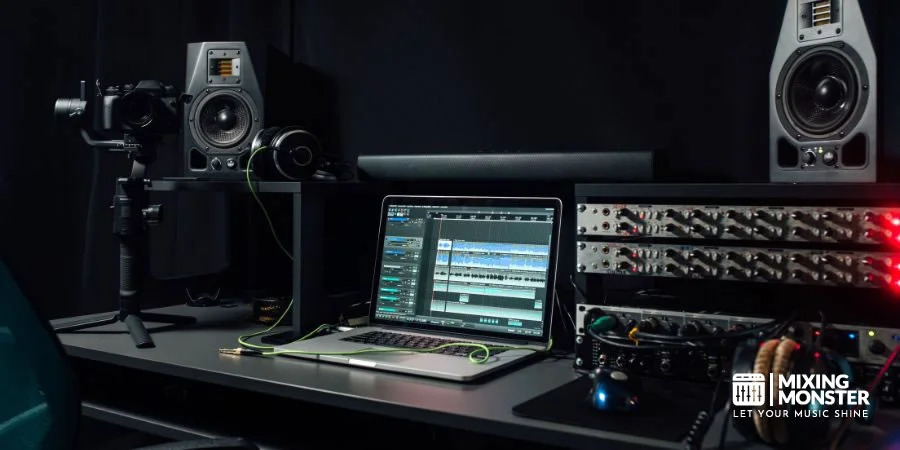
A professional Digital Audio Workstation (DAW) forms the foundation of modern mastering. Engineers need high-quality studio monitors and acoustic treatment for accurate sound reproduction.
Essential hardware includes:
- Audio interface with pristine AD/DA conversion
- Professional monitoring headphones
- Calibrated measurement microphone
- Power conditioning unit
A typical mastering chain consists of several processing stages designed to enhance the audio signal. Required software tools:
- Precision EQ plugins
- High-end compressors and limiters
- Stereo imaging processors
- Metering and analysis tools
Key Mastering Techniques
The mastering process starts with analyzing the mix using spectrum analyzers and reference tracks. Engineers adjust the tonal balance through precise equalization.
Dynamic processing helps control volume variations and enhance impact. This includes:
- Multi-band compression for frequency-specific control
- Peak limiting for maximum loudness
- Parallel compression for punch and energy
Stereo enhancement techniques create width and depth while maintaining mono compatibility.
Your Song Mixed & Mastered By Mixing Monster


Common Mastering Effects
Professional mastering employs specific effects to enhance the final sound:
Frequency Processing:
- Linear phase EQ for transparent tonal adjustment
- Dynamic EQ for frequency-dependent compression
- Harmonic enhancement for added warmth
Dynamic Control:
- Brick wall limiting
- Multi-band expansion
- Transient shaping
Quality Control Steps
Critical listening on multiple speaker systems ensures consistent playback across different devices. Engineers check for:
- Peak levels and loudness standards
- Phase correlation
- Stereo balance
- Frequency consistency
Several monitoring passes focus on different aspects:
- Technical issues like clicks or distortion
- Musical elements and flow
- Metadata accuracy
- Proper application of dither when converting bit depths
Regular comparison with reference tracks ensures competitive sound quality while maintaining the artistic vision.

4
Common Mastering Mistakes to Avoid
Making a master excessively loud and over-processing the audio are two critical errors that can ruin a mastering project. Proper calibration, careful gain staging, and maintaining the mix's original intent are essential for professional results.
Technical Pitfalls
Over-compression is one of the most damaging mistakes in mastering. Engineers should avoid squashing the dynamic range too aggressively.
Excessive limiting can introduce unwanted distortion and fatigue for listeners. A conservative approach with gentle compression ratios between 1.5:1 and 2:1 typically works best.
Improper gain staging can lead to digital clipping. Each processing stage should maintain appropriate headroom, typically -6 dB to -3 dB.
Workflow Errors
Not using proper reference tracks makes it difficult to achieve competitive sound quality. Select references from the same genre with similar arrangements.
Processing without a clear goal can lead to unnecessary adjustments. Create a plan before starting and take detailed notes about processing decisions.
Rushing the mastering process often leads to missed issues. Take regular breaks to maintain fresh ears and perspective.
Related Articles

Equipment-Related Issues
Failing to calibrate the monitoring system leads to unreliable decisions. Room acoustics and speaker placement must be optimized for accurate monitoring.
Using consumer-grade headphones or speakers exclusively can result in translation problems. Professional-grade monitoring equipment is essential for critical listening.
Poor analog-to-digital conversion can introduce unwanted artifacts. Use high-quality converters and maintain proper sample rates throughout the chain.
Communication Problems
Failing to discuss project goals with clients can result in misaligned expectations. Establish clear objectives and sonic preferences before beginning.
Failing to provide multiple versions when requested can frustrate clients. Prepare alternate masters with different loudness levels when needed.
Working against the mixing engineer's intentions can damage the artistic vision. Communicate concerns to the mixing engineer rather than making dramatic changes.

5
How to Choose a Mastering Engineer
Selecting the right mastering engineer requires careful evaluation of their technical expertise and previous work. They must be able to enhance your music while maintaining its artistic vision.
A professional mastering engineer can elevate your tracks to commercial standards. This ensures your music sounds great across all common playback systems.

Key Qualifications to Look For
Professional mastering engineers need extensive experience in audio processing, deep knowledge of music genres, and advanced technical skills. They must understand frequency balance, dynamic processing, and stereo imaging.
Look for engineers with:
- Formal audio engineering education or certifications
- At least 5 years of professional mastering experience
- Expertise in your specific genre
- High-quality monitoring setup and acoustic treatment
- Knowledge of current industry standards and loudness requirements
Budget Considerations
Professional mastering services range from $90 to $ 5,000 per track, depending on the engineer's reputation and experience.
Common pricing options:
- Online automated services (LANDR): $10-50 per track
- Mid-tier mastering engineers: $50-150 per track
- Top-tier mastering engineers: $150-500+ per track
Consider whether automated online mastering services fit your needs for budget projects or demos.
Portfolio Evaluation
Listen to the engineer's previous work in your genre to assess their skills and style compatibility.
Key evaluation points:
- Clarity and definition across frequencies
- Consistent loudness levels between tracks
- Proper stereo image and depth
- Clean transitions between songs
- Professional sound comparable to commercial releases
Request sample masters or short demo services when available.
Communication Requirements
A mastering engineer must clearly understand your creative vision and technical requirements.
Essential communication points:
- Reference tracks and desired sound
- Technical specifications for different release formats
- Timeline and delivery expectations
- Revision policy and process
- File formats and delivery methods
Schedule a brief consultation to assess their responsiveness and ability to explain technical concepts clearly.

6
Key Takeaways for Understanding Music Mastering
Music mastering is the final and crucial stage of music production, where a specialized engineer refines and optimizes the mix for distribution.
The primary objectives of mastering include achieving consistency, cohesion, and competitiveness across all tracks. Engineers focus on balancing frequencies, stereo imaging, and dynamics to create professional-quality sound.
A professional mastering engineer works to ensure tracks sound consistent across different playback systems and formats. This includes optimizing volume levels, adjusting EQ, and enhancing stereo width.
The mastering process evolved from a purely technical role during the vinyl era to a creative and technical discipline in the digital age. Modern mastering combines both artistic judgment and technical expertise.
Essential Elements of Mastering:
- Volume and loudness optimization
- Frequency balance adjustment
- Dynamic range control
- Stereo field enhancement
- Format-specific preparation
Each mastered track must maintain clarity, punch, and detail while meeting current industry standards. Professional mastering ensures songs translate well across various listening environments and platforms.
Happy mastering!

Frequently Asked Questions
1
What does the process of mastering a track entail?
Professional mastering involves carefully adjusting levels and applying equalization, compression, and limiting to achieve optimal sound reproduction across different playback systems.
The mastering engineer evaluates the mix and makes precise adjustments to enhance clarity, depth, and impact while maintaining the artistic vision.
The process includes stereo enhancement, frequency balancing, and ensuring proper loudness standards for the intended distribution format.
2
How do mixing and mastering differ in the music production workflow?
Mixing focuses on balancing individual track elements like vocals, instruments, and effects within the arrangement.
Mastering works with the completed stereo mix as a whole, making refinements that affect the entire track rather than individual elements.
3
Can you list the benefits of professional mastering for an audio track?
Professional mastering enhances overall sound quality through improved clarity, punch, and dimension.
Mastered tracks achieve commercial-grade loudness levels while maintaining dynamic range and preventing distortion.
Professional mastering ensures consistency across an album and compatibility with various playback systems.
4
What are the notable differences between AI mastering and traditional mastering?
AI mastering uses an automated mastering engine to analyze and process audio automatically. A cloud-based mastering engine can offer quick results at lower costs than a human engineer.
Traditional mastering leverages human expertise, creative judgment, and high-end equipment to achieve nuanced, context-aware results.
5
How crucial is mastering in the overall music production workflow?
Mastering serves as the vital final step that bridges the gap between studio production and commercial release.
A properly mastered track meets industry standards and competes sonically with professional releases in the same genre.
6
What tools or software are commonly used in the music mastering process?
Professional mastering equipment includes high-end equalizers, compressors, limiters, and specialized monitoring systems.
Digital audio workstations (DAWs) and dedicated mastering plugins provide precise control over audio processing parameters.
Accurate monitoring environments and professional-grade converters ensure reliable decision-making during mastering.