






Reference tracks are the secret weapon of professional audio engineers and producers. They provide a benchmark for quality and help shape the sonic character of your mix.
Reference tracks are commercially released songs that serve as a standard of comparison during the mixing and mastering process. They help audio professionals assess and adjust various aspects of their mix, including frequency balance, dynamics, stereo width, and overall tonal quality. Reference tracks are typically chosen from the same genre or style as the project being worked on, ensuring relevance and accuracy in the comparison process.
Using reference tracks can significantly improve your mixing and mastering skills and final output. They offer a concrete target to aim for, helping you make informed decisions about EQ, compression, and other processing.
Professional mixing engineers rely on reference tracks to maintain consistency across different listening environments and to ensure their mixes translate well to various playback systems. By incorporating reference tracks into your workflow, you'll gain valuable insights and develop a more discerning ear for professional-quality sound.
Key Takeaways / TL;DR
- Reference tracks provide a quality benchmark for mixing and mastering
- Choosing appropriate references enhances mix decisions and outcomes
- Integrating reference tracks into your workflow improves mixing skills

1
Understanding Reference Tracks In Audio Mixing
Reference tracks play a crucial role in achieving professional-quality mixes. They provide a benchmark for mix engineers to compare their work against and make informed decisions throughout the mixing process.
What Are Reference Tracks?
Reference tracks are professionally mixed and mastered songs that serve as a standard for comparison during the mixing process. These tracks are typically from the same genre or style as the project being worked on. Mix engineers use them to gauge various aspects of their mix, including frequency balance, dynamics, and overall sound quality.
Reference tracks help establish a target for the final mix. They provide insights into industry standards for elements like loudness, stereo width, and tonal balance. By comparing their work-in-progress to a reference, engineers can identify areas that need improvement and make necessary adjustments.
Professionally produced tracks offer a clear reference point for engineers to strive towards. This comparison helps ensure the mix meets professional standards and aligns with current industry trends.
The Importance Of Reference Tracks In Professional Mixing
Reference tracks are essential tools for achieving consistent, high-quality mixes. They help mix engineers overcome limitations in their listening environment and provide an objective standard for evaluation.
By using reference tracks, engineers can:
- Calibrate their ears to a professional standard
- Identify problems in their mix more easily
- Make more informed decisions about EQ, compression, and effects
- Ensure their mix translates well across different playback systems
Reference tracks are particularly valuable when working in unfamiliar acoustic spaces. They provide a known point of reference, helping engineers compensate for any shortcomings in their monitoring setup.
How Reference Tracks Improve Your Mix Decisions
Reference tracks guide mix engineers in making crucial decisions throughout the mixing process. They provide valuable insights into appropriate levels, effects usage, and overall balance.
When comparing to a reference track, engineers can:
- Set appropriate levels for individual instruments and elements
- Determine suitable amounts of compression and dynamics processing
- Gauge the right amount of effects like reverb and delay
- Assess the overall frequency balance and make EQ adjustments
Regular A/B comparisons between the mix and reference track help identify discrepancies. This process allows engineers to fine-tune their mix, ensuring it aligns with professional standards.
Reference tracks also inspire creativity by showcasing effective mixing techniques. They can provide ideas for innovative processing or arrangement choices that enhance the final product.

2
Selecting The Right Reference Tracks
Choosing appropriate reference tracks is crucial for achieving professional-quality mixes. The right references serve as benchmarks and inspire creative decisions throughout the production process. Learning how to choose reference tracks that match your target aesthetic is essential.
Criteria For Choosing Effective Reference Tracks
Effective reference tracks should closely match the genre and style of your project. Consider tracks with similar instrumentation, tempo, and overall vibe. Pay attention to production quality, ensuring the references are professionally mixed and mastered.
Look for tracks with exceptional sound in specific areas you want to improve, such as vocals, drums, or bass. Popular artists like The Weeknd, Zedd, and Kendrick Lamar often serve as great references due to their high-quality productions.
Listen to potential reference tracks on various playback systems to ensure they translate well across different environments.
Genre-Specific Reference Track Considerations
Different genres require unique approaches when selecting reference tracks.
For hip-hop and trap, focus on tracks with powerful bass and crisp drums.
EDM subgenres like house, techno, and future house benefit from references with clean, punchy kicks and well-balanced synths.
Rock and funk tracks often emphasize guitar tones and live drum sounds.
For modern pop, look to artists like Charlie Puth or Disclosure for polished vocal production and contemporary arrangement techniques.
Electronic music genres such as drum and bass or dubstep require attention to complex sound design and intricate rhythm patterns.
Discover Best Audio Gear & Equipment


Building A Diverse Reference Track Library
Create a varied collection of reference tracks to cover different aspects of your productions. Include tracks that excel in specific areas like low-end, stereo width, or vocal clarity.
Regularly update your library with current releases to stay informed about evolving production trends. Consider including iconic tracks like Daft Punk's "Get Lucky" for timeless production quality.
Organize your reference tracks by genre, mood, and specific sonic characteristics for easy access during mixing sessions. This approach allows for quick comparisons and ensures you have suitable references for various projects.
3
Implementing Reference Tracks In Your Workflow
Integrating reference tracks effectively can significantly enhance your mixing process. It allows for accurate comparisons, helps achieve desired tonal balance, and ensures your mix stands up to industry standards.
Setting Up Reference Tracks In Your DAW
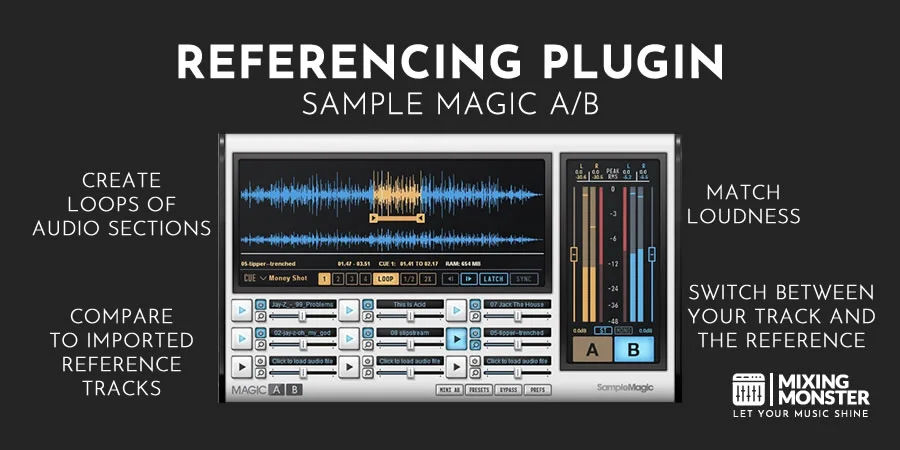
To set up reference tracks in your Digital Audio Workstation (DAW), start by importing high-quality versions of your chosen tracks. Create a dedicated track or bus for references, ensuring it bypasses any master bus processing.
Use a reference plugin like MCompare to switch between your mix and reference tracks seamlessly. This tool often includes Automatic Loudness Compensation, matching levels for fair comparisons.
Set up keyboard shortcuts for quick A/B testing. This allows for rapid toggling between your mix and references, making the comparison process more efficient.
Consider creating a playlist of multiple reference tracks. This provides a broader perspective on different mixing styles and approaches within your genre.
Best Practices For A/B Reference Tracks Comparison
When comparing your mix to reference tracks, focus on specific elements rather than the overall sound. Begin with the low-end, assessing the balance of kick drum and bass.
Listen for vocal clarity and the depth of the stereo image. Pay attention to how instruments are panned and their relative levels in the mix.
Analyze the groove and energy of the tracks. Note how the reference achieves a punchy sound and how this compares to your mix.
Take breaks during comparison sessions to avoid ear fatigue. Fresh ears will provide more accurate assessments of your mix's progress.
Your Song Mixed & Mastered By Mixing Monster


Analyzing Frequency Balance And Dynamics
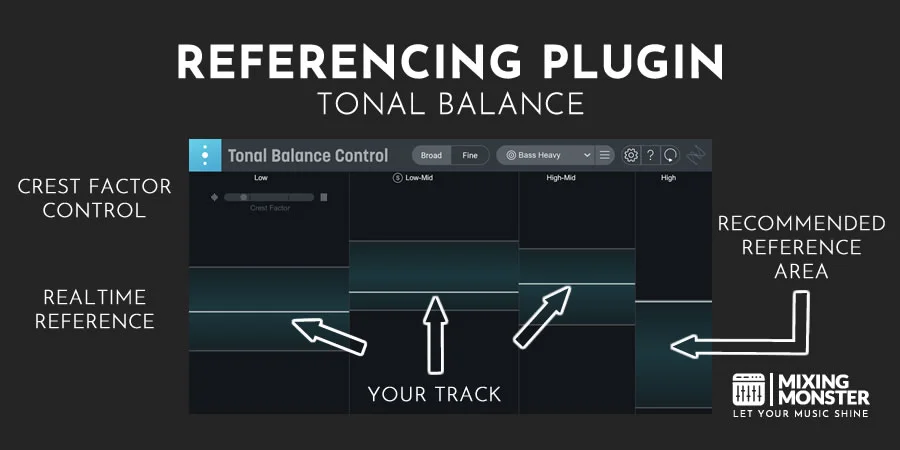
Use spectral analysis tools to visually compare the frequency spectrum of your mix with the reference. Analyzing the tonal balance curve of a professional song helps identify any areas where your mix might be lacking or excessive.
Pay attention to the tonal balance across the entire frequency range. Matching your work to a specific tonal balance curve ensures consistency across different monitoring systems. Note how the reference track achieves clarity in the midrange and air in the high frequencies.
Examine the stereo width at different frequency ranges. Use a correlation meter to ensure proper mono compatibility, especially in the low-end.
Analyze the dynamic range of both tracks. Look at how compression is applied in the reference, particularly on elements like vocals and drums.
Use a loudness meter to match the perceived volume of your mix to the reference. This ensures a fair comparison of dynamics and punch.

4
Advanced Techniques For Reference Track Usage
Reference tracks can be leveraged in sophisticated ways to enhance mix quality, match loudness, and improve mastering outcomes. These advanced methods allow for more nuanced comparisons and precise adjustments.
Using Multiple Reference Tracks For Different Mix Elements
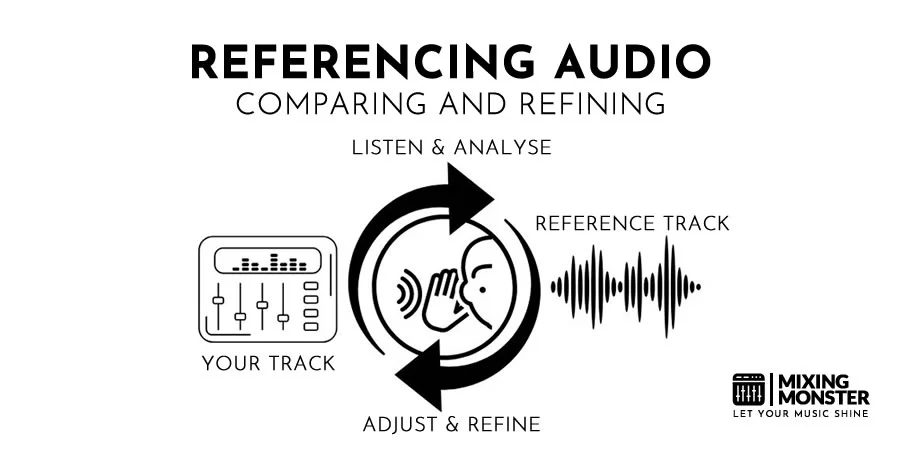
Utilizing multiple reference tracks enables targeted comparisons for specific mix elements. Select reference tracks that excel in particular areas:
- Bass: Choose tracks with outstanding low-end clarity and punch
- Vocals: Pick references with exceptional vocal presence and balance
- Drums: Use tracks featuring well-defined and impactful percussion
Create a playlist of 3-5 reference tracks for each mix element. This approach allows for a comprehensive analysis of how top producers handle various aspects of a mix.
When focusing on a specific element, such as drums, switch between reference tracks to compare different production styles. This technique helps identify common traits among professional mixes and informs decisions about EQ, compression, and effects.
Matching Loudness And Level-Setting Strategies
Matching loudness between the mix and reference tracks is crucial for accurate comparisons. Use a loudness meter to measure and match integrated LUFS (Loudness Units Full Scale) values.
Strategies for effective level matching:
- Set reference tracks to -14 LUFS for streaming-friendly comparisons
- Adjust mix levels to match reference loudness
- Use pink noise as a calibration tool for setting monitor levels
Employ a gain-matching plugin to automate level adjustments between the mix and references. This ensures consistent volume when switching between tracks, allowing for more precise evaluations of dynamics and balance.
Related Articles

Applying Reference Tracks In Mastering
Reference tracks play a vital role in the mastering process. They guide decisions on tonal balance, stereo width, and dynamic range.
Key mastering techniques using references:
- A/B comparisons: Rapidly switch between the master and reference to identify areas needing adjustment
- Spectral analysis: Use a spectrum analyzer to compare frequency content and make informed EQ decisions
- Stereo imaging: Evaluate the stereo field of references to inform mid/side processing choices
Professional mastering engineers often create genre-specific reference playlists. These curated collections help maintain consistency across different projects while adhering to genre-specific sonic characteristics.

5
Reference Tracks Pitfalls And How To Avoid Them
Reference tracks can be powerful tools, but they come with potential pitfalls. Recognizing these challenges helps producers and mixers use reference tracks more effectively.
Over-Relying On Reference Tracks
Using reference tracks can improve mixing decisions, but excessive dependence can stifle creativity. Mixers may become too focused on matching every aspect of the reference, losing sight of their project's unique qualities.
To avoid this, engineers should use references as guidelines rather than strict templates. They can set specific goals for referencing, such as matching the low-end punch or vocal presence, without trying to replicate the entire mix.
It's crucial to remember that reference tracks are tools, not rules. Engineers should trust their ears and artistic judgment, using references to inform decisions rather than dictate them.
Misinterpreting Reference Track Characteristics
Misunderstanding the sonic characteristics of reference tracks can lead to poor mixing choices. Engineers might incorrectly identify EQ curves or mistake mastering effects for mix decisions.
To prevent this, mixers should analyze reference tracks critically. They can use spectrum analyzers to visualize frequency content and level meters to understand dynamics. This approach helps separate mix decisions from mastering processes.
It's also important to consider the sound system used for playback. Different speakers or headphones can emphasize or mask certain frequencies, leading to misinterpretation.
Neglecting Your Artistic Vision
While reference tracks provide valuable insights, blindly following them can compromise artistic integrity. The "loudness war" exemplifies how chasing a perceived standard can lead to detrimental results.
Engineers should prioritize their artistic vision and the needs of the specific project. They can use references to inspire ideas or solve technical challenges without sacrificing the unique qualities of their mix.
It's beneficial to select reference tracks that align with the project's genre and style. This approach helps maintain a balance between technical excellence and artistic expression.
Producers can also create a depth of field similar to their references while preserving the distinctive elements of their mix. This technique allows for a professional sound without compromising creativity.

6
Tools And Plugins For Reference Track Integration
Several powerful tools and plugins are available to integrate reference tracks seamlessly into mixing and mastering workflows. These solutions range from dedicated plugins to DIY approaches, offering flexibility for different needs and budgets.
Popular Reference Track Plugins
Reference track plugins streamline the comparison process between a project and professional tracks. MCompare allows users to host up to 16 reference tracks and sync them with the DAW transport. Metric A/B, available for $49 during sales, offers excellent A/B functionality for referencing.
iZotope's Ozone and Neutron feature reference track capabilities within their suites. These tools provide comprehensive analysis and matching features, helping users align their mixes with industry standards.
REFERENCE by Mastering the Mix is another standout option. It enables precise loudness matching and provides detailed visual feedback on spectral balance and dynamics.
DIY Solutions For Reference Track Comparison
For those preferring a custom approach, DAWs often offer built-in methods for reference track integration. In FL Studio, users can employ Patcher to bypass mastering effects on reference tracks, ensuring accurate comparisons.
A simple yet effective technique involves routing the DAW output and computer audio to separate inputs on a monitor controller. This setup allows quick switching between the project and reference tracks.
Some engineers create dedicated reference tracks within their sessions, importing snippets of professionally mixed songs for easy A/B testing.
Trends In Reference Track Technology
Recent advancements in reference track technology focus on AI-driven analysis and matching. AudioLens exemplifies this trend, offering automated suggestions for EQ and dynamics processing based on reference track analysis.
Cloud-based reference libraries are gaining popularity, allowing users to access a vast collection of high-quality tracks for comparison. These services often include genre-specific playlists and analysis tools.
Integration with streaming services is another emerging trend, enabling direct referencing against commercial releases without the need for local files.
|
Tool/Plugin |
Key Features |
Price Range |
|
MCompare |
16 track hosting, DAW sync |
$50-$100 |
|
Metric A/B |
A/B functionality |
$49-$99 |
|
Ozone |
Comprehensive suite, matching |
$200-$500 |
|
REFERENCE |
Loudness matching, visual feedback |
$50-$150 |
|
AudioLens |
AI-driven analysis |
$100-$200 |

7
Key Takeaways For Working With Reference Tracks
Reference tracks play a crucial role in achieving a quality mix. They serve as benchmarks for audio engineers to compare their work against industry standards.
Using reference tracks helps align a mix with professional sound expectations. This practice ensures that the final product meets or exceeds current industry norms.
Key takeaways for audio mixing with reference tracks include:
- Selecting appropriate reference tracks for the genre
- Analyzing the frequency balance of reference tracks
- Comparing dynamic range and compression levels
- Assessing stereo width and depth
- Evaluating overall tonal balance and clarity
Regular A/B testing between the mix in progress and the reference track is essential. This process allows for continuous refinement and adjustment throughout the mixing process.
Critical listening skills are honed through the use of reference tracks. Engineers learn to identify subtle differences in sound quality, leading to more precise mixing decisions.
Reference tracks provide insights into genre-specific dynamic range expectations. This knowledge helps in applying appropriate compression and limiting techniques to achieve the desired sound.
By incorporating these key takeaways, audio engineers can significantly improve their mixing skills and produce professional-quality results.
Happy referencing!

Frequently Asked Questions
1
What are the best sources for free reference tracks?
Many online platforms offer free reference tracks for music producers. Streaming services like Spotify and YouTube provide access to a vast library of professionally mixed and mastered songs. Some websites specialize in providing reference tracks for specific genres or production styles.
2
How can I effectively use reference tracks for mixing?
To use reference tracks effectively, producers should compare their mix to the reference at various stages. They can focus on specific elements like frequency balance, stereo width, and dynamics. Adjusting the loudness of both tracks to match is essential for accurate comparison.
3
What defines a good reference track for genre-specific music production?
A good reference track for genre-specific production should exemplify the sonic characteristics of that genre. It should have high-quality production, a clear mix, and represent the desired style. The track should also be from a reputable artist or producer within the genre.
4
Can you explain the purpose of a reference track in music production?
Reference tracks serve as benchmarks for sound quality and mix balance. They help producers ensure their work meets industry standards and achieves the desired sonic characteristics. These tracks also provide inspiration and guidance throughout the production process.
5
What is the process for choosing appropriate reference tracks for a project?
Selecting appropriate reference tracks involves considering the genre, style, and sonic goals of the project. Producers should choose tracks with similar instrumentation and arrangement. They may also select multiple references to cover different aspects of the production.
6
How do producers use reference tracks when creating new work?
Producers use reference tracks to inform their decision-making throughout the creative process. They may analyze the arrangement, sound design, and mixing techniques of the reference. This analysis helps guide their own production choices and ensures their work aligns with professional standards.